

Psychology, Strategy and Conflict - Clear, Nested Explanations
Psychology, Strategy and Conflict - Clear, Nested Explanations
Price subject to change. Tap below for current.
Couldn't load pickup availability
Our review of Psychology, Strategy and Conflict finds it most valuable for scholars and advanced students of international relations who want a rigorous method for connecting system-level forces with state decision making. James W. Davis curates essays that return to Robert Jervis's explanatory nesting, arguing the approach still matters in a post-Cold War, multipolar era. The bottom line: this volume offers a coherent framework for integrating systemic, strategic, and perceptual explanations, making it a useful reference for researchers working on crisis behavior, deterrence, and diplomatic history.
Key Features
- Explanatory nesting: Presents a multi-layered method that links systemic pressures to individual and state-level perceptions for clearer causal accounts.
- Contemporary relevance: Examines how the approach applies after the collapse of the US-Soviet bipolar stalemate and amid challenges to unipolar hegemony.
- Scholarly contributors: Brings together leading international relations and diplomatic history scholars to illustrate the approach across cases.
- Parsimonious yet nuanced: Advocates explanations that balance simplicity with attention to strategic and perceptual detail.
- Case-oriented: Uses historical and theoretical cases to show how nested explanations illuminate decision processes in conflict and deterrence.
Who It's For
This book is aimed at graduate students, academic researchers, and policy analysts who need a robust framework to explain why states behave as they do in crises and long-term competition. It is particularly useful for readers focused on deterrence, strategic choice, and diplomatic history who want models that bridge levels of analysis.
Readers seeking an introductory textbook or a pop-intellectual history of conflict should look elsewhere, as the volume assumes familiarity with international relations theory and engages in dense theoretical argumentation rather than offering simplified overviews.
Pros & Cons
Pros
- Provides a disciplined method for combining systemic, strategic, and perceptual factors into a single explanatory account.
- Contributions from established scholars give the book intellectual depth and varied case material.
- Addresses the continuing relevance of classical theory in a changed international environment, useful for contemporary analysis.
Cons
- Not an introductory read; the material is dense and best suited to readers already versed in international relations theory.
Specifications
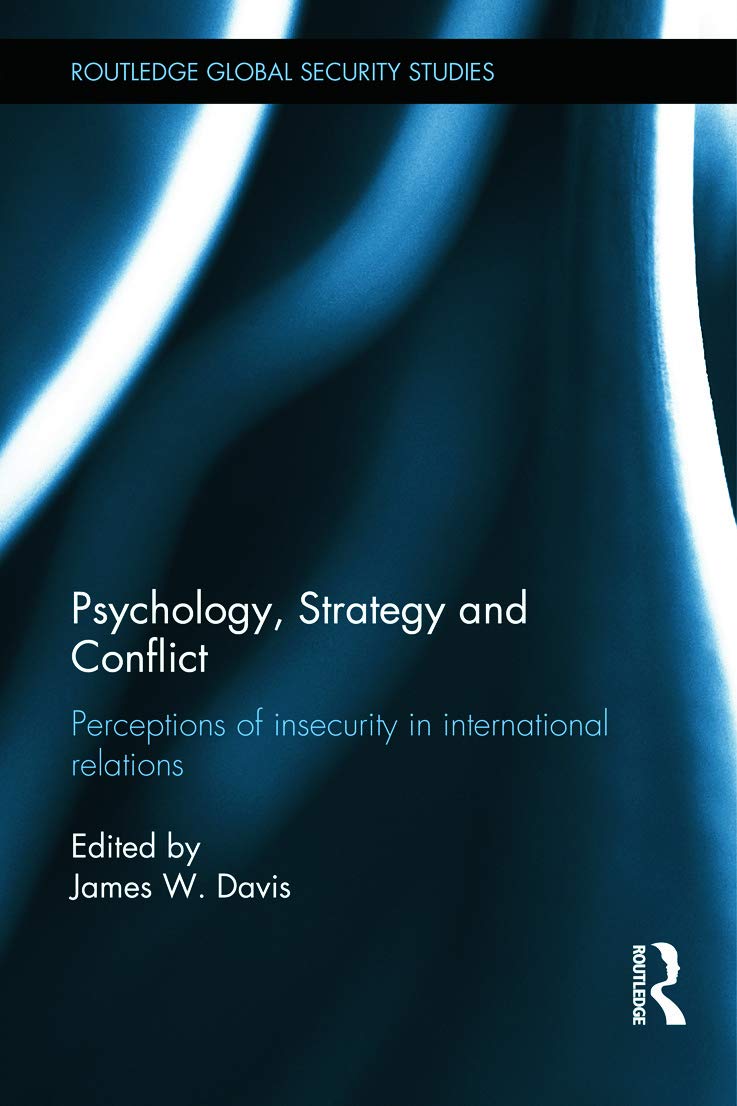
| Title | Psychology, Strategy and Conflict |
| Series | Routledge Global Security Studies |
| Editor/Author | James W. Davis |
| Subject focus | International relations theory, diplomatic history |
| Approach | Explanatory nesting: systemic, strategic, perceptual |
| Key themes | Deterrence, power transition, perception in decision making |
Our Verdict
Psychology, Strategy and Conflict is a worthwhile purchase for specialists who need a compact, theoretically rigorous treatment of nested explanation. It offers durable analytic tools for interpreting state behavior in a more complex international system and represents good value as a reference for graduate study and scholarly work.
Frequently Asked Questions
Does this book require prior theory knowledge?
This volume assumes familiarity with basic international relations concepts and is best read by graduate students or scholars.
Is this focused on historical cases or contemporary policy?
It blends diplomatic history and theory to show how explanatory nesting applies to both past and current international dynamics.
Will it help with research design?
Yes; the book provides a framework useful for crafting causal arguments that integrate system, strategic interaction, and perception.
Editor's Take
Psychology, Strategy and Conflict is a rigorous, theory-driven volume that uses explanatory nesting to link systemic forces with state decision making, making it a strong choice for graduate students and scholars seeking analytic tools for contemporary conflict and deterrence studies.

Recently viewed
Recently viewed products will appear here as customers browse the store.