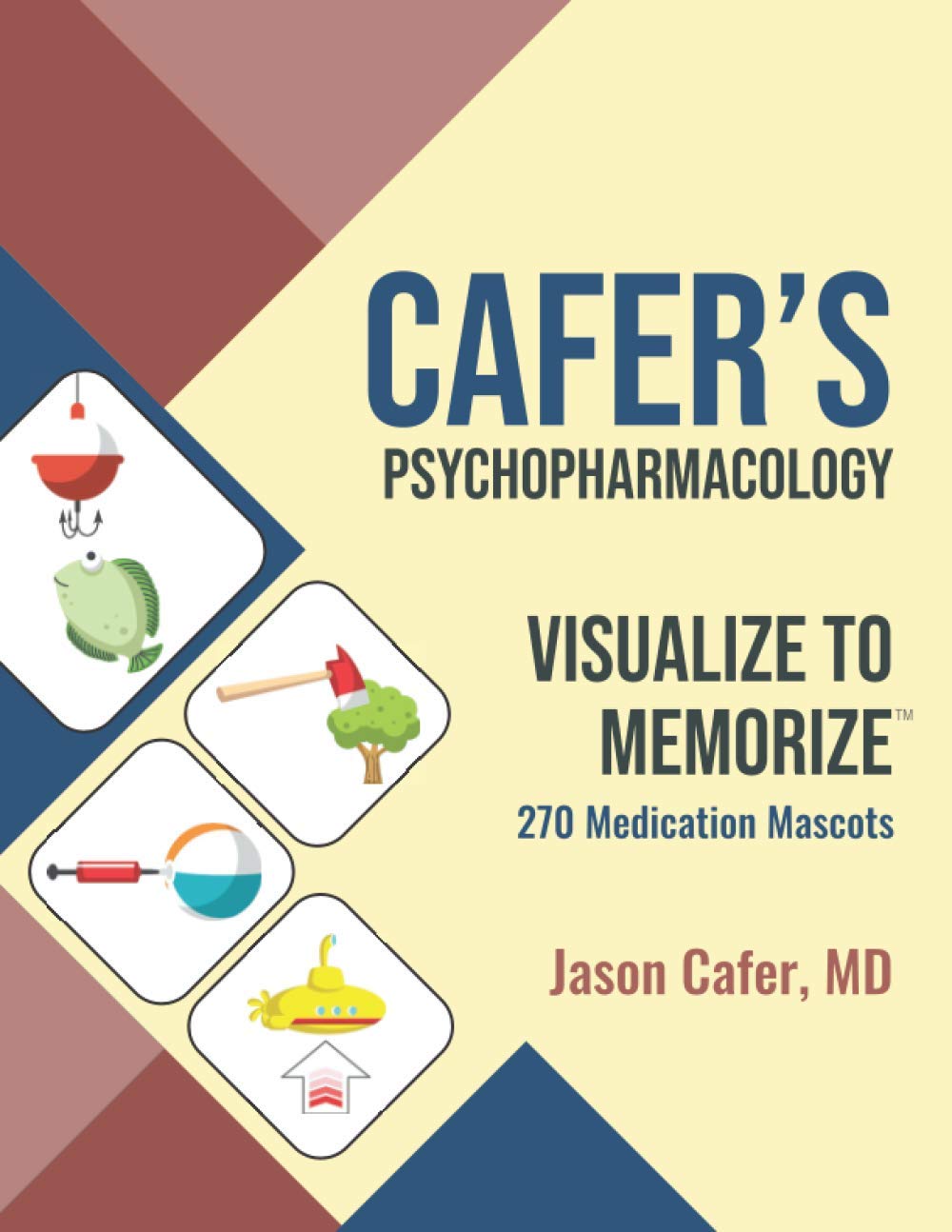
Psychopharmacology Visualize to Memorize 270 Medication Mascots
Psychopharmacology Visualize to Memorize 270 Medication Mascots
Price subject to change. Tap below for current.
Couldn't load pickup availability
Cafer's Psychopharmacology: Visualize to Memorize 270 Medication Mascots is an innovative educational tool designed for students and professionals in the field of psychiatry and pharmacology. This unique resource combines visual learning with essential pharmacological information, making it easier to grasp complex concepts. The use of visual aids helps in retaining critical information about various medications.
One of the standout features of this product is its extensive collection of medication mascots. Each mascot represents a different medication, providing a memorable way to associate drug names with their uses and side effects. This approach not only enhances memory retention but also makes learning more engaging and enjoyable.
The book is organized in a user-friendly manner, allowing readers to quickly find the information they need. Each section is clearly labeled, and the illustrations are vibrant and eye-catching, which aids in the learning process. This organization is particularly beneficial for busy students who need to study efficiently.
In addition to the mascots, the book includes detailed descriptions of each medication, including its indications, contraindications, and potential side effects. This comprehensive approach ensures that readers have a thorough understanding of the medications they are studying. The inclusion of clinical insights from experienced professionals adds further value to this resource.
Another advantage of Cafer's Psychopharmacology is its portability. Measuring at just 8.5 in x 11 in, it is easy to carry around, making it a perfect companion for studying on the go. Whether you are in a classroom, library, or coffee shop, this book can easily fit into your bag. The compact size does not compromise the quality of information presented, as it is packed with valuable content.
Moreover, the engaging format of the book encourages active learning. By visualizing the medications through their mascots, students are more likely to remember key facts and details. This method of learning is particularly effective for visual learners who benefit from seeing information presented in a creative way. The interactive elements of the book also promote discussion and collaboration among peers, enhancing the overall learning experience.
In conclusion, Cafer's Psychopharmacology: Visualize to Memorize 270 Medication Mascots is an essential resource for anyone looking to deepen their understanding of psychopharmacology. Its unique approach to learning through visualization and memorable mascots sets it apart from traditional textbooks. This book is not just a study aid; it is a comprehensive guide that will serve as a valuable reference throughout your career in the medical field.
Share