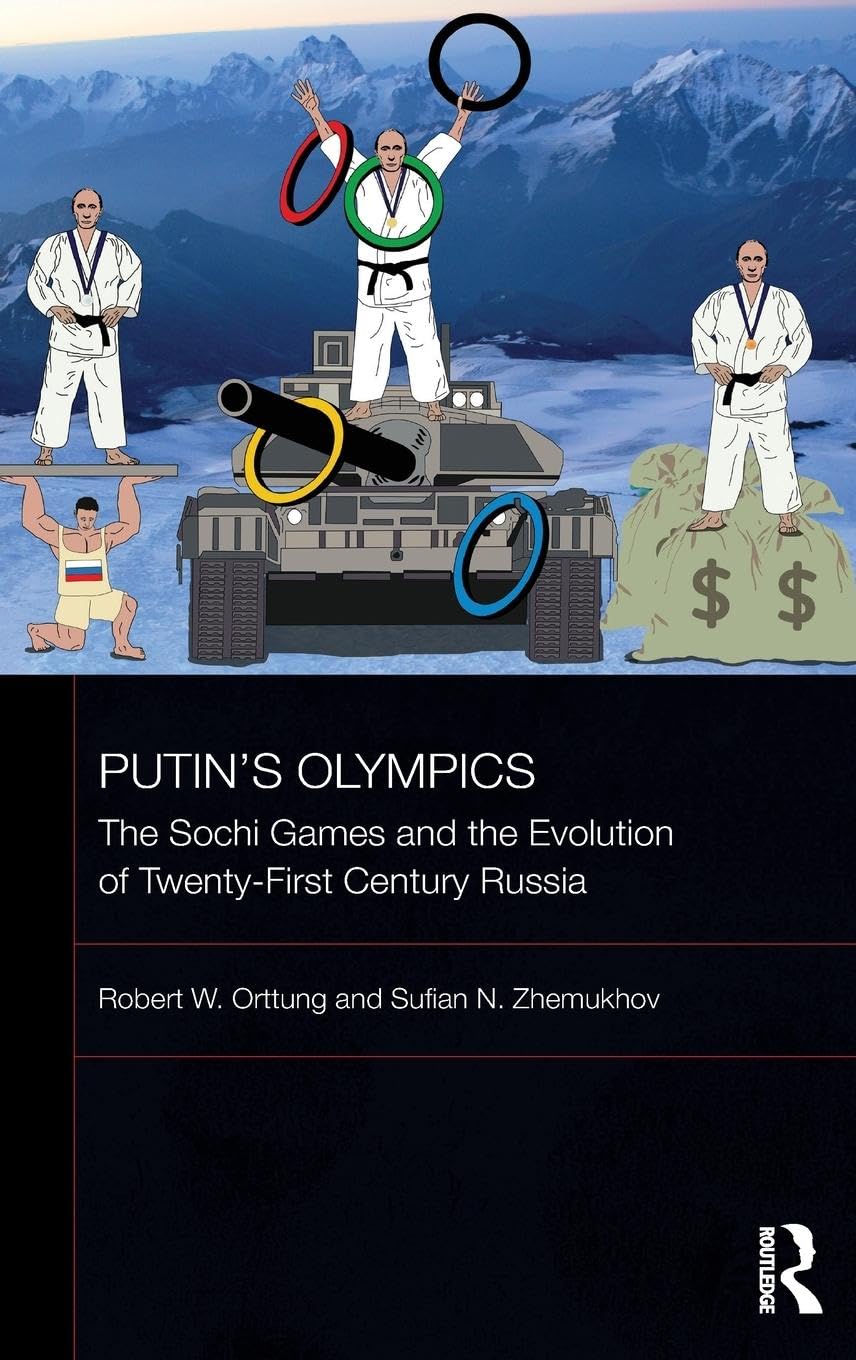
Putin's Olympics: The Sochi Games and Modern Russia's Evolution
Putin's Olympics: The Sochi Games and Modern Russia's Evolution
Price subject to change. Tap below for current.
Couldn't load pickup availability
Putin's Olympics is a compelling exploration of the Sochi Games, offering readers a deep dive into the intricate relationship between sports and politics in contemporary Russia. Authored by Robert W. Orttung and Sufian Zhemukhov, this book provides a nuanced perspective on how the Olympics served as a platform for Vladimir Putin to showcase Russia's resurgence on the global stage.
The authors meticulously analyze the Sochi Games, highlighting the extensive preparations and the significant investments made to ensure the event's success. This was not merely a sporting event; it was a carefully orchestrated display of national pride and power. The book delves into the socio-political implications of hosting the Olympics in a country with a complex history and ongoing challenges.
One of the standout features of this work is its examination of the evolution of twenty-first century Russia. The authors argue that the Sochi Games were a pivotal moment in Russia's post-Soviet identity, reflecting both the aspirations and the contradictions of the current regime. Through a combination of historical context and contemporary analysis, readers gain insight into how the Olympics were utilized as a tool for political messaging.
Furthermore, the book addresses the controversies surrounding the Games, including issues of corruption, human rights violations, and environmental concerns. The authors do not shy away from discussing the darker aspects of the Sochi Olympics, providing a balanced view that acknowledges both the achievements and the failures of the event.
In addition to its rich content, Putin's Olympics is well-researched, drawing on a variety of sources and perspectives. This makes it an invaluable resource for anyone interested in understanding the intersection of sports and politics in Russia. The authors' expertise in Russian studies shines through, making complex topics accessible to a broad audience.
Readers will find that the book is not just for academics but also for general readers who are curious about the implications of the Sochi Games. It serves as a reminder of how global events can shape national narratives and influence public perception. The engaging writing style keeps the reader invested, making it a page-turner despite its academic roots.
In conclusion, Putin's Olympics is a must-read for those looking to comprehend the significance of the Sochi Games within the larger framework of Russian politics. It offers a critical lens through which to view the complexities of modern Russia, making it an essential addition to any library focused on contemporary history and international relations.
Share