

Quantitative Trait Loci: Methods and Protocols - Practical QTL Guide
Quantitative Trait Loci: Methods and Protocols - Practical QTL Guide
Price subject to change. Tap below for current.
Couldn't load pickup availability
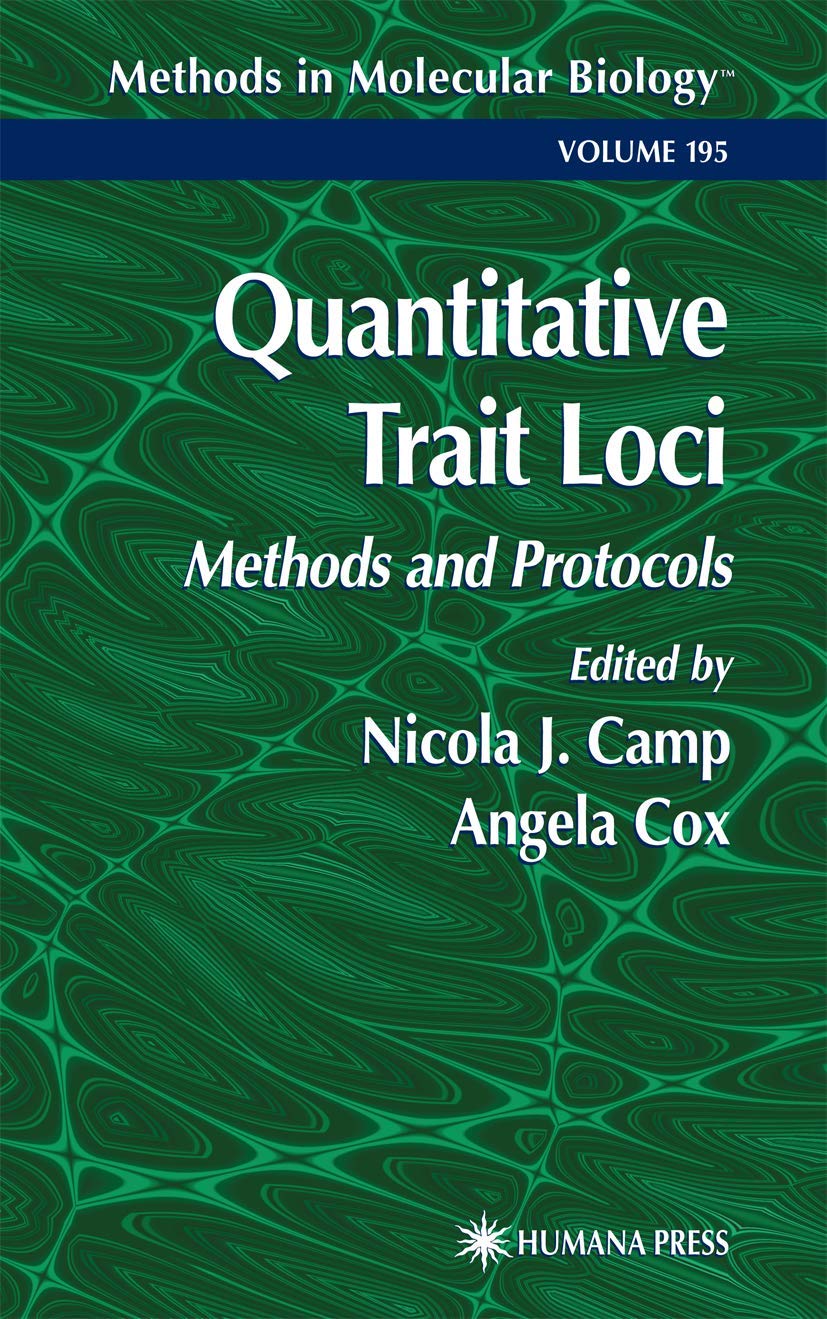
In this review of Quantitative Trait Loci: Methods and Protocols, the bottom line is clear: this is a practical, method-focused manual for researchers who need step-by-step guidance on analyzing quantitative trait data. Written for the nonmathematician, the book emphasizes clear workflows, worked examples, and pointers to software, so the single biggest reason to buy is its hands-on, applied approach to QTL detection and fine mapping rather than abstract theory.
Key Features
- Step-by-step protocols: Each chapter walks through analyses in a practical sequence so researchers can reproduce methods on their own data.
- Software guidance: The book points readers to appropriate software and explains how to use it, reducing time spent hunting tools and documentation.
- Worked examples: Concrete examples and citations to key papers make it easier to interpret results and adapt methods to new datasets.
- Accessible writing: Chapters are written for the nonmathematician, lowering the barrier for biologists to apply statistical genetics methods.
- Varied methodologies: Coverage includes QTDT methods, variance components, and Markov Chain approaches for fine mapping and detection.
Who It's For
This title is aimed at graduate students, postdoctoral researchers, and lab scientists in quantitative genetics or molecular biology who need practical instructions for QTL analysis rather than a theoretical statistics text. It suits investigators planning an experiment who want clear advice from design through interpretation, and who appreciate worked examples and software pointers.
Researchers seeking rigorous mathematical derivations or a beginner's survey of general genetics may want a broader introductory text; likewise, purely computational developers who require full algorithmic proofs should supplement this book with more technical sources.
Pros & Cons
Pros
- Practical, reproducible protocols that shorten the learning curve for applied QTL analysis.
- Explicit guidance on where to find and how to use appropriate software for each method.
- Worked examples and citations that help readers validate and interpret their results.
Cons
- Not a substitute for advanced mathematical treatment, so readers needing formal proofs will need additional references.
Specifications
| Title | Quantitative Trait Loci: Methods and Protocols |
| Series | Methods in Molecular Biology |
| Editors / Authors | Nicola J. Camp, Angela Cox |
| Focus | QTL detection, fine mapping, and analysis protocols |
| Method coverage | QTDT methods, variance components, Markov Chain approaches |
| Audience | Nonmathematician researchers and lab scientists |
Our Verdict
Quantitative Trait Loci: Methods and Protocols is a strong practical resource for researchers who need clear, applied guidance on QTL workflows and software. It delivers good value for teams focused on mapping and interpreting quantitative trait data, though readers seeking deep mathematical proofs should pair it with more technical references.
Frequently Asked Questions
Does this book teach software use?
Yes. The book provides guidance on finding and using appropriate software for the described analyses.
Is the book suitable for beginners?
It is suitable for nonmathematicians with some background in genetics, but absolute beginners may need an introductory genetics text first.
Which methods are emphasized?
The text covers QTDT methods, variance components models, and Markov Chain approaches for detection and fine mapping.
Editor's Take
A practical, method-focused guide to QTL detection and fine mapping that provides step-by-step protocols, worked examples, and software guidance; best for researchers needing applied workflows rather than mathematical proofs.

Recently viewed
Recently viewed products will appear here as customers browse the store.