

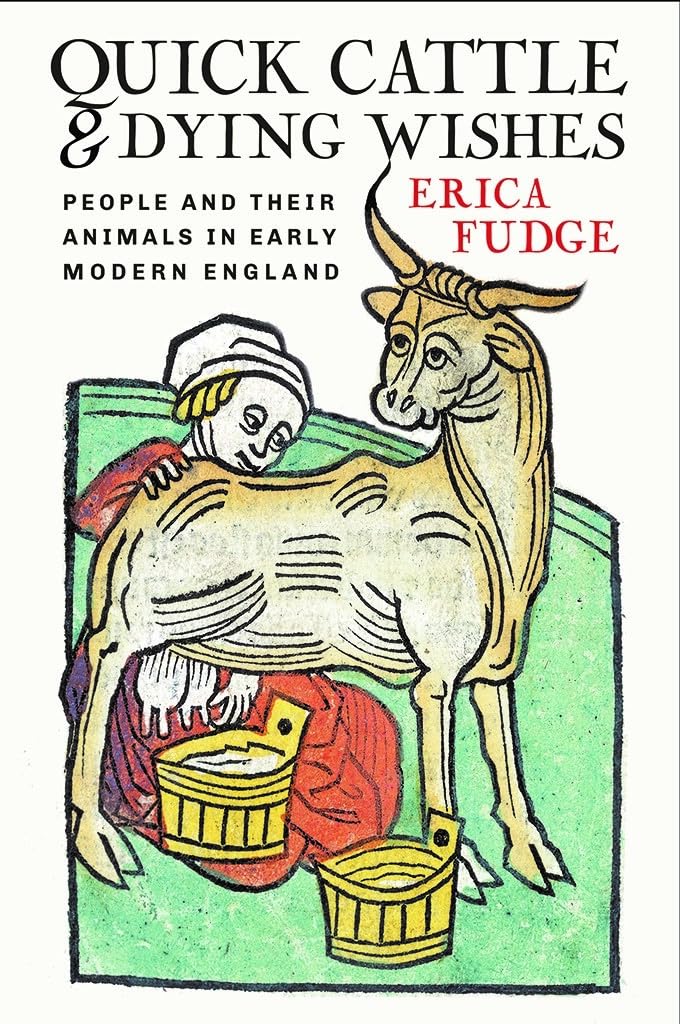
Quick Cattle and Dying Wishes: People and Their Animals in Early
Quick Cattle and Dying Wishes: People and Their Animals in Early
Price subject to change. Tap below for current.
Couldn't load pickup availability
In this review Erica Fudge's Quick Cattle and Dying Wishes is presented as a thoughtful, scholarly look at everyday human-animal relationships in early modern England; it is best suited for readers who want social history grounded in close, humane observation rather than broad economic surveys. The book's single biggest reason to read is its recovery of the daily negotiations between people and their livestock, showing how animals were sentient participants in work and household life; this review focuses on how the narrative and sources make those ordinary interactions vivid and meaningful.
Key Features
- Focus on everyday interactions: The book restores animals to the center of daily life by tracing the routines and negotiations between keepers and livestock, illuminating what milking, tending, and killing meant over years.
- Human-animal relationships: Fudge treats animals as sentient beings, offering readers a perspective that complicates simple economic accounts and brings emotion and practice into view.
- Recovered material: By turning to wills, household records, and case documents, the study reconstructs ordinary episodes often absent from grand narratives of the period.
- Narrative clarity: The prose guides non-specialist readers through archival evidence without losing analytical depth, making complex social history accessible.
- Ethical perspective: The book prompts reflection on attitudes toward livestock, encouraging readers to rethink value, care, and the moral dimensions of animal work.
Who It's For
This book is ideal for students and readers of social and cultural history who want a focused study of human-animal relations in early modern England and for those interested in microhistory approaches that privilege daily life and practice. The clear attention to routine tasks and the use of wills and household records will appeal to historians exploring material and emotional worlds beyond elite political narratives.
Readers seeking a broad economic or agricultural manual on cattle breeds, husbandry techniques, or technical livestock management should look elsewhere; this is not a how-to guide but a humane, interpretive account of relationships and meanings surrounding animals in households and communities.
Pros & Cons
Pros
- Restores animals to the center of historical analysis, offering a fresh perspective on routine work and care.
- Uses wills and household records effectively to reconstruct lived experience and emotional texture.
- Accessible prose makes archival material intelligible to a wide readership without sacrificing nuance.
Cons
- The narrow focus on interactions and negotiations means readers looking for technical agricultural detail or broad economic trends will find the scope limited.
Specifications
| Title | Quick Cattle and Dying Wishes |
| Subtitle | People and Their Animals in Early Modern England |
| Author | Erica Fudge |
| Subject | Human-animal relations, social history |
| Geographic focus | England, early modern period |
| Approach | Microhistory using wills and household records |
Our Verdict
Quick Cattle and Dying Wishes is a thoughtful, rewarding read for historians and general readers interested in how ordinary interactions with livestock shaped everyday life and belief in early modern England; its value lies in recovering sentient perspectives and the moral texture of care, making it good value for those wanting interpretive social history rather than technical agricultural instruction.
Frequently Asked Questions
Does this book focus on livestock husbandry techniques?
The book emphasizes relationships and daily practices rather than step-by-step husbandry or breed-specific technical guidance.
What sources does Erica Fudge use?
Fudge draws primarily on wills, household records, and case documents to reconstruct interactions between people and animals.
Is the book accessible to non-specialists?
Yes, the prose and narrative structure make archival material readable for general audiences interested in social history.
Editor's Take
Quick Cattle and Dying Wishes is a thoughtful social history that recovers everyday human-animal relationships in early modern England; recommended for readers wanting archival, humane perspectives rather than technical agricultural detail.

Recently viewed
Recently viewed products will appear here as customers browse the store.