

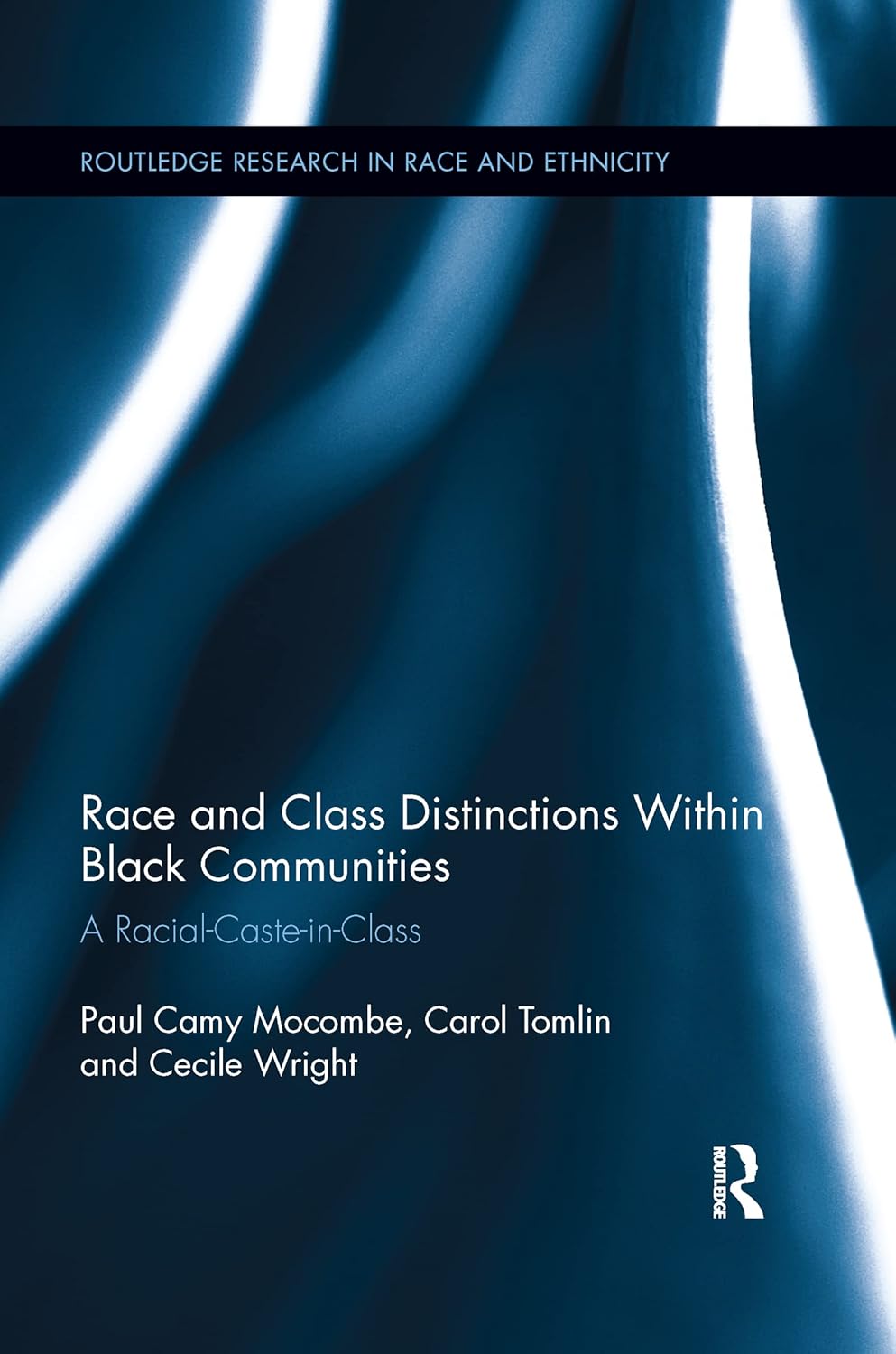
Race and Class Distinctions Within Black Communities - Critical
Race and Class Distinctions Within Black Communities - Critical
Price subject to change. Tap below for current.
Couldn't load pickup availability
Our review of Race and Class Distinctions Within Black Communities highlights a thoughtful, theory-driven examination of black social identity for readers interested in race, class and social theory. Paul Camy Mocombe offers a clear alternative to social or racial determinism by applying a variant of structuration theory; the book's biggest reason to buy is its rigorous attempt to reconcile individual agency and structural forces in the constitution of black American and British life. This review summarizes why the text matters to scholars, advanced students and engaged readers looking for a dialectical approach to identity.
Key Features
- Philosophical and sociological model: Presents a combined philosophical and sociological framework useful for analyzing identity without defaulting to determinism.
- Phenomenological structuralism: Uses a variant of structuration theory to explain how agency and structure co-constitute social identity in black communities.
- Comparative scope: Addresses both black American and British contexts, offering readers comparative insight into transatlantic experiences.
- Critical engagement: Takes on contemporary postmodern and post-structural positions, providing a clear counterpoint for researchers evaluating theoretical alternatives.
- Focus on class relations: Connects black social identity to class division and social relations of production within the global capitalist world-system.
Who It's For
This book is aimed at academics, graduate students and informed readers in cultural and ethnic studies, sociology and political theory who want a rigorous theoretical treatment of black identity that foregrounds both structure and agency. It is especially useful to those researching race in relation to class and global capitalism and to instructors seeking a text that challenges postmodern takes.
Readers seeking an introductory, narrative-driven history or a light, anecdotal survey of black life should look elsewhere; this work presumes familiarity with social theory and expects the reader to engage with dense argumentation rather than popular storytelling.
Pros & Cons
Pros
- Provides a nuanced model that balances individual agency with structural constraints, helping clarify complex identity processes.
- Engages critically with postmodern and post-structural thought, making it valuable for theoretical coursework and debate.
- Offers comparative analysis of both American and British black experiences, broadening its relevance to transnational studies.
Cons
- The theoretical density may limit accessibility for casual readers or those new to social theory.
Specifications
| Title | Race and Class Distinctions Within Black Communities |
| Author | Paul Camy Mocombe |
| Series | Routledge Research in Race and Ethnicity |
| Approach | Phenomenological structuralism (variant of structuration theory) |
| Focus areas | Black American and British life, class division, social relations of production |
Our Verdict
Race and Class Distinctions Within Black Communities is a strong value for readers who need a theoretically robust, dialectical account of black social identity that refuses simple determinism. Its comparative and critical approach makes it especially worthwhile for scholars and advanced students examining the intersections of race, class and global capitalism.
Frequently Asked Questions
Does the book cover both US and UK contexts?
Yes. The text explicitly addresses black American and British life and draws comparative insights across those contexts.
Is this suitable for undergraduate readers?
It is best suited to advanced undergraduates or graduate students with prior exposure to social theory; the material is conceptually dense.
What theoretical lens does the author use?
The author employs a variant of structuration theory called phenomenological structuralism to explain the constitution of social identity.
Editor's Take
A rigorous, dialectical study that links black identity to class and global capitalism; ideal for scholars and advanced students seeking a theory-driven alternative to determinism.

Recently viewed
Recently viewed products will appear here as customers browse the store.