

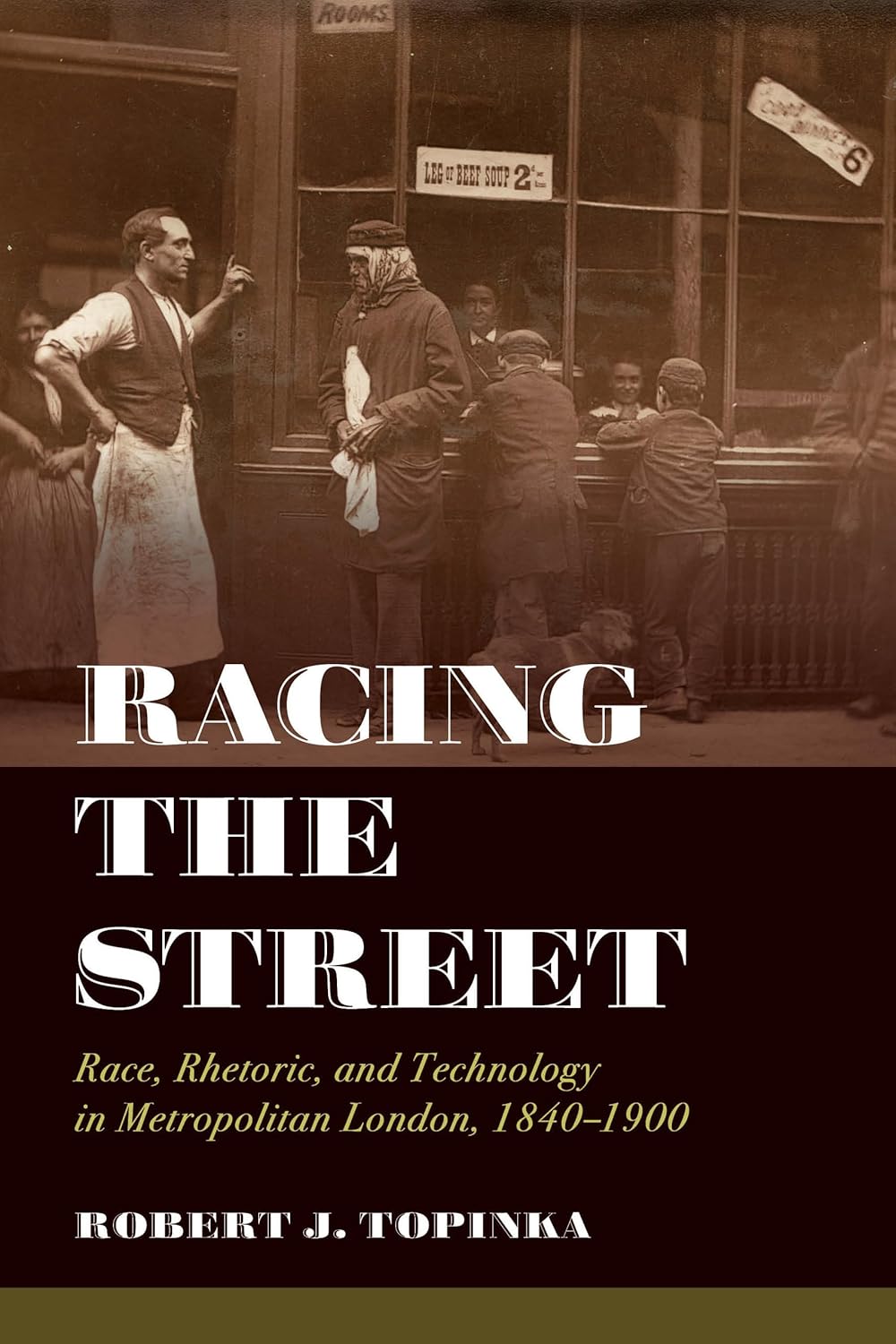
Racing the Street: Race, Rhetoric, and Technology in Metropolitan
Racing the Street: Race, Rhetoric, and Technology in Metropolitan
Price subject to change. Tap below for current.
Couldn't load pickup availability
Our review of Racing the Street finds it best suited for scholars and advanced students interested in urban history, rhetoric, and the material culture of nineteenth-century London; its single biggest strength is the author's original argument that race functioned as an organizing technology for the modern street, grounded in a wide archival range. Robert J. Topinka's study reads as a focused interdisciplinary investigation rather than a broad survey, and this review highlights how the book reorients familiar debates by tracing how engineering plans, committee reports, and press coverage all participated in assembling metropolitan networks.
Key Features
- Interdisciplinary archival scope: Topinka draws on engineering blueprints, parliamentary committee reports, pamphlets, and periodical press accounts to support a rich, evidentiary narrative.
- Theoretical framing: The book develops a sustained genealogy of the nineteenth-century London street that connects rhetoric, race, and technology into a single analytic frame.
- Focus on practice: By treating race as a technology that gathers and sorts urban life, the study offers concrete mechanisms rather than abstract assertions.
- Urban government lens: The work links municipal and parliamentary technologies to everyday street life, clarifying how governance shaped metropolitan networks.
- Accessible prose for specialists: The author writes in a measured academic style that remains readable for historians and rhetoric scholars who want a focused argument without excessive jargon.
Who It's For
This book is primarily for graduate students, researchers, and faculty in history, rhetoric, media studies, and urban studies who are looking for a novel method to connect race and technology in nineteenth-century metropolitan settings. Its archival detail and theoretical ambition make it a useful seminar text for courses on urban government, media history, or the rhetoric of race.
Readers seeking a general popular history of Victorian London, a biographical narrative, or a primer on technical engineering practices should look elsewhere, as the work assumes familiarity with scholarly debates and prioritizes analytic argument over broad narrative storytelling.
Pros & Cons
Pros
- Original thesis that reconceptualizes race as a technology, offering a fresh analytical tool for scholars.
- Wide archival base provides concrete evidence across engineering, parliamentary, and press sources.
- Interdisciplinary reach connects rhetoric, media, and urban governance in productive ways.
Cons
- The focused academic style and disciplinary assumptions may be dense for non-specialist readers.
Specifications
| Title | Racing the Street: Race, Rhetoric, and Technology in Metropolitan London, 1840-1900 |
| Series | Rhetoric & Public Culture: History, Theory, Critique (Volume 3) |
| Author | Robert J. Topinka |
| Subject focus | Race, rhetoric, media, technology, and urban government in nineteenth-century London |
| Evidence base | Engineering blueprints, parliamentary committee reports, pamphlets, periodical press |
| Approach | Interdisciplinary historical and rhetorical analysis |
Our Verdict
Racing the Street is a compelling, well-documented study for specialists who want to rethink how race and infrastructure shaped metropolitan life; its value lies in the novel argument and archival breadth, making it a worthwhile investment for academic libraries and graduate seminars despite a style that favors scholarly readers.
Frequently Asked Questions
Does this book require prior expertise in rhetoric?
While helpful, prior familiarity is not strictly required; readers should expect scholarly terminology and engagement with academic debates.
What types of sources does the author use?
The study uses a mix of engineering plans, parliamentary committee reports, pamphlets, and contemporary periodical accounts to build its argument.
Is this suitable for undergraduate courses?
Yes for advanced undergraduates in seminars, though introductory survey classes may prefer more general texts.
Editor's Take
Racing the Street offers a compelling interdisciplinary argument that race operated as a technology in nineteenth-century London; its archival depth and theoretical clarity make it essential for scholars and graduate seminars despite a style aimed at academic readers.

Recently viewed
Recently viewed products will appear here as customers browse the store.