

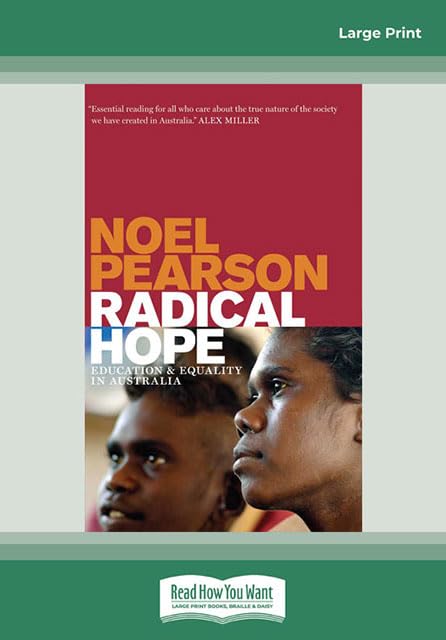
Radical Hope: Education and Equality in Australia - of Pearson
Radical Hope: Education and Equality in Australia - of Pearson
Price subject to change. Tap below for current.
Couldn't load pickup availability
In this review of Radical Hope: Education and Equality in Australia, Noel Pearson tackles the persistent failures and possibilities of schooling for disadvantaged communities. The book is for readers interested in education policy, indigenous affairs and social justice; its single biggest reason to buy is Pearson's insistence on a rigorous, practical vision for schooling that aims to equip underclass students to engage confidently with the wider world. The tone is urgent but constructive, and the argument is driven by long-term observation and new research findings he introduces throughout.
Key Features
- Clear central questions: Pearson frames the discussion around the survival of culture and whether education can lift whole communities rather than a fortunate few, focusing the book's purpose.
- Focus on disadvantaged students: The book argues that underclass students, many Aboriginal, should receive rigorous schooling that enables negotiation of the wider world.
- Critical policy history: Pearson examines the long-term failure of Australian educational policy, giving readers a historical lens on why reforms repeatedly falter.
- Lessons from innovation: He asks why reforms revert to "Groundhog Day" and highlights innovations that could be scaled or learned from.
- Research-informed viewpoints: Radical Hope introduces new findings from research to support its claims and policy recommendations.
Who It's For
Radical Hope is best for teachers, school leaders, policy makers, and readers engaged in indigenous affairs who want a thoughtful critique of education policy and a call for more demanding schooling for disadvantaged students. Academics and advocates seeking a combination of moral clarity and practical proposals will find Pearson's voice valuable.
Those looking for a step-by-step curriculum or classroom handbook should look elsewhere; the book is a political and philosophical intervention rather than a lesson plan resource. Readers expecting a neutral academic report may also find Pearson's perspective deliberately partisan and argumentative.
Pros & Cons
Pros
- Persuasive case that rigorous schooling can provide real means to participate in wider society.
- Clear diagnosis of policy failures offers a useful framework for reform discussions.
- Inclusion of new research findings strengthens the book's recommendations and credibility.
Cons
- The book is more focused on broad policy and moral argument than classroom-level practical guidance.
Specifications
| Title | Radical Hope: Education and Equality in Australia |
| Author / Brand | Noel Pearson |
| Main focus | Education policy and indigenous disadvantage |
| Key themes | Survival of culture, rigorous schooling, policy reform |
| Approach | Argumentative, research-informed commentary |
| Intended audience | Policy makers, educators, advocates |
Our Verdict
Radical Hope is a compelling and timely book for anyone serious about education reform and indigenous equity; Pearson's insistence on rigorous schooling and his critique of repeated policy failure make it a valuable contribution. It is good value for readers seeking policy insight and moral argument, though those after classroom-level tools will need supplementary resources.
Frequently Asked Questions
Does this book focus on indigenous education?
The book places significant emphasis on Aboriginal students and the indigenous sector while addressing broader issues of disadvantage.
Is it a practical teaching guide?
No, Radical Hope is a policy and philosophical critique rather than a classroom curriculum or step-by-step teaching manual.
Does Noel Pearson use research to support his claims?
Yes, the author introduces new research findings to underpin his arguments about schooling and reform.
Editor's Take
Radical Hope is a compelling, research-informed critique of Australian education policy that argues for rigorous schooling to empower disadvantaged and Aboriginal students; best for policymakers and educators rather than classroom-only practitioners.

Recently viewed
Recently viewed products will appear here as customers browse the store.