

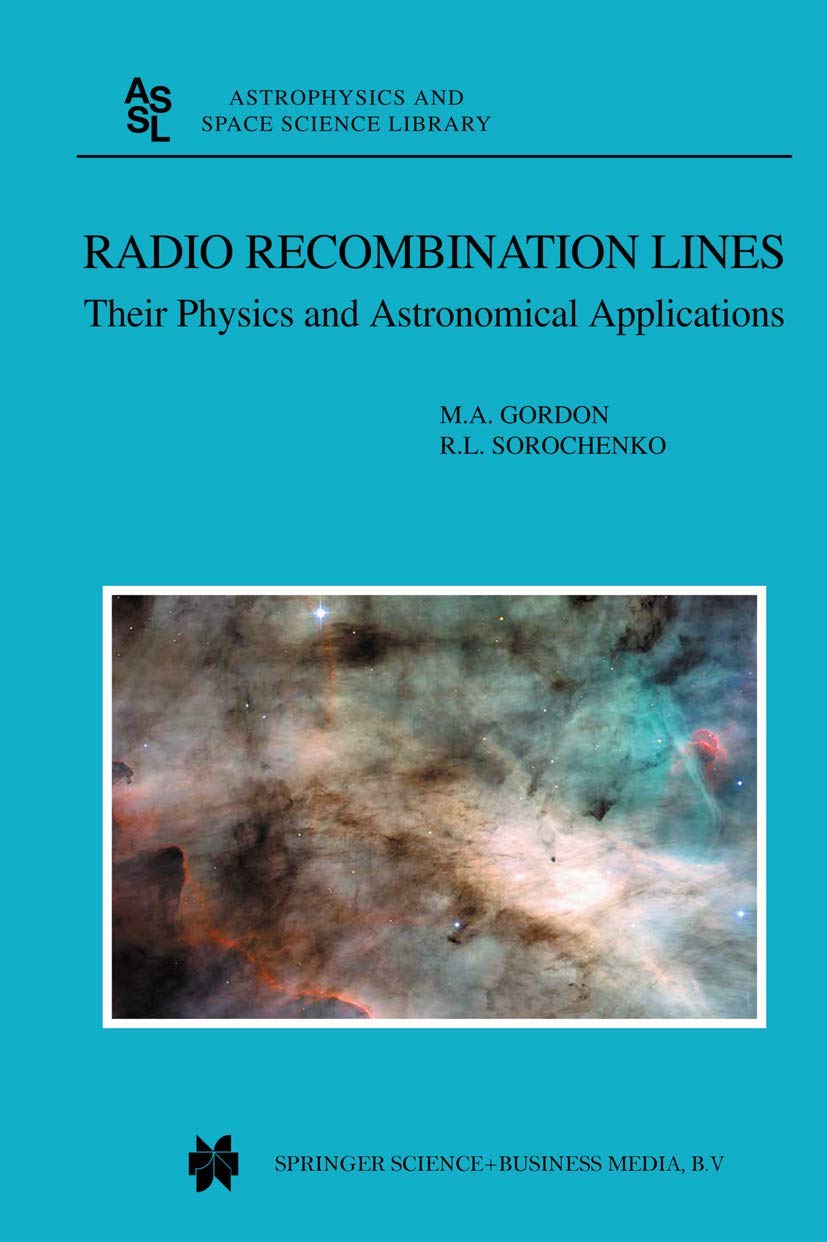
Radio Recombination Lines: Their Physics and Astronomical Applications
Radio Recombination Lines: Their Physics and Astronomical Applications
Price subject to change. Tap below for current.
Couldn't load pickup availability
In this review of Radio Recombination Lines: Their Physics and Astronomical Applications, readers get a focused, scholarly guide to a specialized observational tool. This book is best for graduate students, researchers, and advanced amateurs who need a comprehensive account of how radio recombination lines form and what they reveal about astrophysical plasmas. The single biggest reason to buy is its blend of history, detailed physical explanation, and application examples that together make radio recombination line science accessible without sacrificing rigor.
Key Features
- Historical overview: The book traces the discovery and development of radio recombination line studies, giving context that helps readers understand how methods evolved.
- Physical foundations: Clear coverage of the atomic and plasma physics behind these spectral lines provides the necessary theory for interpreting observations.
- Propagation effects: Detailed discussion of how the voyage of radiation through space alters spectral profiles helps observers correct and model real data.
- Astronomical applications: Examples of how recombination lines probe star-forming gas and even the Sun demonstrate practical uses across astrophysical environments.
- Appendix material: Supplemental material in the appendix supports deeper study and aids those learning to apply the concepts to real datasets.
Who It's For
The book is aimed primarily at graduate students and active researchers in observational astronomy and radio astrophysics who need a reliable reference on spectral line diagnostics. It suits those studying the interstellar medium, star formation, and anyone designing or analyzing radio-spectroscopic observations.
It is less appropriate for casual readers or undergraduates without prior exposure to atomic physics or radiative transfer; such readers may find the level of detail demanding and should consider more introductory texts before tackling this volume.
Pros & Cons
Pros
- Comprehensive treatment connects history, theory, and observation in one volume.
- Useful for practical research: explains how spectral profiles are influenced by propagation and environment.
- Appendix material offers additional reference material for working scientists.
Cons
- The material assumes prior familiarity with atomic and radiative physics, which limits accessibility for beginners.
Specifications
| Title | Radio Recombination Lines: Their Physics and Astronomical Applications |
| Series | Astrophysics and Space Science Library |
| Authors | M.A. A. Gordon, Roman L. Sorochenko |
| Scope | History, formation physics, propagation effects, astronomical applications |
| Includes | Appendix with supplemental material |
| Target audience | Graduate students, researchers, advanced amateurs |
Our Verdict
Radio Recombination Lines is a valuable, well-structured reference for anyone working with radio spectral diagnostics. Its combination of historical perspective, detailed physics, and application examples makes it good value for graduate-level researchers and observers who need an authoritative source on how these lines probe cosmic plasmas.
Frequently Asked Questions
Does this book explain how recombination lines are detected?
Yes. It discusses the formation of lines and how propagation and instrumental effects influence the observed spectral profiles.
Is this suitable for beginners?
Not ideally; the text assumes background in atomic physics and radiative processes, so beginners should supplement it with introductory material.
Are observational applications covered?
Yes. The book includes descriptions of how recombination lines are used to study star-forming gas and other astrophysical environments, including the Sun.
Editor's Take
Radio Recombination Lines is a solid, scholarly reference that links history, detailed physics, and practical applications; it is recommended for graduate students and researchers needing an authoritative guide to radio spectral diagnostics.

Recently viewed
Recently viewed products will appear here as customers browse the store.