

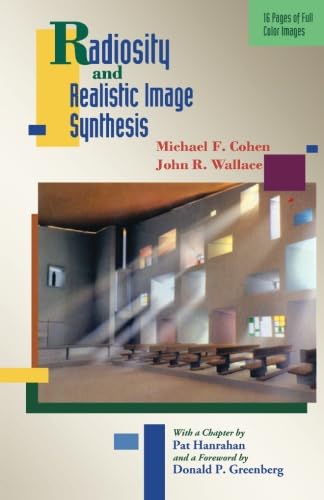
Radiosity and Realistic Image Synthesis - Comprehensive Method
Radiosity and Realistic Image Synthesis - Comprehensive Method
Price subject to change. Tap below for current.
Couldn't load pickup availability
In this review of Radiosity and Realistic Image Synthesis the bottom line is clear: this book is essential for computer graphics students and practitioners who want a rigorous, mathematically grounded introduction to the radiosity method. The author lays out the mathematical fundamentals and the practical algorithms needed to approach realistic image synthesis, making the text valuable for readers with a working background in calculus. For anyone focused on physically based rendering techniques, this is a focused, detailed resource rather than a light survey.
Key Features
- Comprehensive coverage: Presents a full treatment of the radiosity method from fundamentals through display, enabling readers to follow the complete pipeline.
- Mathematical foundation: Explains the underlying calculus and equations so readers can understand why algorithms behave as they do.
- Algorithmic detail: Discusses environment subdivision and other algorithms so implementers gain practical insight into building radiosity systems.
- Implementation perspective: Highlights successes and difficulties in real implementations, helping readers anticipate practical challenges.
- Extension discussion: Covers extensions to the basic radiosity method, pointing to ways to handle more complex lighting effects.
Who It's For
This book is best for upper-level undergraduates, graduate students, and professional graphics programmers who already have a basic knowledge of undergraduate calculus and seek a deep dive into a classical global illumination technique. It works well as a course text or a reference for engineers implementing radiosity algorithms.
Readers looking for a quick, high-level overview of modern real-time rendering or a nonmathematical introduction to lighting should look elsewhere; the treatment here assumes willingness to engage with mathematical detail and algorithmic subtleties.
Pros & Cons
Pros
- Thorough exposition of the radiosity method provides a solid theoretical and practical foundation for realistic image synthesis.
- Clear presentation of algorithms such as environment subdivision helps bridge theory and implementation.
- Discussion of both successes and difficulties gives a balanced, pragmatic view of what works in practice.
Cons
- Requires a basic knowledge of undergraduate calculus, so it is not suitable for complete beginners to math-heavy graphics.
Specifications
| Title | Radiosity and Realistic Image Synthesis |
| Author | Michael F. Cohen |
| Topic | Radiosity method and realistic image synthesis |
| Intended audience | Upper-level students and graphics practitioners |
| Prerequisite | Basic undergraduate calculus knowledge |
| Focus | Algorithms from environment subdivision to final display |
Our Verdict
Radiosity and Realistic Image Synthesis is a focused, well-argued resource for anyone serious about physically based rendering using radiosity; it delivers strong value for students and implementers who can handle the mathematical detail and want a comprehensive guide to both theory and practical algorithmic issues.
Frequently Asked Questions
Is this book suitable for beginners?
The book assumes basic undergraduate calculus and is not aimed at readers seeking a nontechnical introduction.
Does it cover implementation details?
Yes, it discusses algorithms such as environment subdivision and highlights implementation successes and difficulties to guide practitioners.
Will it help with modern rendering techniques?
It focuses on radiosity and its extensions, offering foundational insight that can inform modern physically based rendering, though it is centered on the radiosity approach.
Editor's Take
A focused, math-oriented guide to the radiosity method that is excellent for students and graphics implementers who want detailed algorithms and practical insight into realistic image synthesis.

Recently viewed
Recently viewed products will appear here as customers browse the store.