

Radiowave Propagation and Smart Antennas for Wireless Communications
Radiowave Propagation and Smart Antennas for Wireless Communications
Price subject to change. Tap below for current.
Couldn't load pickup availability
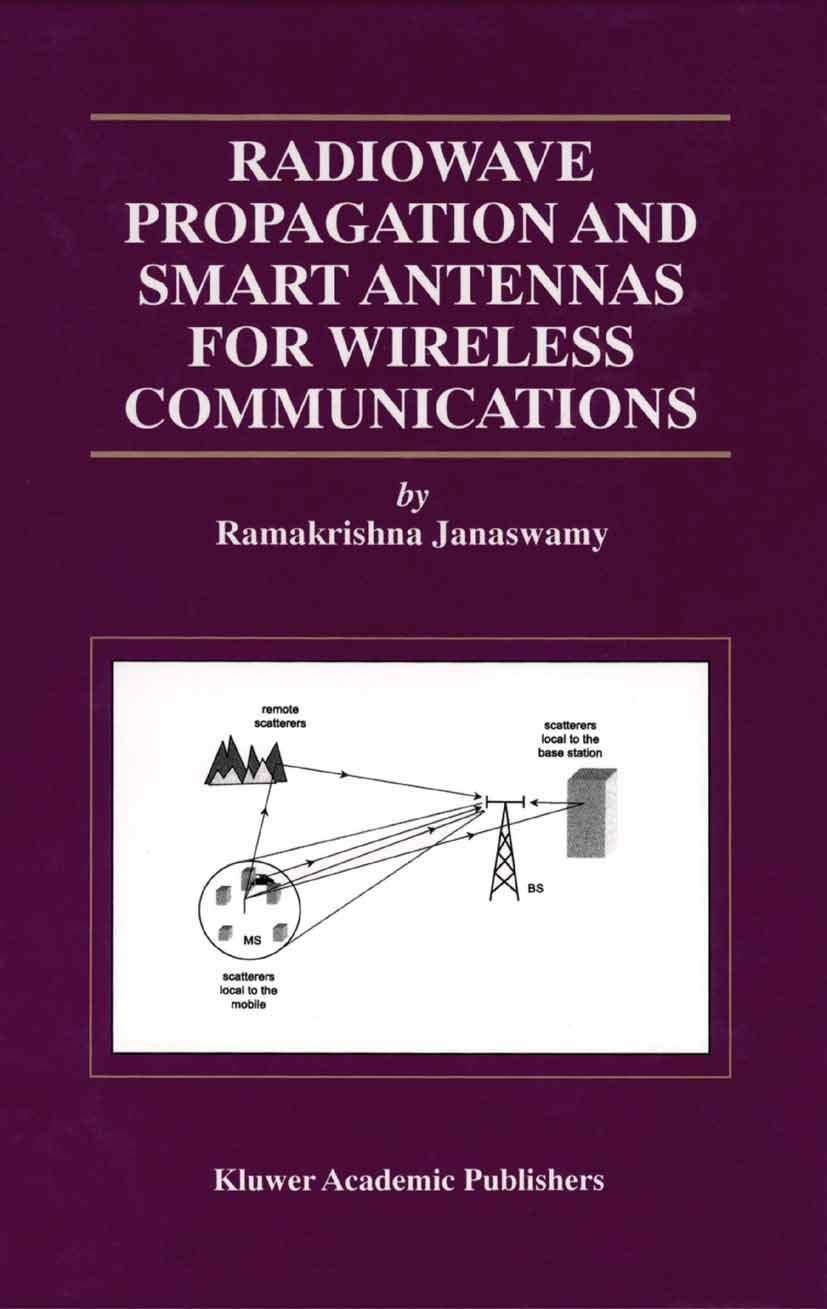
In this review of Radiowave Propagation and Smart Antennas for Wireless Communications the bottom line is clear: this is a focused, graduate-level text and reference that bridges electromagnetics, communications, and signal processing for practitioners and researchers. Written from a course developed at the Naval Postgraduate School, the book's single biggest reason to buy is its interdisciplinary approach, which helps readers with a basic grounding in probability and wave propagation gain practical and theoretical insight into smart antenna systems. It reads like a course condensed into a reference, useful both for study and to consult when solving applied problems.
Key Features
- Graduate course origin: Material evolved from a Naval Postgraduate School course, so it follows a well-structured pedagogical progression useful for semester study or self-study.
- Interdisciplinary coverage: Combines electromagnetics, communications, and signal processing to give readers a rounded view of radiowave propagation and antenna techniques.
- Reference utility: Organized for use as a reference, making it easy to return to specific topics relevant to industry and research applications.
- Accessible prerequisites: Assumes only basic probability, wave propagation, digital communications, and elementary signal processing, lowering the barrier for electrical engineering graduates.
- Applied focus: Emphasizes practical implications of propagation and smart antenna concepts, aiding engineers who need to connect theory to real system design.
Who It's For
This book is best for graduate students taking an advanced course in propagation or smart antennas, and for practicing engineers in telecommunications or radar who need a concise, course-based reference. The material is geared toward readers who already have undergraduate grounding in electromagnetic theory and digital communications and who want a targeted, technical treatment rather than a popular overview.
Readers who want a beginner-level introduction to antennas or a purely mathematical treatment heavy on proofs may want to supplement this book with more introductory texts or specialized monographs; however, for those requiring a practical, interdisciplinary bridge between fields, this is well suited.
Pros & Cons
Pros
- Clear course-derived structure that makes the topics logical and teachable.
- Interdisciplinary content helps engineers expand across electromagnetics, communications, and signal processing.
- Useful as both a graduate textbook and a compact reference for research and industry tasks.
Cons
- Not aimed at absolute beginners; assumes prior knowledge of probability and basic signal processing.
Specifications
| Title | Radiowave Propagation and Smart Antennas for Wireless Communications |
| Series | The Springer International Series in Engineering and Computer Science |
| Author | Ramakrishna Janaswamy |
| Audience | Graduate students, researchers, industry engineers |
| Focus areas | Electromagnetics, communications, signal processing |
| Use case | Graduate text and reference book |
Our Verdict
Radiowave Propagation and Smart Antennas is a focused, practical graduate text that delivers strong interdisciplinary value for students and working engineers. Its course-rooted organization and emphasis on connecting electromagnetics with communication system issues make it a worthwhile purchase for those who meet the stated prerequisites and need a compact reference that supports both learning and applied problem solving.
Frequently Asked Questions
Is this book suitable as a course textbook?
Yes; the book emerged from a graduate course and is structured to support semester teaching as well as self-study.
Do I need advanced math to follow the book?
No; it expects basic understanding of probability, wave propagation, digital communications, and elementary signal processing rather than advanced mathematical training.
Is this more theoretical or applied?
The book balances theory and application, making it useful both as a reference for industry problems and as a graduate-level theoretical text.
Editor's Take
Radiowave Propagation and Smart Antennas is a focused graduate text and practical reference that bridges electromagnetics, communications, and signal processing, ideal for students and engineers who meet the stated prerequisites.

Recently viewed
Recently viewed products will appear here as customers browse the store.