

Rational Suicide in the Elderly: Clinical, Ethical, and Sociocultural
Rational Suicide in the Elderly: Clinical, Ethical, and Sociocultural
Price subject to change. Tap below for current.
Couldn't load pickup availability
Our review of Rational Suicide in the Elderly: Clinical, Ethical, and Sociocultural Aspects finds it a thoughtful, scholarly resource for clinicians and trainees navigating a fraught topic in geriatric mental health. The book's single biggest reason to buy is its balanced, cross-cultural and historical framing that does not push a single ethical conclusion but instead equips readers with frameworks to assess end-of-life wishes in older adults. For practitioners who face complex requests from chronically ill patients, this book serves as a sustained, evidence-aware conversation starter rather than a prescriptive manual.
Key Features
- Comprehensive framing: The opening chapters map the history and cultural variation around rational suicide, helping clinicians place current cases in broader context.
- Balanced perspective: The text deliberately refrains from endorsing a single viewpoint, allowing readers to consider both permissive and cautionary approaches to patient requests.
- Clinical relevance: Material is tailored for geriatric mental health professionals, offering assessment and decision-making considerations for those who confront suicidal ideation in the elderly.
- Ethical analysis: The book presents ethical frameworks useful for team discussions and institutional policy development around end-of-life wishes.
- Sociocultural attention: Discussion of cultural differences and the baby boomer cohort helps clinicians anticipate demographic trends and differing attitudes toward rational suicide.
Who It's For
This book is aimed primarily at geriatric psychiatrists, primary care physicians with aging patients, palliative care clinicians, ethicists, and mental health trainees who need a nuanced resource on end-of-life decision-making. Its clinical and ethical focus makes it suitable for teaching rounds and multidisciplinary case conferences.
Those seeking step-by-step legal guidance or a purely advocacy-driven argument for or against assisted death should look elsewhere; the book is not a legal manual nor a partisan tract, but rather a balanced text intended to inform assessment, discussion, and reflective practice.
Pros & Cons
Pros
- Clear historical and cross-cultural framing helps clinicians contextualize patient wishes across populations.
- Balanced, non-prescriptive stance supports reflective clinical assessment without pushing a single ethic.
- Practical relevance for geriatric mental health professionals seeking frameworks rather than directives.
Cons
- Not a substitute for jurisdiction-specific legal guidance, so readers must consult local law for practice decisions.
Specifications
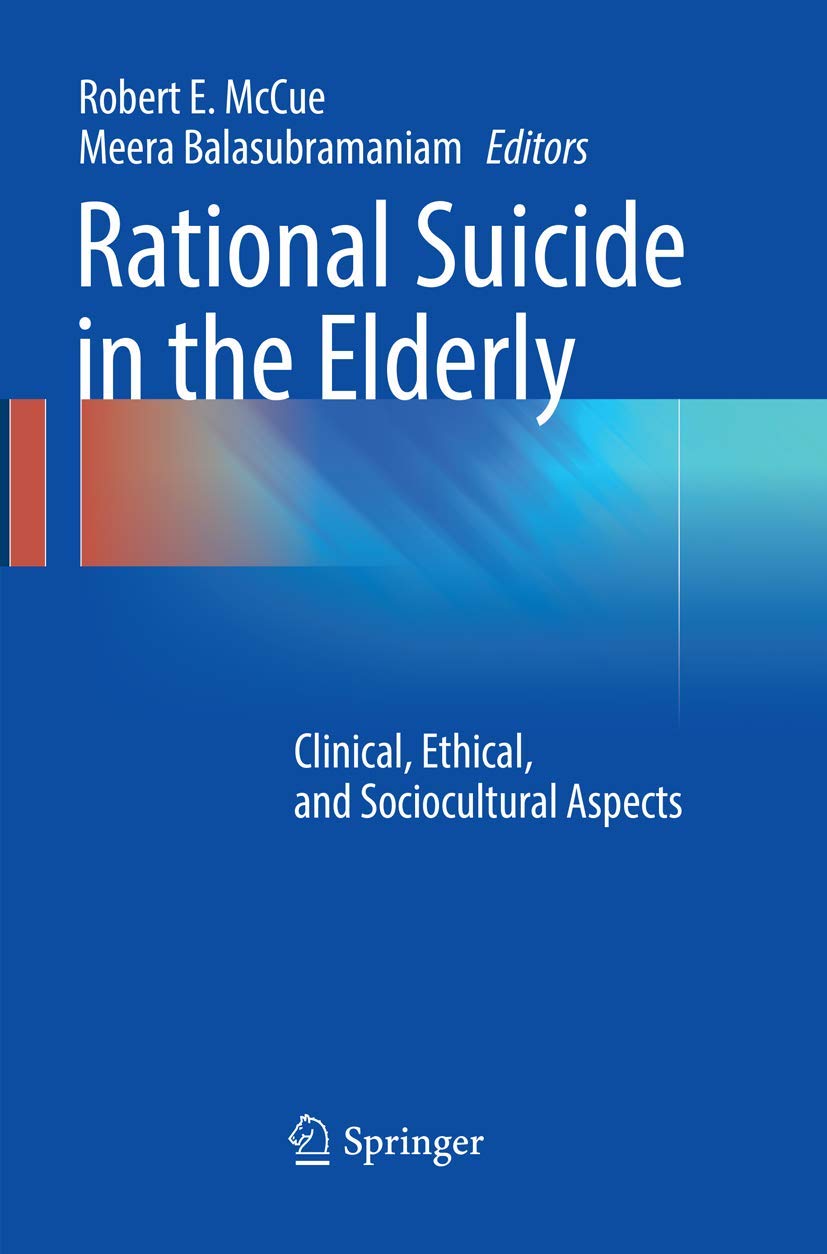
| Title | Rational Suicide in the Elderly: Clinical, Ethical, and Sociocultural Aspects |
| Authors | Robert E. McCue, Meera Balasubramaniam |
| Subject | Rational suicide in the elderly, geriatric mental health |
| Approach | Clinical, ethical, and sociocultural analysis |
| Audience | Geriatric clinicians, psychiatrists, ethicists, trainees |
| Focus areas | History, cross-cultural perspectives, baby boomer cohort |
Our Verdict
Rational Suicide in the Elderly is a worthwhile purchase for clinicians and ethicists who need a balanced, context-rich text to guide assessment and discussion of end-of-life wishes in older adults. It offers strong value as a reference and discussion primer, though it should be supplemented with legal resources when practice decisions depend on jurisdictional rules.
Frequently Asked Questions
Does this book advocate for rational suicide?
No; the authors present multiple viewpoints and avoid endorsing a single ethical conclusion, focusing instead on assessment and context.
Who will benefit most from this text?
Geriatric psychiatrists, primary care clinicians, palliative care teams, and ethics committees will gain the most practical and conceptual benefit.
Is this a legal guide?
No; the book addresses clinical and ethical dimensions and is not a substitute for local legal advice or jurisdiction-specific practice guidelines.
Editor's Take
Rational Suicide in the Elderly is a balanced, context-rich resource for clinicians and ethicists seeking frameworks to assess end-of-life wishes in older adults; it is valuable for discussion and reference but not a substitute for legal guidance.

Recently viewed
Recently viewed products will appear here as customers browse the store.