

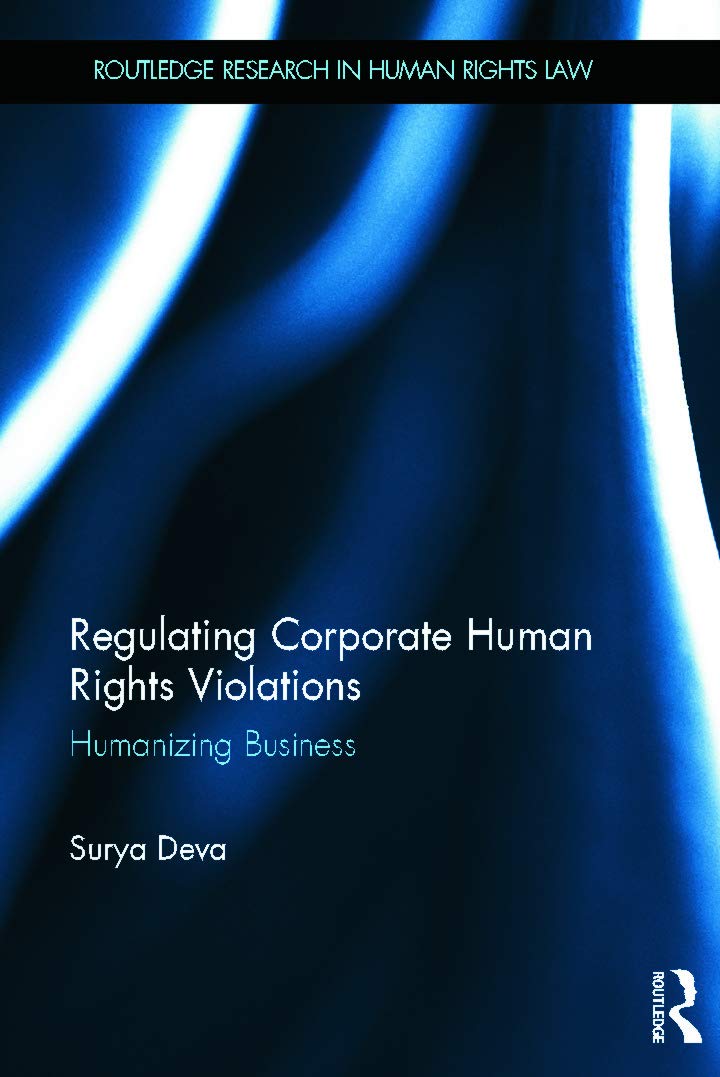
Regulating Corporate Human Rights Violations - Scholarly
Regulating Corporate Human Rights Violations - Scholarly
Price subject to change. Tap below for current.
Couldn't load pickup availability
In this review of Regulating Corporate Human Rights Violations the reviewer finds a focused, academically rigorous examination of why corporations repeatedly evade responsibility for human rights harms. Written for readers who want legal frameworks and practical regulatory proposals rather than journalistic narrative, this book's single biggest reason to buy is its sustained effort to turn corporate impunity into a solvable regulatory problem. The author frames the Bhopal gas leak as a human rights case study and uses it to show that historical regulatory failures persist, making this title essential for policy-minded readers seeking concrete reform ideas.
Key Features
- Comparative regulatory analysis: Explains how existing initiatives fall short and what legal gaps allow corporate impunity.
- Case study focus: Uses the Bhopal gas leak to illustrate persistent obstacles victims face in securing corporate accountability.
- Normative argument: Sets out why companies should adhere to human rights standards and what those responsibilities entail.
- Practical solutions: Offers concrete regulatory strategies to improve compliance and enforcement of corporate human rights duties.
- Interdisciplinary grounding: Builds on literature across law, policy and human rights scholarship to support its recommendations.
Who It's For
This book is aimed at legal scholars, policymakers and human rights advocates who need a rigorous analysis of corporate responsibilities and workable regulatory reforms. It benefits readers who want to understand both the theoretical basis for corporate human rights obligations and pragmatic mechanisms to compel compliance.
Those looking for a general-interest history of Bhopal or a narrative account of the disaster should look elsewhere; the text is geared toward academic and policy audiences and presumes familiarity with legal and human rights discourse.
Pros & Cons
Pros
- Thorough legal framing clarifies why corporate impunity persists and what regulatory levers matter.
- Detailed case study use ties abstract norms to the lived experience of victims, strengthening the book's proposals.
- Practical regulatory suggestions make the work useful for policymakers seeking implementable change.
Cons
- The academic tone and depth may be dense for casual readers or those without prior legal background.
Specifications
| Title | Regulating Corporate Human Rights Violations |
| Series | Routledge Research in Human Rights Law |
| Author | Surya Deva |
| Focus | Corporate human rights responsibilities and regulatory challenges |
| Case study | The Bhopal gas leak examined as a human rights violation |
| Approach | Theoretical analysis plus practical regulatory solutions |
Our Verdict
Regulating Corporate Human Rights Violations is a valuable resource for anyone working at the intersection of law, policy and human rights who needs a rigorous explanation of why corporate accountability remains elusive and how to change that. Its blend of case study evidence and regulatory proposals delivers strong practical value despite an academic register that may limit casual readership.
Frequently Asked Questions
Does the book focus on a single disaster?
It uses the Bhopal gas leak as a central case study but situates that example within broader regulatory analysis.
Is this suitable for nonlawyers?
The book is accessible to committed nonlawyers, but it is written in an academic legal style that assumes some prior knowledge.
Does it propose practical reforms?
Yes, one of the book's aims is to offer concrete regulatory solutions to improve corporate compliance with human rights norms.
Editor's Take
A rigorous, policy-oriented examination of corporate impunity that uses the Bhopal case to argue for concrete regulatory reforms; ideal for legal scholars and policymakers seeking actionable solutions.

Recently viewed
Recently viewed products will appear here as customers browse the store.