

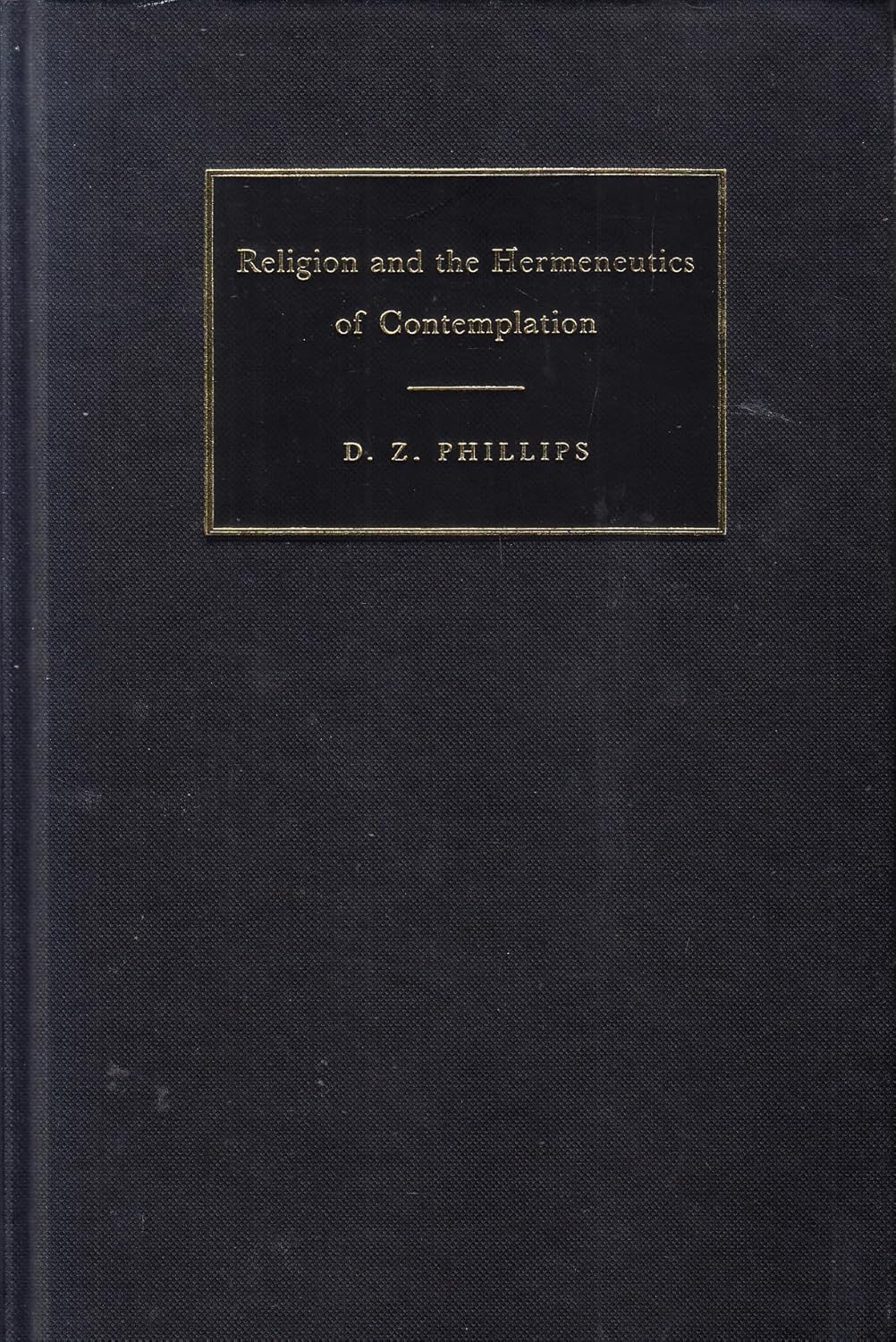
Religion and the Hermeneutics of Contemplation - Critical
Religion and the Hermeneutics of Contemplation - Critical
Price subject to change. Tap below for current.
Couldn't load pickup availability
In this review of Religion and the Hermeneutics of Contemplation the reviewer finds a thoughtful, philosophically rigorous book aimed at readers who want to see intellectual engagement with religion as an exercise in understanding rather than refutation. D. Z. Phillips works through classical and modern critiques of religion to clear methodological obstacles and restore space for genuine religious belief; the single biggest reason to buy is its sustained argument for doing conceptual justice to religious life, which will repay careful reading by students and scholars of theology and philosophy of religion.
Key Features
- Analytical focus: Phillips examines the assumptions that shape inquiry into religion so readers can see where common critiques bypass real understanding.
- Wide historical sweep: The book engages figures from Bernard Williams to Freud and Durkheim, helping readers place contemporary debates in a longer intellectual context.
- Conceptual clarity: By exposing confusions in influential accounts, the text creates logical space for religious belief without defending specific doctrines.
- Continuity with earlier work: This volume extends themes from Phillips' Religion Without Explanation, making it useful for readers familiar with his prior ideas.
- Scholarly but accessible tone: The prose balances philosophical rigor with a contemplative aim, making it suitable for advanced undergraduates and specialists alike.
Who It's For
This book is best for philosophy of religion students, theologians, and scholars who want a careful methodological critique of reductionist approaches to religion. Those researching the intellectual history of religious studies will value the sustained engagement with Hume, Marx, Frazer, and others and the way Phillips reframes the academic task as one of understanding rather than explaining away.
Readers looking for an introductory primer on world religions or a devotional manual should look elsewhere; the book assumes some prior familiarity with philosophical debates and primary authors and rewards readers prepared for conceptual analysis.
Pros & Cons
Pros
- Clear, sustained argument that reframes the scholarly task as contemplative understanding rather than critique.
- Broad engagement with major thinkers provides helpful context for contemporary debates in religious studies.
- Extends and deepens Phillips' earlier work, making it an important follow-up for familiar readers.
Cons
- The scholarly, conceptual style may feel dense for casual readers or those seeking narrative history.
Specifications
| Title | Religion and the Hermeneutics of Contemplation |
| Author | D. Z. Phillips |
| Subject | Philosophy of religion and hermeneutics |
| Approach | Methodological critique and conceptual analysis |
| Notable figures discussed | Williams, Hume, Feuerbach, Marx, Frazer, Freud, Durkheim, Winch |
| Relation to prior work | Extends Religion Without Explanation (1976) |
Our Verdict
Religion and the Hermeneutics of Contemplation is a valuable, intellectually rigorous book for scholars and serious students who want to reconceive the study of religion as contemplative understanding; it offers strong conceptual work and historical breadth, making it good value for those committed to philosophical reflection on religion.
Frequently Asked Questions
Does this book defend specific religious doctrines?
No, Phillips does not defend particular doctrines; his aim is methodological and conceptual, making room for belief rather than arguing for doctrines.
Is prior philosophical knowledge required?
Some familiarity with figures like Hume and Freud and basic philosophy of religion will help readers follow the arguments comfortably.
How does this relate to Phillips' earlier work?
It extends themes from Religion Without Explanation and revisits Phillips' concerns about explanation versus understanding in the academic study of religion.
Editor's Take
A rigorous, philosophically rich book that reframes the study of religion as contemplative understanding; recommended for scholars and serious students seeking conceptual clarity.

Recently viewed
Recently viewed products will appear here as customers browse the store.