

Religion as Social Capital: Producing the Common Good - Scholarly
Religion as Social Capital: Producing the Common Good - Scholarly
Price subject to change. Tap below for current.
Couldn't load pickup availability
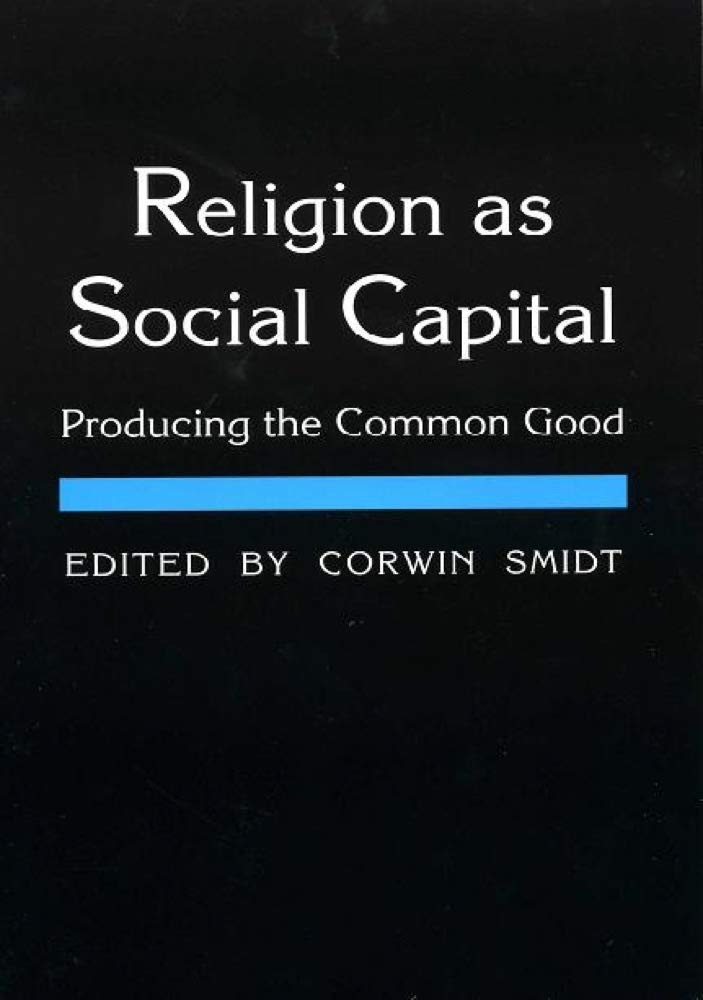
In this review of Religion as Social Capital: Producing the Common Good the reviewer finds a focused, scholarly collection best suited to readers interested in the civic effects of religion. Edited by Corwin E. Smidt and featuring essays by prominent social scientists, the book's single biggest reason to buy is its systematic examination of how religious association generates social capital and influences democratic life in the United States. The tone is academic but accessible enough for advanced undergraduates, clergy, policy analysts, and sociologists who want a deeper, evidence-based discussion beyond popular accounts of volunteerism.
Key Features
- Comprehensive essays: A range of contributions provides multiple empirical and theoretical perspectives on religion's role in producing social capital, offering readers a thorough scholarly overview.
- Focus on democratic life: The collection directly connects religious social capital to civic participation and community effects, which helps readers evaluate implications for public policy and local governance.
- First systematic treatment: As a book-length, coordinated examination it fills a gap left by earlier popular works that emphasized volunteerism without detailing religion's unique contributions.
- Interdisciplinary approach: Essays by social scientists bring sociology, political science, and religious studies into conversation, useful for cross-disciplinary research or classroom use.
- Accessible scholarship: While scholarly, the writing remains readable for non-specialists with background in civic studies, making it a practical choice for seminar reading lists.
Who It's For
This book is best for academics, graduate students, and professional readers who want a careful, evidence-driven account of how religious organizations contribute to community ties and civic engagement. It is particularly helpful for researchers comparing voluntary associations or examining religion as a form of civic infrastructure.
Readers seeking a lightweight popular narrative or a devotional treatment of religion should look elsewhere; the book remains analytic and research-oriented rather than inspirational or devotional in tone.
Pros & Cons
Pros
- Provides a coordinated, book-length study of religious social capital, addressing a notable gap in prior literature.
- Contributions from multiple social scientists offer varied empirical approaches and theoretical framing.
- Connects religious association to civic and democratic outcomes, useful for policy and academic discussions.
Cons
- The academic focus may feel dense for casual readers seeking narrative or inspirational content.
Specifications
| Title | Religion as Social Capital: Producing the Common Good |
| Editor | Corwin E. Smidt |
| Subject | Religion and social capital; democratic life in the United States |
| Approach | Essay collection by social scientists |
| Intended audience | Researchers, graduate students, policy analysts |
| Scope | Systematic, book-length examination of religion's role in civic life |
Our Verdict
Religion as Social Capital is a well-focused, research-driven volume that fills an important scholarly gap by treating religion as a primary form of voluntary association. Those studying civic engagement, sociology of religion, or public policy will find substantial value in its coordinated essays; casual readers should note the academic emphasis but may still appreciate the evidence-based insights into how religious groups shape community life.
Frequently Asked Questions
Is this book academic or popular in tone?
Answer. The book is academic and research-oriented, written by social scientists for scholarly and professional audiences.
Does it focus on a single denomination?
Answer. No; the book treats religion generally as a form of social capital rather than centering on one denomination.
Who benefits most from reading it?
Answer. Graduate students, researchers, clergy involved in community work, and policy analysts examining civic participation will gain the most.
Editor's Take
A focused, research-driven collection that fills a scholarly gap by examining how religious association produces social capital and influences civic life; ideal for researchers and policy analysts.

Recently viewed
Recently viewed products will appear here as customers browse the store.