

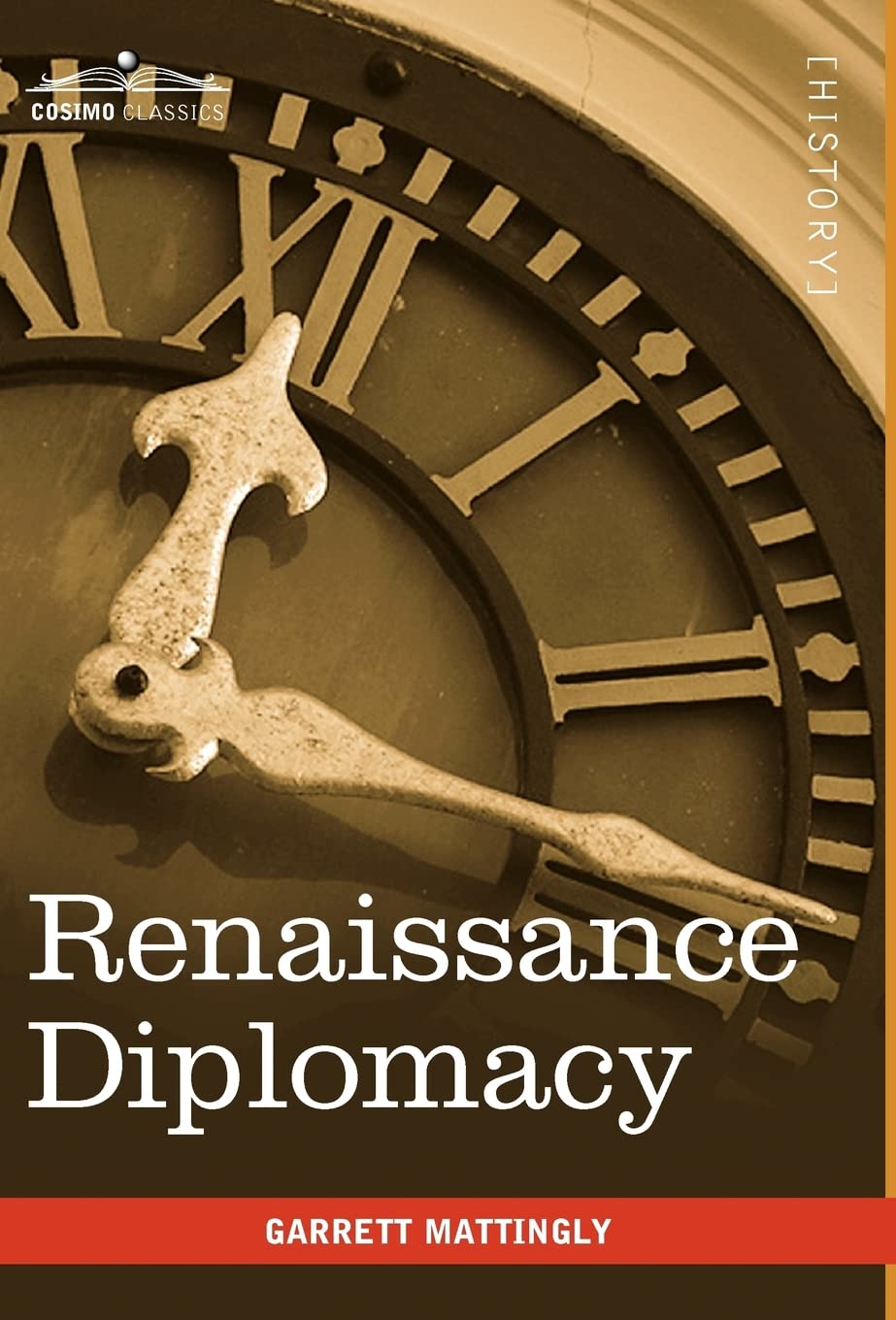
Renaissance Diplomacy - Classic History of Modern Diplomacy
Renaissance Diplomacy - Classic History of Modern Diplomacy
Price subject to change. Tap below for current.
Couldn't load pickup availability
In this review of Renaissance Diplomacy the reviewer finds a focused, scholarly account of how modern diplomatic practice emerged in Europe after 1400. Garrett Mattingly's 1955 work is best for readers who want a compact, historically grounded study rather than a textbook or reference manual. Its single biggest strength is the clear tracing of institutional and legal changes that led to resident embassies and new power relations, which makes it valuable for students of international history and anyone curious about the origins of modern statecraft.
Key Features
- Legal framework of Medieval diplomacy: Explains the rules and precedents that governed interstate relations before the Renaissance, giving readers context for later changes.
- Diplomatic practices in the 15th century: Describes procedures, envoys and mission norms that illustrate how negotiation was conducted in the period.
- Italian beginnings of modern diplomacy: Traces how city-states and courts in Italy pioneered practices that spread across Europe, showing a clear line to resident embassies.
- Precedents for resident embassies: Shows the institutional shift toward permanent representation and why it mattered for international relations.
- Dynastic power relations in the 16th century: Analyzes how family ties and dynastic politics shaped diplomatic priorities and alignments among European powers.
- French diplomacy and political change: Covers the role of France in altering the balance of power and how diplomacy adapted to new national strategies.
Who It's For
Renaissance Diplomacy suits upper-level undergraduates, graduate students and general readers with a solid interest in how modern diplomacy originated. The book rewards those who appreciate well-wrought narrative history and contextual analysis rather than technical manuals or contemporary policy prescriptions.
Readers seeking a modern textbook, step-by-step diplomatic procedure, or a broad global survey should look elsewhere; this work focuses tightly on European developments from the 15th to 16th centuries and presumes some prior interest in political history.
Pros & Cons
Pros
- Accessible narrative that connects medieval practice to modern institutions, useful for understanding the origins of resident embassies.
- Concise treatment of complex topics like dynastic relations and legal precedent without excessive jargon.
- Historical depth that illuminates how changing power relations reshaped diplomatic norms in Europe.
Cons
- Because it is focused on European history and was first published in 1955, it lacks coverage of non-European diplomatic traditions and later historiographical debates.
Specifications
| Title | Renaissance Diplomacy |
| Author | Garrett Mattingly |
| First published | 1955 |
| Subject focus | Development of modern diplomacy in Renaissance Europe |
| Periods covered | 15th and 16th centuries |
| Key topics | Medieval legal framework, resident embassies, dynastic relations, French diplomacy |
Our Verdict
Renaissance Diplomacy is a compact, authoritative historical study ideal for readers who want to understand how modern diplomatic institutions evolved from medieval practice. Its focused narrative and attention to legal and dynastic detail make it good value for students and history readers, though those needing global or contemporary coverage should supplement it with more recent or broader works.
Frequently Asked Questions
Is this book a primary source or a secondary study?
This is a secondary historical study that synthesizes earlier records and scholarship to explain the evolution of diplomatic institutions.
What time frame does the book cover?
The narrative centers on developments after 1400, with particular attention to the 15th and 16th centuries.
Will it help with research on modern diplomacy?
Yes, it provides useful historical foundations and precedents for modern diplomatic practice, but should be paired with recent works for up-to-date theory and global scope.
Editor's Take
Renaissance Diplomacy is a compact, authoritative study that explains how modern diplomatic institutions grew from medieval practice; ideal for students and readers seeking historical foundations, though it lacks global or recent historiographical updates.

Recently viewed
Recently viewed products will appear here as customers browse the store.