

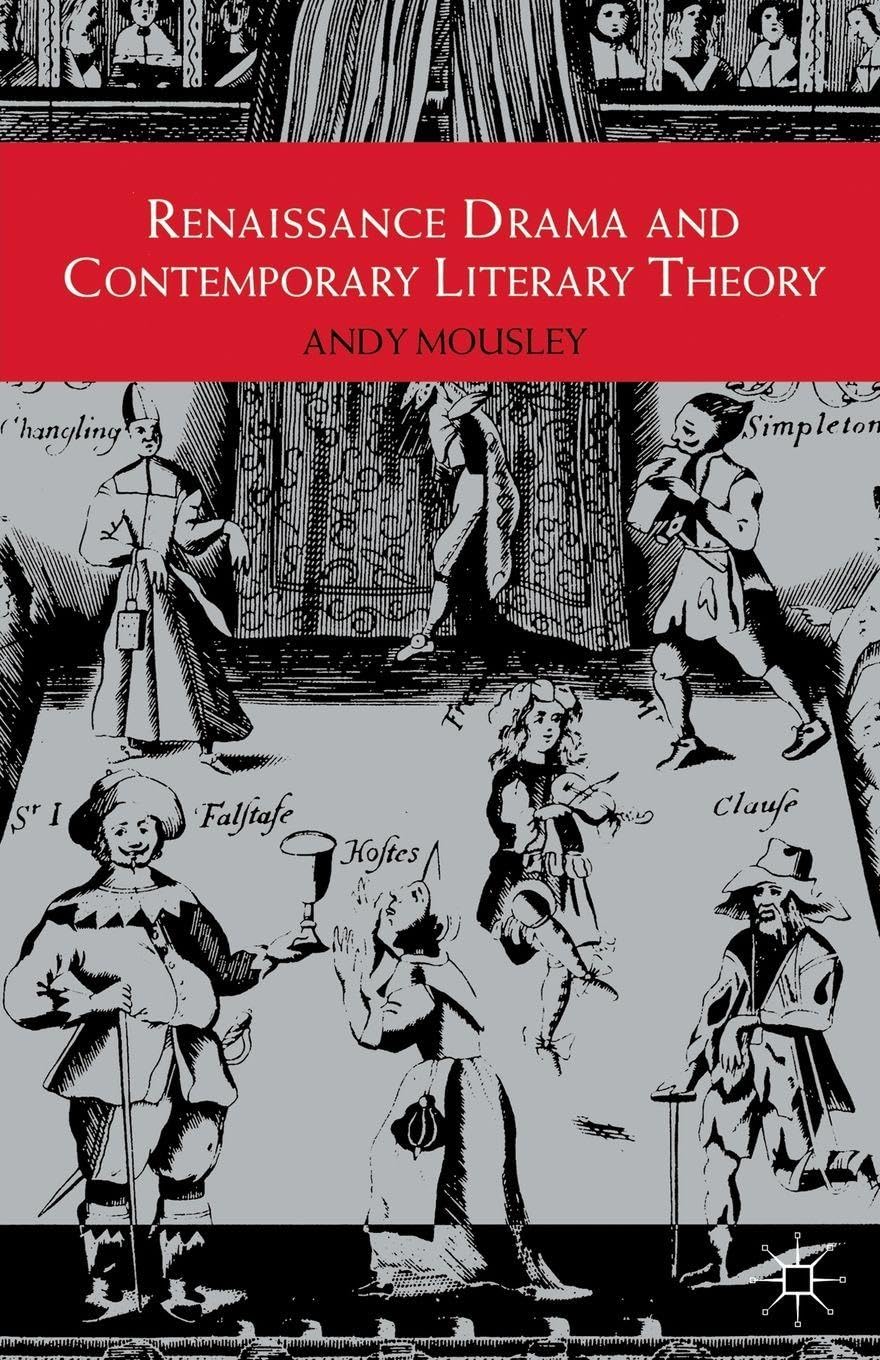
Renaissance Drama and Contemporary Literary Theory - Focused Critical
Renaissance Drama and Contemporary Literary Theory - Focused Critical
Price subject to change. Tap below for current.
Couldn't load pickup availability
In this review of Renaissance Drama and Contemporary Literary Theory the bottom line is clear: this is a focused, intellectually rigorous book for readers who want a sustained dialogue between a historical period and modern critical approaches. Andy Mousley avoids treating theory as a plug-in toolbox and instead stages a thoughtful conversation between Renaissance drama and contemporary literary thought, making it essential reading for graduate students, instructors, and serious readers of early modern plays who need a close, historically grounded theoretical account.
Key Features
- Sustained period focus: The book concentrates on the English Renaissance rather than surveying theory across periods, which clarifies how theory and text shape each other in a shared historical context.
- Play-centered discussions: Seventeen plays are examined closely, allowing readers to see theory applied to full dramatic texts rather than brief excerpts.
- Humanism and theory: A distinctive account maps the complex relationship between humanism and modern literary theory, helping readers situate theoretical moves historically.
- Thematic range: Themes such as love, money, alienation and exotic death are employed as recurring lenses, giving the analysis concrete moral and cultural touchstones.
- Mix of well-known and obscure plays: The selection includes familiar texts like A Midsummer Night's Dream and The Duchess of Malfi alongside lesser-studied comedies, broadening canonical conversations.
Who It's For
This book is aimed at readers with some prior exposure to literary theory who want to see critical concepts tested against Renaissance drama rather than offered as abstract templates. It will serve graduate students preparing seminar papers, lecturers designing a focused course on early modern drama, and scholars interested in the intersection of humanism and contemporary critical methods.
Less suitable for complete novices to literary theory or casual readers seeking a broad survey of critical schools; those audiences will find more accessible, general introductions preferable before tackling this sustained, period-specific study.
Pros & Cons
Pros
- Careful, text-driven analysis shows how theory and Renaissance drama can illuminate one another without forcing one onto the other.
- Wide but selective play coverage (seventeen plays) provides varied examples across genres and levels of fame.
- The book's distinctive account of the relationship with humanism adds historical depth to theoretical discussion.
Cons
- The sustained, scholarly focus means the book can feel dense for readers lacking prior familiarity with core theoretical terms.
Specifications
| Title | Renaissance Drama and Contemporary Literary Theory |
| Author | Andy Mousley |
| Scope | Focused study of English Renaissance drama |
| Number of plays discussed | Seventeen plays including A Midsummer Night's Dream and The Duchess of Malfi |
| Theoretical emphasis | Contemporary literary theory in dialogue with humanism |
| Main themes | Love, money, alienation, exotic death |
Our Verdict
Renaissance Drama and Contemporary Literary Theory is a thoughtful, well-argued study for scholars and advanced students who want theory applied to a cohesive corpus rather than scattered examples. Its careful readings and the book's attention to humanism make it a worthwhile value for those investing in a deeper, period-specific understanding of both plays and critical practice.
Frequently Asked Questions
Does the book cover well-known plays?
Yes. It discusses prominent texts such as A Midsummer Night's Dream and The Duchess of Malfi alongside lesser-studied works.
Is prior knowledge of literary theory required?
Some familiarity with key theoretical ideas is helpful because the book engages theory in a sustained and scholarly way.
Does it situate theory historically?
Yes. One of the book's strengths is its comprehensive account of how humanism relates to contemporary literary theory in the context of Renaissance drama.
Editor's Take
This is a thoughtful, period-focused study ideal for graduate students and scholars; it applies contemporary theory to seventeen Renaissance plays and offers a distinctive account of humanism's role in literary criticism.

Recently viewed
Recently viewed products will appear here as customers browse the store.