

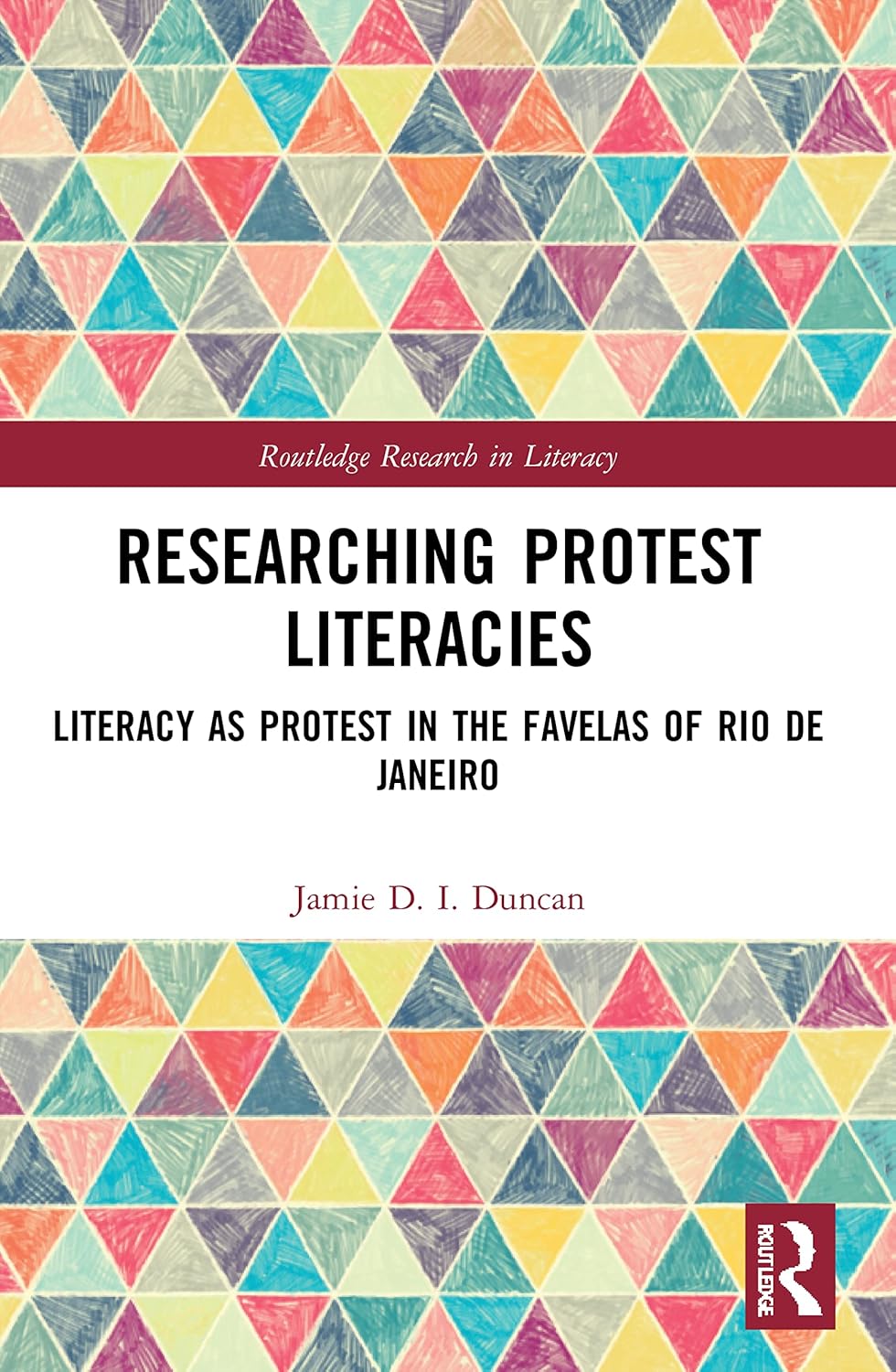
Researching Protest Literacies - Ethnography of Favela Protests
Researching Protest Literacies - Ethnography of Favela Protests
Price subject to change. Tap below for current.
Couldn't load pickup availability
In this review of Researching Protest Literacies, Jamie D. I. Duncan presents a focused ethnographic study of how literacy practices shaped protest in Rio de Janeiro favelas from 2006 to 2016; the bottom line is that this book is best for scholars and graduate students who need a textually grounded account of protest practice rather than a broad theoretical manifesto. Duncan's combination of fieldwork and archival research makes the argument concrete: readers looking for detailed case material on how campaigning, memorial, media-activist, arts-activist, and demonstration literacies operate in local contexts will find rich, document-based examples throughout.
Key Features
- Ethnographic fieldwork: Detailed local observation gives readers concrete examples of how residents and activists produced and circulated protest texts in favelas.
- Archival research: Extensive archival sourcing supplies historical depth and allows patterns across 2006-2016 to be traced with documentary evidence.
- Five literacy types: The book conceptualizes campaigning, memorial, media-activist, arts-activist, and demonstration literacies, offering specific frames for analyzing protest texts.
- Text-centered argument: By focusing on textually mediated reactions, the work links everyday literacy practices to political mobilization in a way useful for qualitative analysis.
- Local focus: The Rio de Janeiro favela setting provides a regionally specific case that illuminates how policy changes shape communicative responses on the ground.
Who It's For
This book is aimed at scholars of literacy, social movements, media studies, and Latin American urban studies who need empirically rich case studies about protest communication. Graduate students preparing literature reviews or ethnographers seeking an example of combining archival and field methods will find the methodological detail particularly useful.
It is less appropriate for readers looking for a global comparative handbook, a general political history, or a quick popular read; the prose and emphasis on conceptualizing literacies demand patient, academically minded readers rather than casual readers seeking broad summaries.
Pros & Cons
Pros
- Grounded ethnography provides tangible examples of how residents and activists used texts during protests.
- Clear analytical framework with five distinct literacy categories useful for teaching and research.
- Archival depth strengthens claims about changes across a decade of protest activity.
- Regionally specific focus makes it a strong resource for studies of Rio de Janeiro and similar urban contexts.
Cons
- The narrow favela focus and academic tone may limit appeal to general readers or those seeking broader comparative coverage.
Specifications
| Title | Researching Protest Literacies |
| Series | Routledge Research in Literacy |
| Author | Jamie D. I. Duncan |
| Geographic focus | Favelas of Rio de Janeiro, Brazil |
| Time period studied | 2006-2016 |
| Primary methods | Ethnographic fieldwork and archival research |
Our Verdict
Researching Protest Literacies is a well-documented, methodologically careful study that will reward scholars and advanced students who need a text-centered account of protest in urban Brazil. Its combination of fieldwork and archives, plus a practical five-part framework, makes it good value for research and teaching despite a narrowly focused scope that may not suit casual readers.
Frequently Asked Questions
Does this book include first-hand fieldwork?
Yes, the review highlights that Duncan pairs ethnographic fieldwork with archival sources to trace literacy practices.
Is the book broadly comparative across countries?
No, the study is regionally focused on Rio de Janeiro favelas and traces developments within that specific context from 2006 to 2016.
Who will benefit most from reading it?
Researchers, graduate students, and instructors in literacy studies, media activism, and Latin American urban studies will benefit most.
Editor's Take
A methodical ethnographic and archival study that conceptualizes five forms of protest literacy in Rio de Janeiro favelas, well suited to scholars and graduate students seeking detailed, text-centered case material.

Recently viewed
Recently viewed products will appear here as customers browse the store.