

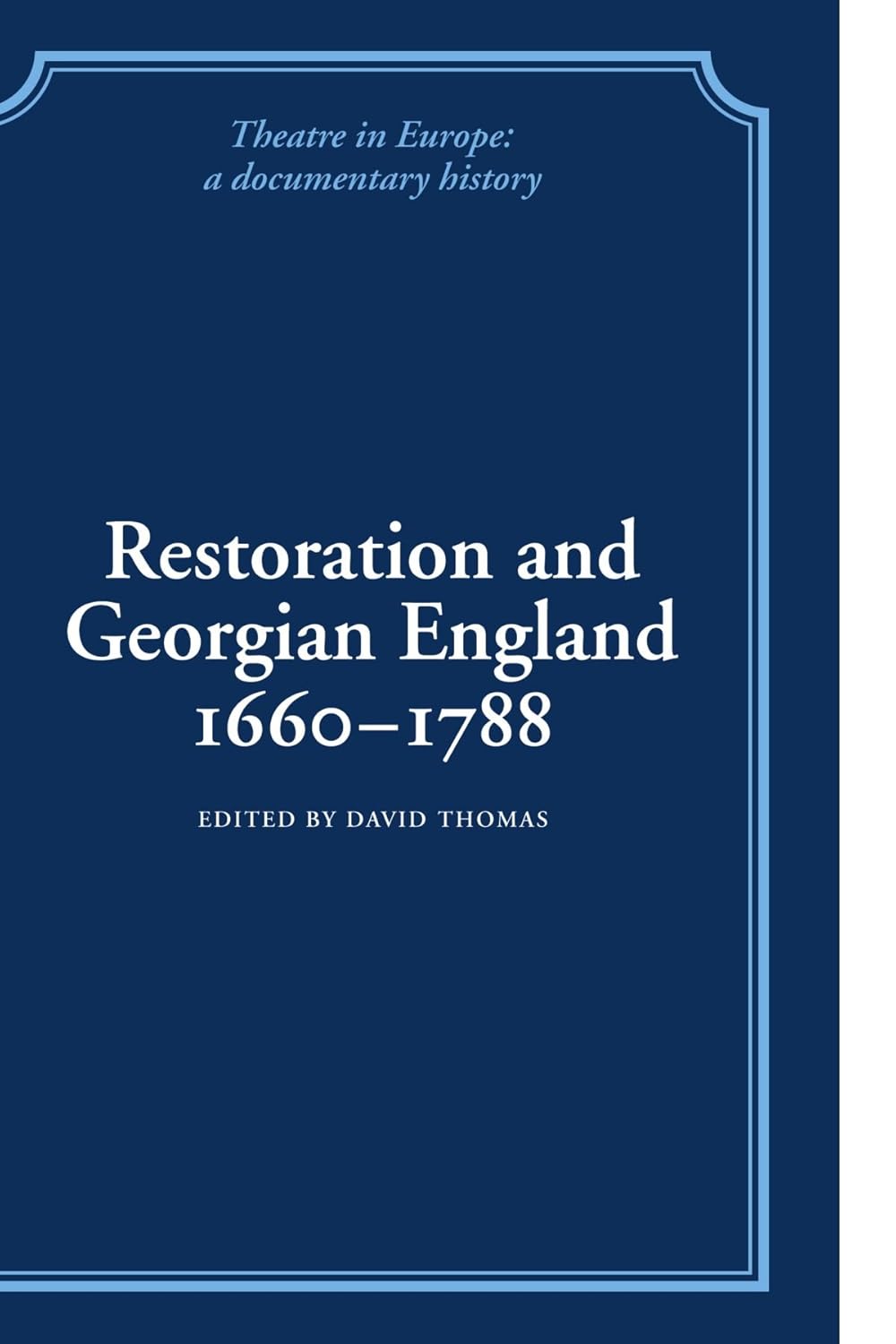
Restoration and Georgian England 1660-1788 - Documentary Theatre
Restoration and Georgian England 1660-1788 - Documentary Theatre
Price subject to change. Tap below for current.
Couldn't load pickup availability
In this review the first volume of Theatre in Europe is assessed as a focused, archival collection for readers interested in British theatrical history. The book traces some 120 years of change from court-centered Restoration drama to a vibrant Georgian commercial stage, and its biggest selling point is the assembly of primary sources that let scholars and curious theatre fans read the period in the participants' own words and images. This edition is best for those seeking documentary evidence rather than a modern narrative history, and the review highlights the volume's documentary strengths.
Key Features
- Documentary compilation: A carefully compiled collection of primary verbal and visual material that lets readers examine original accounts of Restoration and Georgian theatre.
- Chronological scope: Coverage spans roughly 1660 to 1788, showing theatrical development across about 120 years for historical perspective.
- Staging evolution: Documents the arrival of the scenic stage in London and the practical shifts in staging and performance that followed.
- Social and political context: Source material illustrates changes in government control and censorship affecting theatrical life in Britain.
- Scholarly utility: Useful as a reference volume for research, teaching, or informed reading about early modern and Georgian theatre.
Who It's For
The book suits theatre historians, academic researchers, and students of performing arts who value primary sources and want to trace concrete shifts in practice and policy from Restoration courts to Georgian commercial theatres. It is particularly helpful for courses that focus on primary-document analysis or for writers reconstructing staging and audience experience.
Readers looking for a narrative-driven popular history, a biography-heavy approach, or a richly annotated modern interpretation should look elsewhere; this volume prioritizes documentary evidence and expects the reader to synthesize context from the sources themselves.
Pros & Cons
Pros
- Provides a wide range of original verbal and visual documents that support primary research into theatrical change.
- Clearly demonstrates the transition from court-based control to a commercial theatre culture in late Georgian Britain.
- Helps readers understand the practical impact of scenic staging innovations in London theatres.
Cons
- Not written as a modern narrative history, so it requires readers to interpret and contextualize the documents themselves.
Specifications
| Title | Restoration and Georgian England 1660-1788 |
| Series | Theatre in Europe: A Documentary History |
| Author / Editor | David Thomas |
| Coverage period | 1660-1788 (approx. 120 years) |
| Content type | Primary source material (verbal and visual) |
| Subject focus | British theatre history, staging, censorship, commercial theatre |
Our Verdict
This volume is a strong value for scholars and serious students of theatre history because it gathers the documentary evidence needed to study Restoration and Georgian theatrical change. Its emphasis on primary sources makes it an indispensable reference for research and teaching, though casual readers seeking a narrative history may prefer a different title.
Frequently Asked Questions
Does this book include visual material?
Yes, the collection includes both verbal and visual primary-source material documenting theatrical practice.
Is this a narrative history?
No, the book is a documentary compilation that expects readers to interpret the primary sources rather than offering a continuous modern narrative.
Who edited this volume?
The book is compiled under the authorship/editorship of David Thomas as part of the Theatre in Europe series.
Editor's Take
A valuable documentary collection for scholars and students, this volume gathers primary verbal and visual sources showing theatrical change from the Restoration to the late Georgian era; excellent for research but not a narrative history.

Recently viewed
Recently viewed products will appear here as customers browse the store.