

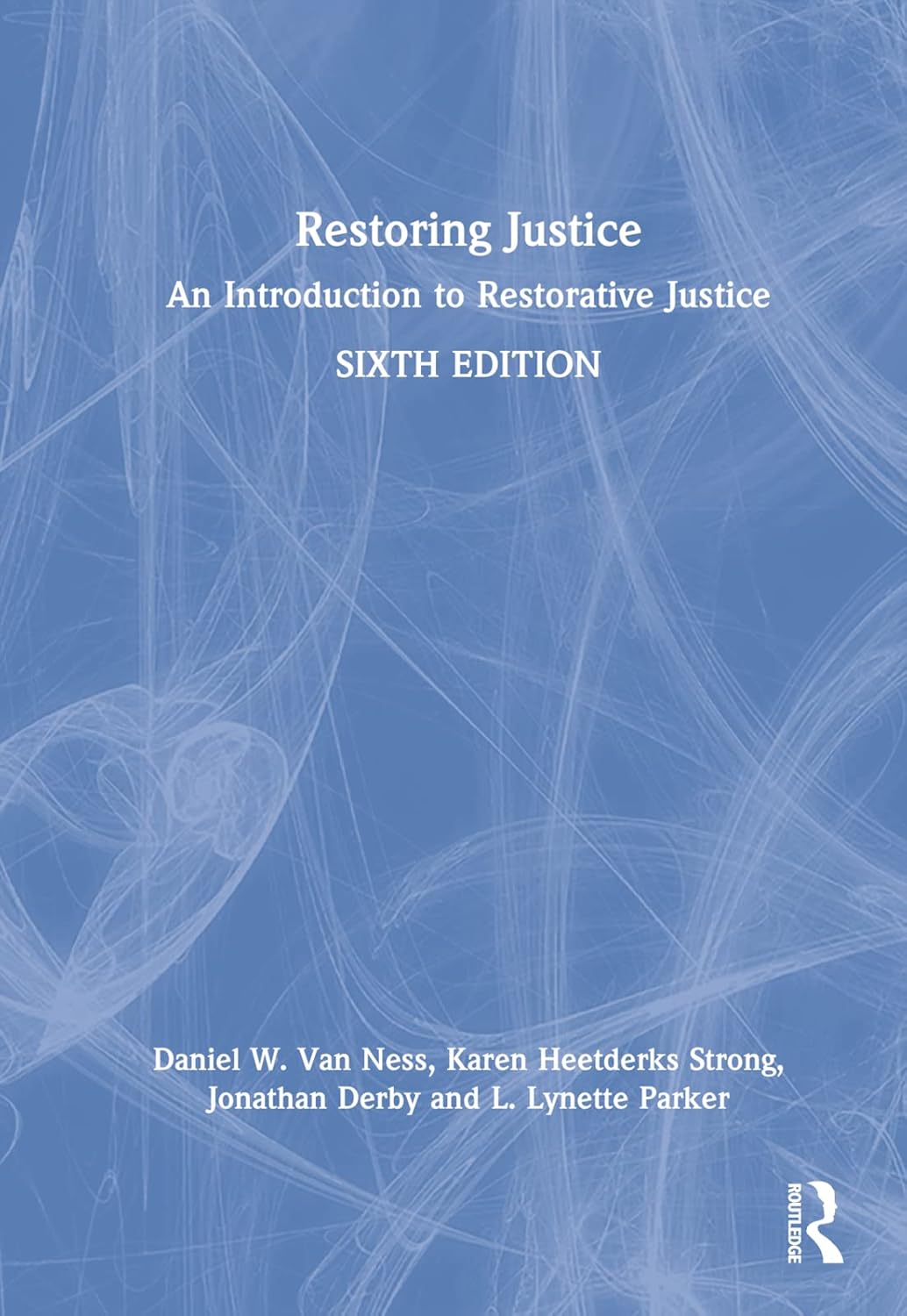
Restoring Justice: An Introduction to Restorative Justice - Clear
Restoring Justice: An Introduction to Restorative Justice - Clear
Price subject to change. Tap below for current.
Couldn't load pickup availability
In this review of Restoring Justice: An Introduction to Restorative Justice, the sixth edition emerges as a clear, accessible primer for readers seeking a principled alternative to traditional criminal justice approaches. The book is best for students, practitioners, and policy-minded readers who want a concise explanation of restorative theory and practice; its biggest strength is a focused presentation of the movement's core ideas-Inclusion, Encounter, Repair, and Cohesion-that explains why restorative approaches matter and how they differ from retributive systems.
Key Features
- Concise history: The book traces restorative justice roots and development so readers can see how the movement evolved as an alternative to an impersonal system.
- Theoretical clarity: It presents the theory and principles of restorative justice in straightforward language useful for classroom discussion or practitioner reflection.
- Four cornerpost framework: Inclusion, Encounter, Repair, and Cohesion are explained as practical organizing ideas for designing restorative processes.
- Stakeholder focus: Emphasis on cooperative processes that include victims, offenders, and community helps readers appreciate the inclusive nature of restorative practice.
- Worldwide perspective: The book highlights why restorative justice has ongoing influence across different jurisdictions, helping readers understand global relevance.
Who It's For
Restoring Justice is well suited to undergraduate and graduate students in criminology or social sciences, community mediators, restorative justice coordinators, and criminal justice professionals exploring alternatives to punishment-focused systems. Its clear explanations make it a useful course text or an introductory manual for practitioners beginning to design programs.
Readers seeking a practitioner's how-to manual packed with step-by-step scripts or exhaustive case studies should look elsewhere, as this edition emphasizes conceptual grounding and the movement's development more than procedural templates.
Pros & Cons
Pros
- Provides a clear, principled account of restorative justice useful for teaching and orientation.
- Organizes ideas around four memorable cornerposts, aiding comprehension and application.
- Balances historical context with contemporary relevance to show why the movement endures worldwide.
Cons
- Not a detailed practitioner guide; readers wanting step-by-step implementation tools will need supplementary resources.
Specifications
| Title | Restoring Justice: An Introduction to Restorative Justice |
| Edition | Sixth Edition |
| Authors | Daniel W. Van Ness, Karen Heetderks Strong, Jonathan Derby, L. Lynette Parker |
| Scope | Theory, history, and principles of restorative justice |
| Core ideas | Inclusion; Encounter; Repair; Cohesion |
| Audience | Students, practitioners, policy readers |
Our Verdict
Restoring Justice, Sixth Edition, is a compact, well-structured introduction that belongs on the shelf of anyone studying or developing restorative programs. It delivers clear conceptual framing and a useful historical overview, making it good value for readers who need principled understanding rather than a technical implementation manual.
Frequently Asked Questions
Does this edition explain how restorative justice differs from traditional punishment?
Yes. The book contrasts restorative approaches with an impersonal system focused on conviction and punishment, emphasizing repair and stakeholder inclusion.
Will this book teach facilitation techniques for circles or conferences?
It outlines principles and models but does not function as a step-by-step facilitator handbook; practitioners should use it alongside practical training resources.
Is this suitable for classroom use?
Yes. Its clear presentation of theory, history, and core cornerposts makes it appropriate as an introductory course text in criminology and social sciences.
Editor's Take
Restoring Justice, Sixth Edition, is a compact, well-structured introduction offering clear conceptual framing and a useful historical overview, ideal for students and practitioners who need principled understanding rather than a step-by-step manual.

Recently viewed
Recently viewed products will appear here as customers browse the store.