

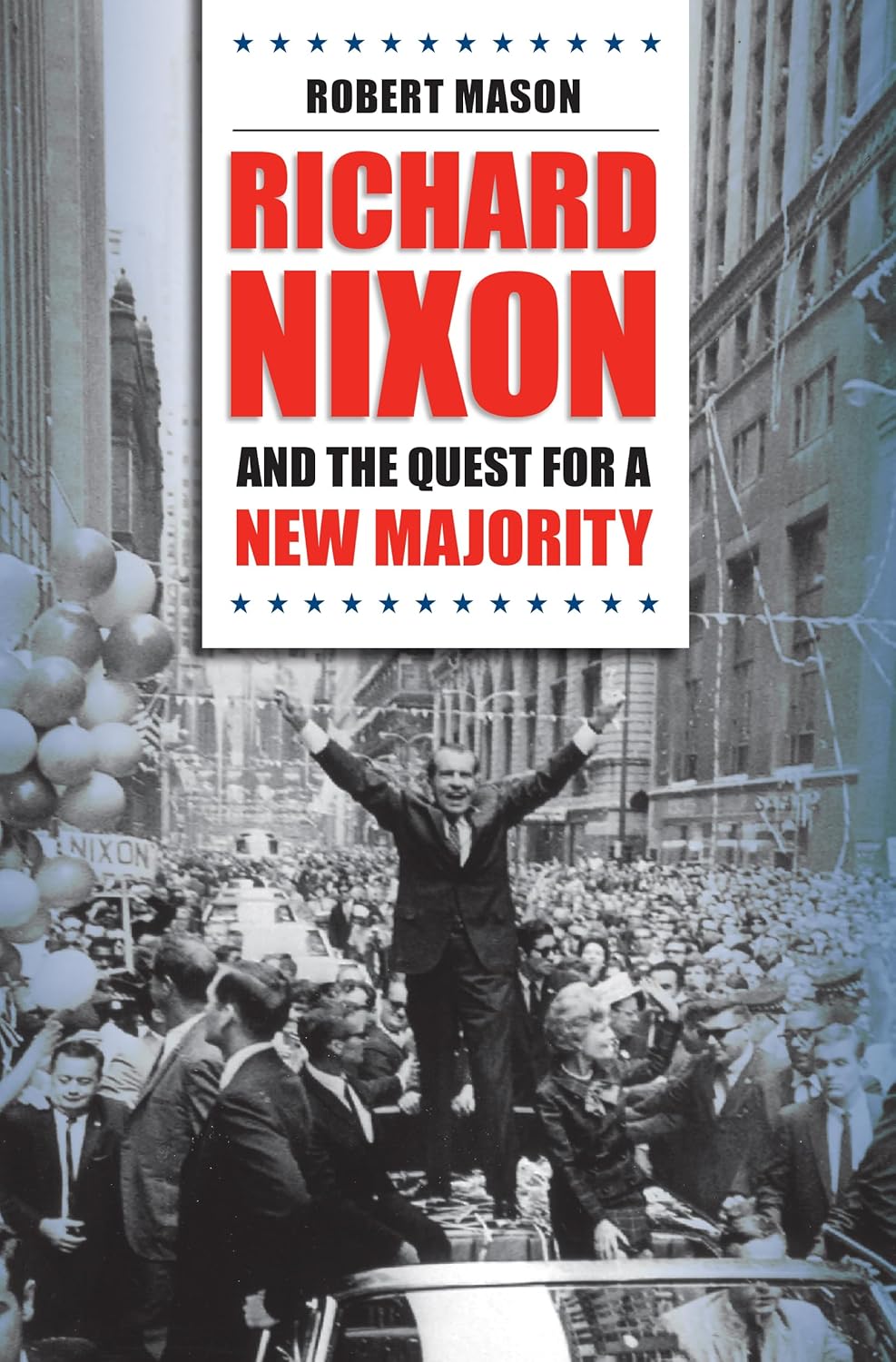
Richard Nixon and the Quest for a New Majority - Historical
Richard Nixon and the Quest for a New Majority - Historical
Price subject to change. Tap below for current.
Couldn't load pickup availability
In this review of Richard Nixon and the Quest for a New Majority, the reviewer argues this book is best suited for readers interested in mid-20th century American politics and the development of modern conservatism. Robert Mason offers a focused analysis of Nixon's political strategy, showing how the 1969 silent majority speech both curtailed antiwar activism and laid the groundwork for a Republican coalition. The bottom line: this is a thoughtful scholarly review of Nixon's intentions versus outcomes, most useful for students, historians, and politically curious readers who want a measured, source-driven account rather than partisan polemic.
Key Features
- Historical focus: Mason centers the book on the late twentieth century political landscape to clarify the origins of modern conservative strategy.
- Argument clarity: The author contends Nixon was activist in intent but limited in implementation, which helps readers separate rhetoric from policy.
- Silent Majority analysis: The book examines the 1969 speech as a pivotal moment that both suppressed antiwar momentum and identified a voter base.
- Revisionist critique: Mason challenges revisionist histories that portray the Nixon administration as uniformly activist, sharpening debates in political historiography.
- Case study approach: The narrative uses Nixon's re-election strategy and political tactics to illustrate broader shifts in party coalition-building.
Who It's For
This book is aimed at undergraduate and graduate students of political history, historians researching conservatism and party development, and readers who want a careful, argumentative study of Nixon's political moves. The writing assumes some prior knowledge of 1960s politics and the antiwar movement.
Readers seeking a sweeping biography of Nixon, a policy-by-policy account of the administration, or a polemical work from either extreme of the political spectrum should look elsewhere; Mason's book is analytic and focused on coalition strategy rather than exhaustive biography or partisan advocacy.
Pros & Cons
Pros
- Provides a nuanced reinterpretation that helps readers understand how Nixon sought to cultivate a new electoral base.
- Shows clear evidence connecting the silent majority speech to both electoral strategy and the weakening of antiwar activism.
- Engages revisionist claims directly, offering a corrective that advances scholarly discussion.
Cons
- The book is narrowly focused on strategy and coalition-building, so readers expecting a comprehensive account of all Nixon-era policies may find coverage limited.
Specifications
| Title | Richard Nixon and the Quest for a New Majority |
| Author | Robert Mason |
| Subject | Origins of modern political conservatism |
| Focus period | Late twentieth century, including 1969 |
| Key event analyzed | 1969 silent majority speech |
| Approach | Revisionist critique and coalition analysis |
Our Verdict
Richard Nixon and the Quest for a New Majority is a concise, well-argued study for readers who want to understand how Nixon's rhetoric and strategy shaped a new Republican coalition. Its focused critique of revisionist claims and close reading of the silent majority moment make it good value for students and historians seeking analytical depth rather than broad biography.
Frequently Asked Questions
Does this book cover Nixon's entire presidency?
Answer. No, the book concentrates on Nixon's efforts to build a Republican majority and the 1969 silent majority speech rather than a full presidential biography.
Is the book scholarly or popular history?
Answer. The work reads as scholarly analysis aimed at historians and students, with an argumentative stance on revisionist interpretations.
Will it help me understand modern conservatism?
Answer. Yes, the book links Nixon's strategies to broader shifts in political conservatism and party coalition-building in the late twentieth century.
Editor's Take
A focused, well-argued study that links Nixon's 1969 silent majority speech to his effort to build a Republican coalition; ideal for students and historians seeking analytical depth.

Recently viewed
Recently viewed products will appear here as customers browse the store.