

Risky Curves: On the Empirical Failure of Expected Utility - Critical
Risky Curves: On the Empirical Failure of Expected Utility - Critical
Price subject to change. Tap below for current.
Couldn't load pickup availability
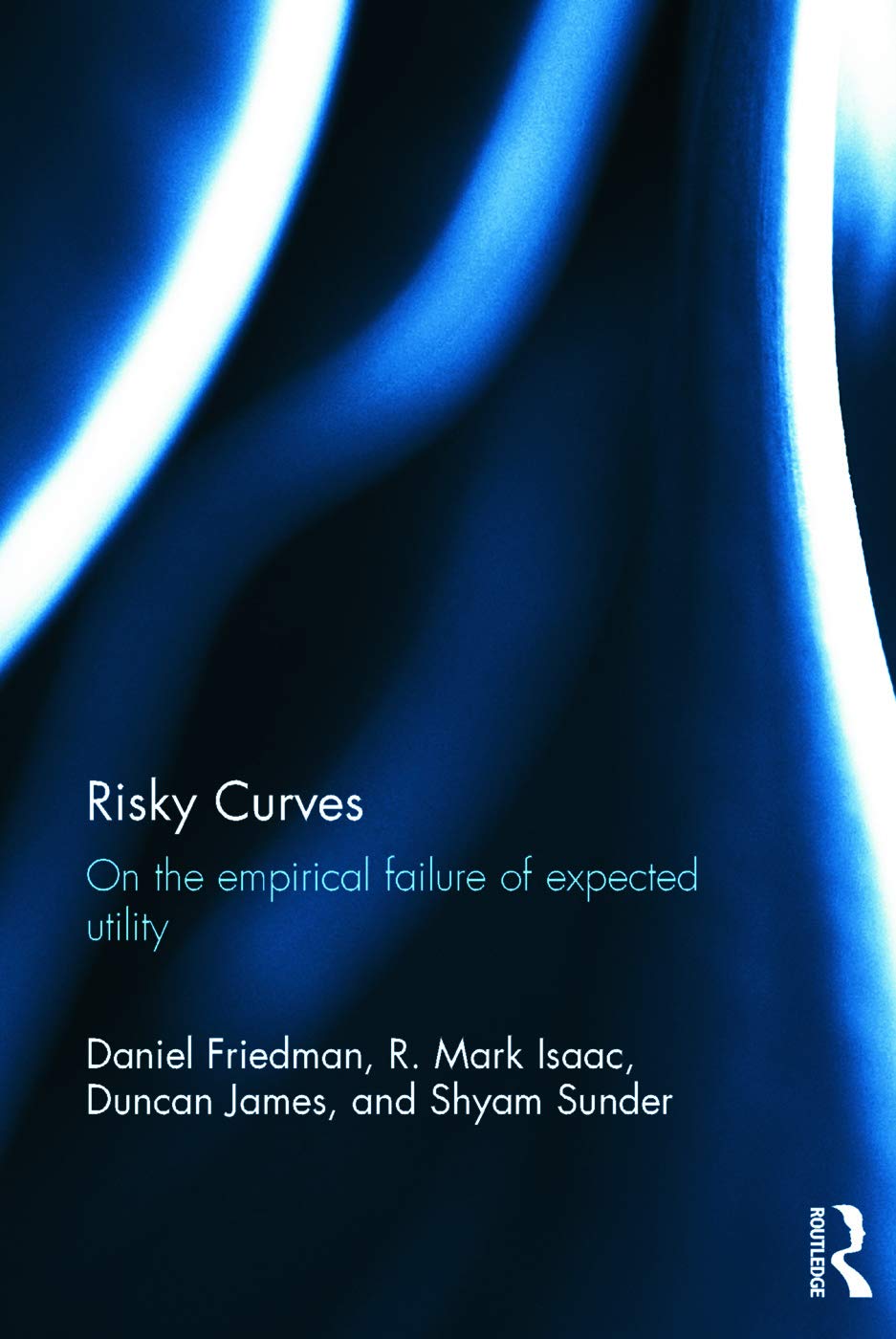
In this review of Risky Curves: On the Empirical Failure of Expected Utility the authors challenge long-standing assumptions about decision making under risk and deliver a focused critique aimed at economists and methodologists. The book is best for readers who want a rigorous reassessment of why orthodox expected utility theory has struggled to match empirical evidence; the single biggest reason to read it is its sustained documentation that estimated utility curves and parameters have varied erratically across domains, undermining claims of a stable, generalizable model of choice under risk.
Key Features
- Historical reappraisal: The authors revisit the origins of orthodox utility theory to show how foundational assumptions shaped later empirical expectations.
- Empirical critique: The book compiles decades of failed attempts at calibration to demonstrate the practical limits of expected utility for real choice data.
- Cross-domain comparisons: By contrasting individual choice and aggregated measures the text highlights inconsistency in estimated curve shapes and parameters.
- Methodological focus: Readers get a sustained look at why rules of thumb and constraint-focused models sometimes outperform formal utility specifications.
- Collaborative scholarship: Contributions from multiple authors bring varied perspectives that strengthen the central empirical argument.
Who It's For
The book is aimed at academic economists, graduate students in microeconomics, and empirical researchers who need a sober assessment of the limits of expected utility in applied work. It is particularly useful for anyone designing experiments or estimating preference parameters who wants to avoid overconfidence in a single functional form.
Readers looking for an introductory textbook or step-by-step empirical techniques for applied policy design may find the material dense and argumentative; those seeking prescriptive models for immediate application should look elsewhere.
Pros & Cons
Pros
- Clear documentation of empirical failures gives researchers reason to reconsider model assumptions.
- The historical overview helps contextualize why orthodox theory persisted despite mixed validation.
- Cross-domain examples make the critique persuasive for both laboratory and field settings.
Cons
- The book is primarily critical rather than prescriptive, offering limited alternative models for immediate use.
Specifications
| Title | Risky Curves: On the Empirical Failure of Expected Utility |
| Authors | Daniel Friedman, R. Mark Isaac, Duncan James, Shyam Sunder |
| Focus | Empirical critique of expected utility theory |
| Scope | Historical review and decades of empirical attempts |
| Key claim | Estimated curves and parameters vary erratically across domains |
| Intended audience | Economists, researchers, graduate students |
Our Verdict
Risky Curves is a valuable, evidence-driven critique for specialists who need to question the empirical reliability of expected utility models; it offers strong reason to adopt more robust empirical strategies, though it stops short of delivering a unified replacement, making it good value for methodologically-minded readers.
Frequently Asked Questions
Does the book overturn expected utility theory?
It does not offer a single replacement but marshals empirical evidence that expected utility performs inconsistently and should not be assumed universally valid.
Who wrote the critique?
The volume is authored by Daniel Friedman, R. Mark Isaac, Duncan James, and Shyam Sunder, who bring complementary perspectives to the empirical argument.
Is this book suitable for policymakers?
Policymakers will find the critique useful for cautioning against overly simplistic preference models, but may need more prescriptive guidance for implementation.
Editor's Take
Risky Curves is a rigorous, evidence-driven critique that shows expected utility estimates vary widely across domains; it is essential for researchers who need to question the empirical reliability of orthodox preference models.

Recently viewed
Recently viewed products will appear here as customers browse the store.