

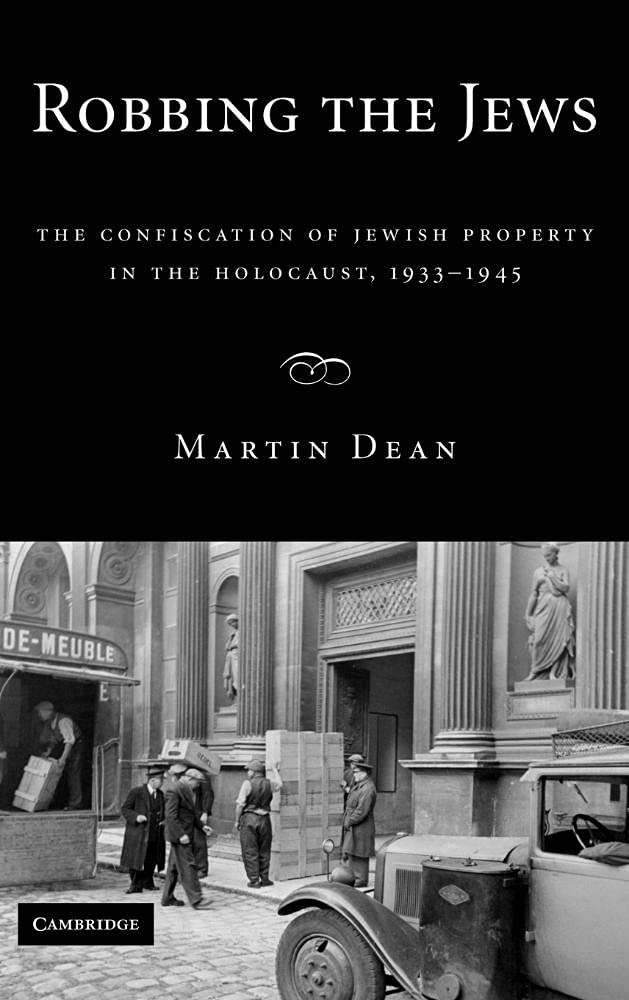
Robbing the Jews: The Confiscation of Jewish Property in the Holocaust
Robbing the Jews: The Confiscation of Jewish Property in the Holocaust
Price subject to change. Tap below for current.
Couldn't load pickup availability
In this review of Robbing the Jews the reviewer finds a rigorous, evidence-driven account ideal for readers who want to understand how economic expropriation was integral to the Holocaust. Martin Dean's book focuses squarely on the mechanisms and administrative processes that enabled mass theft, making it valuable for historians, students, and informed general readers who need a clear link between policy and persecution. The book's greatest strength is its detailed tracing of how robbery evolved from local pressure to state-run programs, which gives a convincing picture of the relationship between ideology and bureaucratic action.
Key Features
- Comprehensive historical scope: The book traces confiscation across regions and years, helping readers see the escalation from the Anschluss and Kristallnacht to full wartime spoliation.
- Comparative approach: Dean demonstrates how practices differed in Western and Eastern Europe, clarifying the roles of legal decrees and local antisemitism.
- Focus on mechanisms: Emphasis on administrative measures and the flow of valuables to Berlin shows the structural side of persecution rather than isolated incidents.
- Evidence-based narrative: The account uses documented policies and events to show how theft was organized, useful for researchers and instructors.
- Clear linkage to the Holocaust: The book makes a persuasive case that robbery was not incidental but closely tied to the genocidal program.
Who It's For
Robbing the Jews is aimed at historians, graduate students, and readers with a strong interest in Holocaust studies or modern European history who want a focused analysis of economic dispossession. It is especially helpful for courses or reading groups examining the bureaucratic and legal dimensions of persecution and those seeking primary explanations rather than anecdotal narratives.
Readers looking for a personal memoir, a broad general survey of World War II battle campaigns, or a light popular history should look elsewhere; this is a scholarly, document-driven study that privileges structural analysis over narrative memoir or panoramic war history.
Pros & Cons
Pros
- Detailed explanation of administrative processes clarifies how theft was systematized across regions.
- Comparative attention to Western and Eastern Europe highlights different legal and social drivers of spoliation.
- Strong documentary foundation supports arguments linking robbery to the wider genocidal program.
Cons
- The book's scholarly focus and dense detail may be less accessible to readers seeking a lighter narrative or personal stories.
Specifications
| Title | Robbing the Jews: The Confiscation of Jewish Property in the Holocaust, 1933-1945 |
| Author | Martin Dean |
| Subject | Confiscation of Jewish property; Holocaust studies |
| Geographic scope | Western and Eastern Europe; occupied territories |
| Period covered | 1933-1945 |
Our Verdict
For those studying the Holocaust or the mechanics of state-sponsored persecution, this book is a valuable, well-documented resource that explains how dispossession was integral to genocide. Its focused, comparative analysis makes it good value for scholars and serious readers who need a clear, evidence-led account rather than a general overview.
Frequently Asked Questions
Does this book cover the whole period of Nazi rule?
Yes, it examines confiscation practices from 1933 through 1945, including key turning points like the Anschluss and Kristallnacht.
Is the content suitable for academic courses?
Yes, the book's documentary approach and comparative analysis make it well suited for history and Holocaust studies seminars.
Will readers find personal survivor stories here?
No, the emphasis is on administrative measures and systemic theft rather than memoir or personal narratives.
Editor's Take
A well-documented, comparative study showing how confiscation of Jewish property was systematically organized during 1933-1945; ideal for scholars and serious readers seeking an evidence-led account.

Recently viewed
Recently viewed products will appear here as customers browse the store.