

Role-play as a Heritage Practice - Scholarly of Role-Play Genres
Role-play as a Heritage Practice - Scholarly of Role-Play Genres
Price subject to change. Tap below for current.
Couldn't load pickup availability
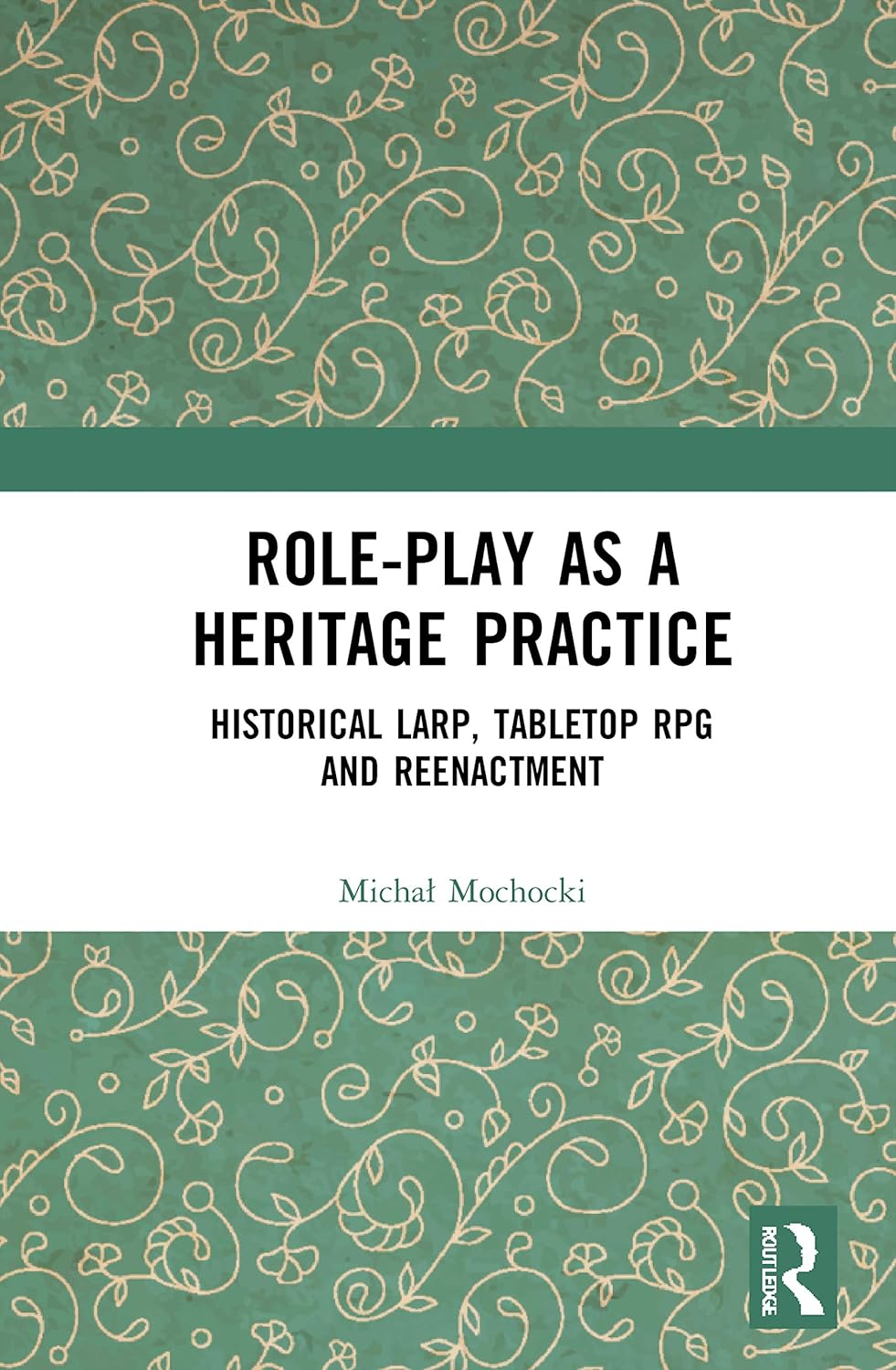
In this review of Role-play as a Heritage Practice, the reviewer finds a thoughtful, interdisciplinary study that will appeal to academics and serious hobbyists interested in how live, non-digital role-plays interact with cultural memory. The book's single biggest reason to buy is its clear argument that tabletop role-playing games, live-action role-play, and historical reenactment can all be read as heritage practices, offering readers a new conceptual frame for understanding participatory engagement with the past.
Key Features
- Interdisciplinary approach: The book combines methods from game studies and heritage studies to analyze role-play as a form of cultural practice, making it useful for scholars crossing disciplines.
- Genre comparison: By treating TRPG, LARP and RH as distinct but related genres, the author clarifies how different formats shape participants' engagement with history.
- Focus on performance: The text emphasizes physically performed enactments, which helps readers see how embodied play contributes to heritage meanings.
- Theoretical clarity: The book offers a concise conceptual argument that players' engagement with history is multi-layered, helping researchers design sharper studies.
- Scholarly tone: Written as an academic monograph, it provides citations and structured argumentation appropriate for teaching or research reading lists.
Who It's For
This book is best for university students, researchers, and graduate-level readers in heritage studies, game studies, and social sciences who want a rigorous, comparative treatment of non-digital role-play practices. It suits course reading lists where a theoretical bridge between play and heritage is required.
Hobbyists seeking practical how-to guidance for running games or reenactments should look elsewhere, since the book emphasizes conceptual analysis over step-by-step practice. Casual readers without an interest in academic framing may find the tone dense rather than introductory.
Pros & Cons
Pros
- Offers a novel comparative framework that treats TRPG, LARP and RH as related heritage practices.
- Useful for interdisciplinary research by bridging game studies and heritage scholarship.
- Focus on embodied performance gives fresh insight into how participants enact the past.
Cons
- The academic tone and emphasis on theory may limit accessibility for general hobbyist readers.
Specifications
| Title | Role-play as a Heritage Practice |
| Author | Michal Mochocki |
| Primary focus | Non-digital role-play genres (TRPG, LARP, RH) |
| Approach | Combined game studies and heritage studies perspective |
| Key argument | Role-plays can be considered heritage practices |
| Intended audience | Scholars and graduate students |
Our Verdict
Role-play as a Heritage Practice is a valuable, conceptually rigorous book for researchers and advanced students who want to rethink play as a form of cultural heritage. Its comparative framework and emphasis on embodied enactment make it a worthwhile addition to academic reading lists, though readers seeking practical guidance on running games or reenactments will need a different resource.
Frequently Asked Questions
Does the book cover digital role-play?
No. The focus is explicitly on non-digital role-plays such as TRPG, LARP and hobbyist reenactment.
Is this suitable for course reading?
Yes. Its interdisciplinary framing and theoretical clarity make it well suited for university seminars in game studies or heritage studies.
Who is the author?
Michal Mochocki is the author, writing from combined perspectives in game studies and heritage studies.
Editor's Take
A conceptually rigorous, comparative study that reframes TRPG, LARP and historical reenactment as heritage practices; recommended for researchers and graduate students seeking an interdisciplinary theoretical perspective.

Recently viewed
Recently viewed products will appear here as customers browse the store.