

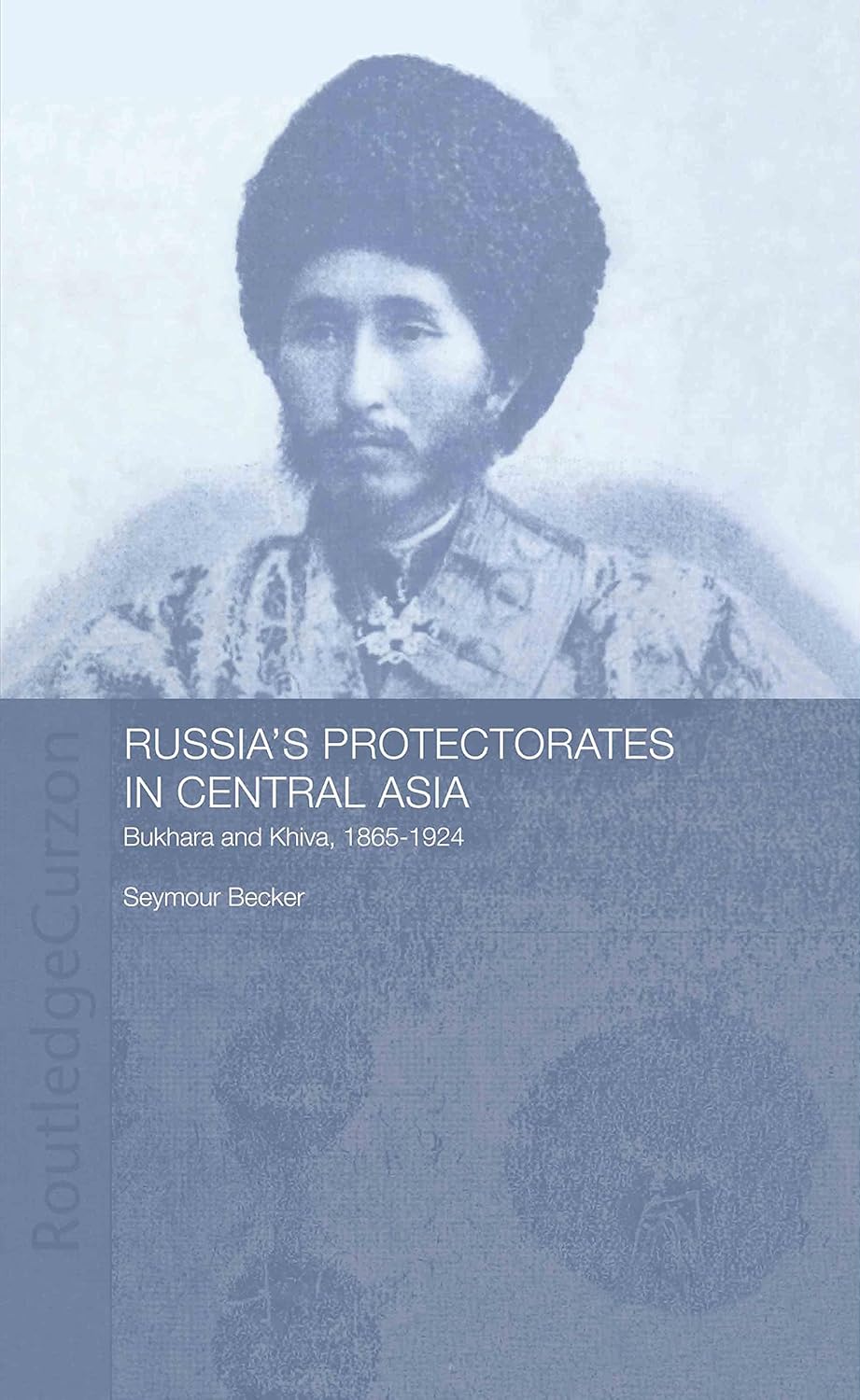
Russia's Protectorates in Central Asia: Bukhara and Khiva, 1865-1924
Russia's Protectorates in Central Asia: Bukhara and Khiva, 1865-1924
Price subject to change. Tap below for current.
Couldn't load pickup availability
In this review of Russia's Protectorates in Central Asia, the reviewer finds a carefully argued reissue that will appeal to students and history readers focused on imperial Central Asia; the single biggest reason to buy is its clear tracing of how Russian policy shifted from non-intervention to active control between the 1860s and 1924. The book's reissued form includes a new introduction that frames the original 1968 analysis for contemporary readers, and the narrative foregrounds political change across the late imperial, wartime and revolutionary periods with a steady scholarly voice.
Key Features
- Historical scope: Covers the Russian conquest and administration of Bukhara and Khiva from 1865 through their political extinction in 1924, giving readers a continuous narrative of change.
- Policy analysis: Traces the shift from non-intervention aimed at deterring British expansion to increasing Russian intervention driven by trade and settlement.
- Revolutionary context: Explains the role of the khanates in the First World War and the Russian Revolution, clarifying how Bolshevik conquest transformed the region.
- Reissue with new intro: The new edition restores a classic 1968 text and adds a contemporary introduction to situate the work for modern scholarship and general readers.
- Focused case studies: Uses Bukhara and Khiva as two sustained case studies to illuminate wider themes of imperial strategy and colonial governance.
Who It's For
This review recommends the book for undergraduate and graduate students studying Central Asian history, Russian imperialism, or colonial administration, and for general readers who want a focused, archival-based account rather than a sweeping general history. The concise temporal frame from the 1860s to 1924 makes it especially useful for courses centered on the late imperial and revolutionary eras.
Readers seeking a richly illustrated or heavily theoretical work should look elsewhere; the volume is a text-driven historical study rather than a pictorial survey or an extended historiographical manifesto. Those wanting a broad contemporary synthesis of Central Asia after 1924 will need complementary works covering Soviet-era developments in more depth.
Pros & Cons
Pros
- Clear, focused narrative that follows the political relationship between Russia and the khanates across six decades.
- Insightful explanation of why Russian policy evolved from non-intervention to intervention as trade and settlement grew.
- The reissue includes a new introduction that helps modern readers contextualize the original 1968 argument.
Cons
- The work is text-heavy and assumes some prior knowledge of Central Asian geography and institutions, which may challenge casual readers.
Specifications
| Title | Russia's Protectorates in Central Asia: Bukhara and Khiva, 1865-1924 |
| Author | Seymour Becker |
| Scope | Conquest and administration of Bukhara and Khiva, 1865-1924 |
| Original publication | 1968 (classic reissue) |
| New material | Includes a new introduction in the reissued edition |
| Historical focus | Russian imperial policy, trade, settlement, WWI and Bolshevik conquest |
Our Verdict
Russia's Protectorates in Central Asia is a valuable reissue for students and serious readers interested in imperial Russia's southern frontier; its focused narrative and policy analysis make it good value as a concise, archival-informed study. Buy it for class reading or to deepen understanding of how Bukhara and Khiva were transformed by late 19th- and early 20th-century Russian expansion.
Frequently Asked Questions
Does this edition include new material?
Yes. The reissue includes a new introduction that places the original 1968 work in a contemporary context.
What time period does the book cover?
The book follows events from the Russian conquest in the 1860s and 1870s through the Bolshevik conquests and the political end of the khanates in 1924.
Is this suitable for general readers?
It is suitable for informed general readers but is text-focused and may be best appreciated by those with some background in Central Asian or Russian history.
Editor's Take
A focused, archival-informed reissue that clearly traces Russian policy from non-intervention to conquest; recommended for students and readers of imperial Central Asian history.

Recently viewed
Recently viewed products will appear here as customers browse the store.