

Sampling and Choosing Cases in Qualitative Research - Realist Guide
Sampling and Choosing Cases in Qualitative Research - Realist Guide
Price subject to change. Tap below for current.
Couldn't load pickup availability
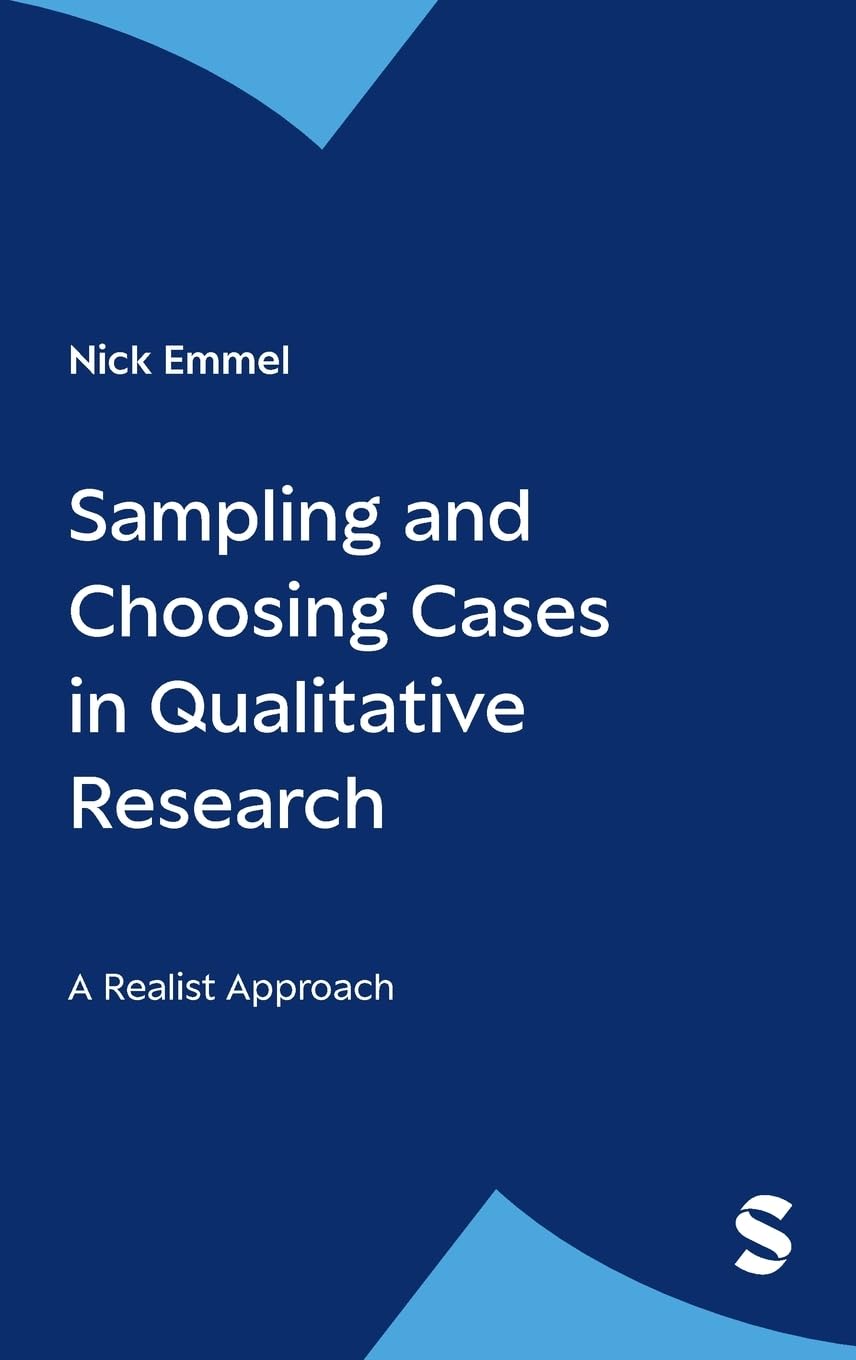
In this review of Sampling and Choosing Cases in Qualitative Research: A Realist Approach the reviewer finds a focused, theory-driven book aimed at researchers who want a deeper understanding of qualitative sampling. The bottom line: this is best for graduate students and social science researchers who want to move beyond procedural checklists and learn how ideas drive choices in case selection. The book's real value is its argument that interpretation and explanation, not sample size, determine the strength of qualitative inference.
Key Features
- Theoretical critique: Reframes common sampling strategies by exposing their underlying assumptions so readers can choose methods with clearer logic.
- Realist approach: Emphasises the relation between ideas and evidence to help researchers use cases to test and develop theory.
- International case studies: Uses examples from across the social sciences to show how different methods play out in practice and to illustrate transferable lessons.
- Practical reasoning: Offers concrete guidance on how to interpret cases, making it easier to justify sampling decisions in research reports and proposals.
- Focus on explanation: Stresses that how cases are used for interpretation and explanation matters more than numerical sample size, guiding better analytic practice.
Who It's For
The primary audience is qualitative researchers in the social sciences, particularly doctoral students and early career academics who need a conceptual framework for sampling decisions. It suits those preparing research proposals or writing methods chapters who want to ground sampling choices in explicit theoretical reasoning.
It is less suitable for readers seeking step-by-step technical recipes or large-scale survey sampling instructions; those needing checklist-style field tools or quantitative sampling formulas should look elsewhere.
Pros & Cons
Pros
- Sharp theoretical perspective helps researchers justify sampling choices with greater clarity.
- Concrete international case studies demonstrate how ideas and evidence interact in real research settings.
- Emphasis on interpretation over sample size encourages stronger analytic practice.
Cons
- The book is conceptual rather than a how-to manual, so it may feel abstract for those wanting detailed procedural steps.
Specifications
| Title | Sampling and Choosing Cases in Qualitative Research: A Realist Approach |
| Author | Nick Emmel |
| Approach | Realist reworking of sampling and case selection |
| Scope | International case studies across the social sciences |
| Focus | Theory-driven interpretation and explanation over sample size |
| Audience | Qualitative researchers, graduate students, social scientists |
Our Verdict
Sampling and Choosing Cases in Qualitative Research is a thoughtful, timely contribution for researchers who want to strengthen the logic behind their sampling. It is good value for anyone seeking conceptual clarity and better ways to link cases to theory, though readers wanting procedural checklists may need to supplement it with method textbooks.
Frequently Asked Questions
Does this book give practical sampling checklists?
The book focuses on conceptual and theoretical guidance rather than step-by-step checklists, so it complements rather than replaces technical method guides.
Who will benefit most from this approach?
Doctoral students and social science researchers who need to justify sampling choices in terms of ideas, interpretation, and explanation will benefit most.
Is the book illustrated with examples?
Yes; it draws on international case studies across the social sciences to show how sampling strategies work in practice.
Editor's Take
This book is a thoughtful, theory-driven guide for qualitative researchers who want to justify sampling choices by linking cases to ideas; ideal for graduate students and social scientists seeking conceptual clarity.

Recently viewed
Recently viewed products will appear here as customers browse the store.