

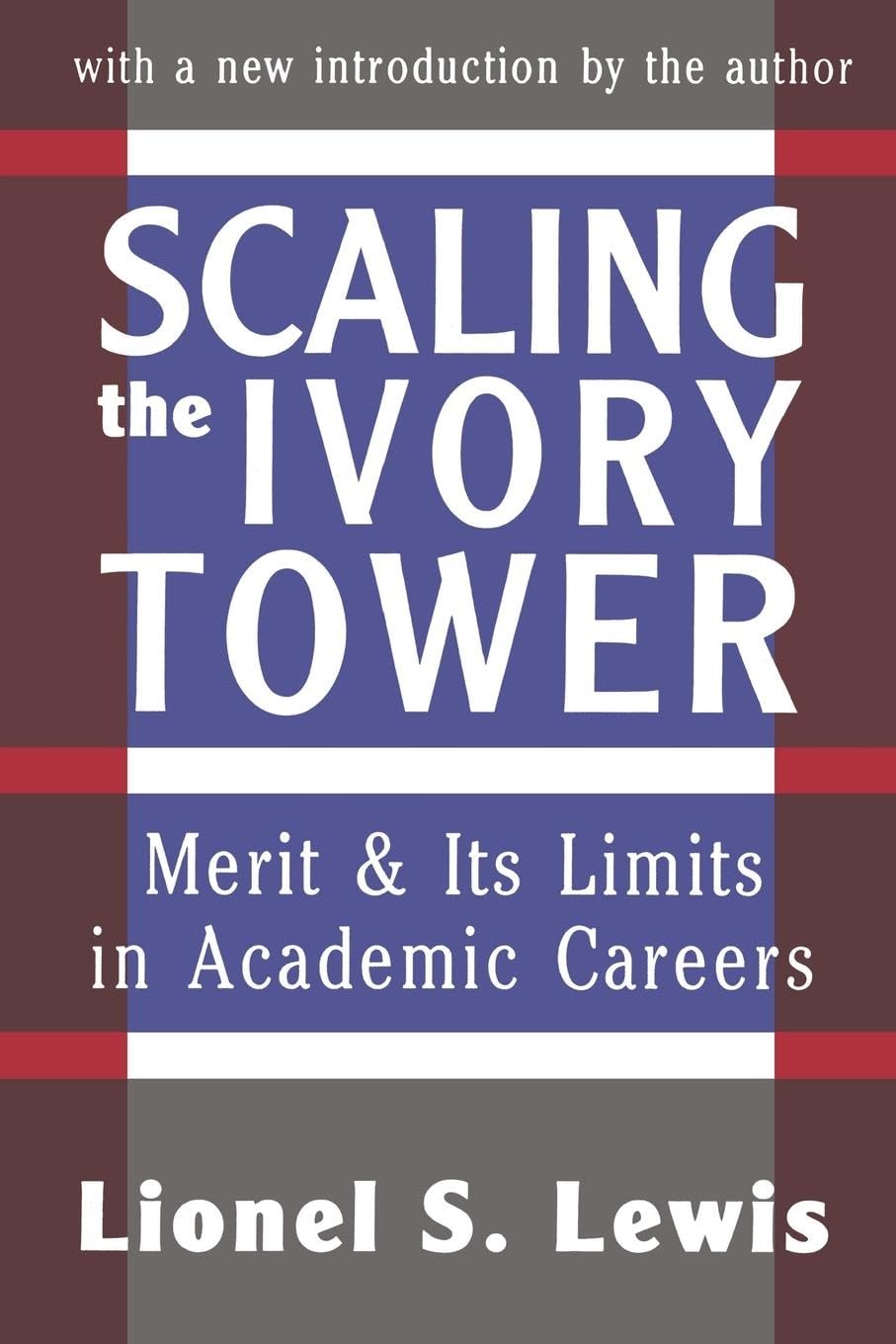
Scaling the Ivory Tower: Merit and Its Limits in Academic Careers
Scaling the Ivory Tower: Merit and Its Limits in Academic Careers
Price subject to change. Tap below for current.
Couldn't load pickup availability
In this review of Scaling the Ivory Tower: Merit and Its Limits in Academic Careers the reviewer finds a thoughtful, evidence-driven examination of how success actually operates inside universities. Lionel S. Lewis builds on Veblenian themes to argue that the familiar maxim publish or perish is only part of the story; letters of recommendation, institutional attitudes, and hidden practices often steer hiring and promotion. This book is best for academics, graduate students, administrators, and anyone interested in higher education who wants a measured, research-backed critique rather than polemic.
Key Features
- Evidence-based analysis: Lewis marshals archival and empirical material to show patterns in hiring and promotion that go beyond simple measures of productivity.
- Historical perspective: The book situates modern academic norms in a tradition traceable to Veblen, helping readers understand how current practices evolved.
- Focus on letters of recommendation: Two chapters explore how recommendations function as decisive signals in appointment and promotion decisions, revealing an often-overlooked mechanism.
- Coverage of academic freedom and tenure: The text examines cases and debates around academic freedom, tenure, and institutional responses to conflict.
- Critical treatment of merit: Lewis questions the assumption that publication and research output are the sole axes of merit, prompting readers to reassess evaluation criteria.
Who It's For
This book is aimed at current faculty, department chairs, doctoral students preparing for academic careers, and higher education researchers who want a nuanced, scholarly critique of hiring and reward systems. Its tone and evidence make it useful for university administrators who must design or defend evaluation policies.
It is less suited to readers seeking a prescriptive how-to guide for career advancement or a short popular polemic; those wanting quick career hacks or a brief overview of publication strategies should look for more practical handbooks instead.
Pros & Cons
Pros
- Thorough documentation supports Lewis's claims and gives the book scholarly credibility.
- The focused chapters on letters of recommendation illuminate a concrete mechanism that affects hiring and promotion.
- Historical framing helps readers place contemporary debates about academic freedom and tenure in context.
Cons
- The book's analytical, research-driven approach may feel dense to readers expecting a lighter, practical career manual.
Specifications
| Title | Scaling the Ivory Tower: Merit and Its Limits in Academic Careers |
| Series | Foundations of Higher Education |
| Author | Lionel S. Lewis |
| Scope | Academic hiring, promotion, letters of recommendation, tenure, academic freedom |
| Approach | Evidence-based historical and archival analysis |
| Audience | Academics, administrators, higher education researchers |
Our Verdict
Scaling the Ivory Tower is a well-documented, thoughtful critique of academic merit and institutional practices; it is recommended for readers who want rigorous analysis of hiring, tenure, and recommendation processes rather than a quick career guide. For those engaged in higher education policy or scholarly careers, it offers considerable value by exposing mechanisms that shape academic advancement.
Frequently Asked Questions
Does the book argue that publication is irrelevant?
No; Lewis does not dismiss publication but shows that publication alone does not fully explain hiring and promotion decisions.
Are letters of recommendation really a major focus?
Yes; two chapters are devoted to how recommendation letters influence academic appointments and promotions.
Is this suitable for non-academic readers?
It can be read by interested laypersons, but the book is primarily written for those familiar with higher education institutions and debates.
Editor's Take
Scaling the Ivory Tower is a well-documented critique of academic merit and institutional practices; recommended for academics and administrators who want rigorous analysis of hiring, tenure, and recommendation processes.

Recently viewed
Recently viewed products will appear here as customers browse the store.