

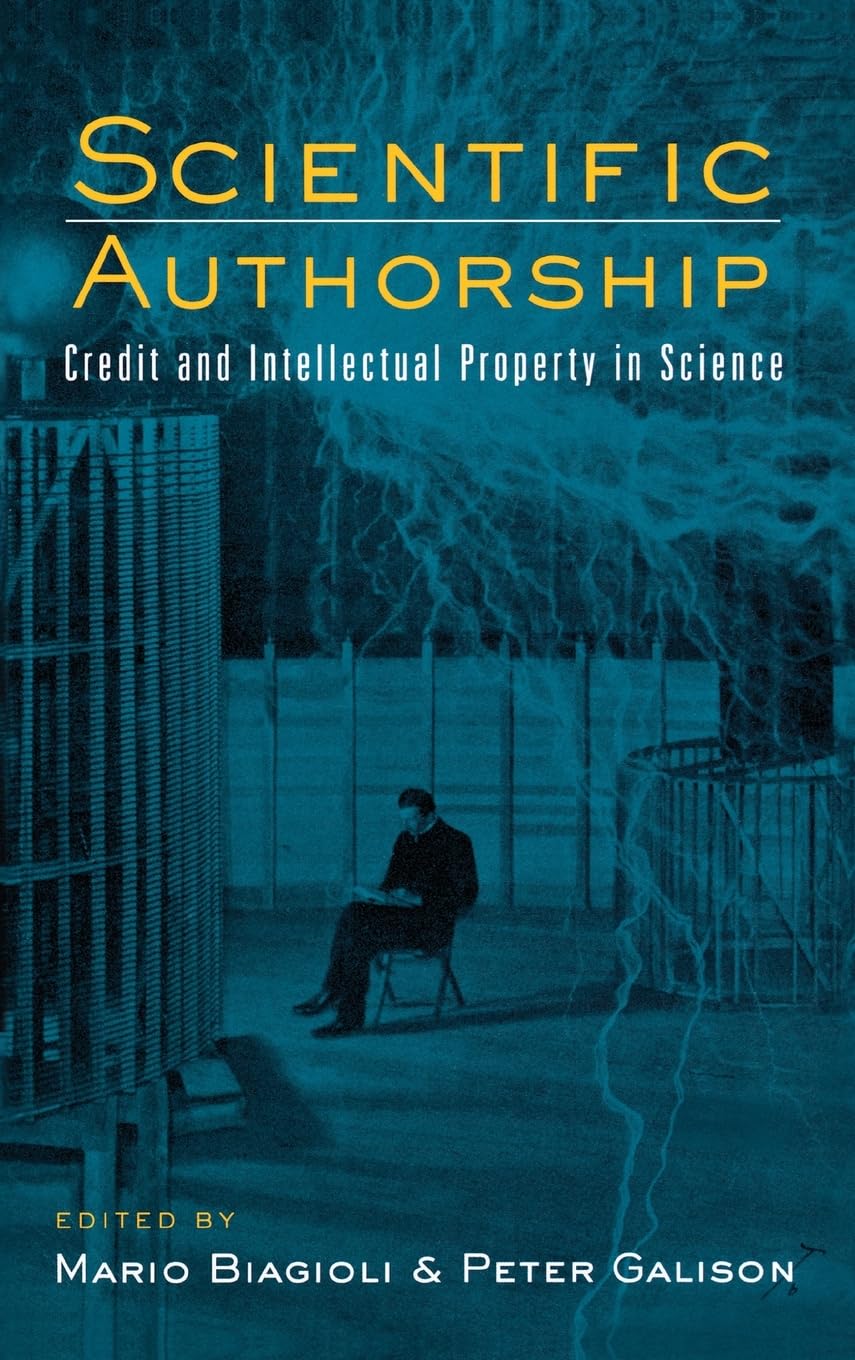
Scientific Authorship: Credit and Intellectual Property in Science
Scientific Authorship: Credit and Intellectual Property in Science
Price subject to change. Tap below for current.
Couldn't load pickup availability
In this review of Scientific Authorship: Credit and Intellectual Property in Science, readers will find a careful, historically grounded examination of how the notion of the scientific author has evolved. The book is best for scholars and advanced students who want a rigorous, interdisciplinary account of authorship, credit, and intellectual property from the age of Galileo to modern biotech. Its single biggest reason to read is the way it assembles historians of science, literary historians, and historians of the book to trace both the cultural and legal contours of scientific authorship.
Key Features
- Interdisciplinary essays: Multiple contributors bring history, literary analysis, and book history together to illuminate shifting ideas of authorship in science.
- Historical sweep: The collection follows changes from seventeenth-century academies through late medieval origins to contemporary concerns with cloning and pharmaceuticals, offering long-term perspective.
- Focus on credit: Contributors examine how credit is assigned in collaborative and multiauthored work, clarifying why authorship matters for reputation and knowledge production.
- Intellectual property lens: Chapters probe legal and conceptual issues such as patenting genetic material and the boundaries between discovery and invention.
- Case-driven analysis: Essays use concrete historical cases to show how institutions and norms shaped the identity of the scientific author.
Who It's For
This volume is aimed at academic readers: historians of science, law scholars interested in intellectual property, advanced graduate students, and anyone researching authorship, credit, or the development of scientific institutions. The dense, essay-based format rewards readers who want close argument and archival detail rather than a popular overview.
Readers seeking an introductory textbook or a short, accessible guide to current patent law should look elsewhere; this is a scholarly edited volume that emphasizes historical and conceptual analysis over practical how-to guidance.
Pros & Cons
Pros
- Rich, interdisciplinary perspectives make complex debates about authorship and credit more intelligible to specialists.
- Historical breadth connects medieval, early modern, and contemporary practices in a single collection.
- Attention to intellectual property provides a useful framework for thinking about modern issues like cloning and pharmaceutical patents.
Cons
- The edited-essay format can feel dense and uneven for readers expecting a single narrative voice or a brief introduction.
Specifications
| Title | Scientific Authorship: Credit and Intellectual Property in Science |
| Editors/Authors | Mario Biagioli, Peter Galison |
| Subject areas | History of science; literary history; intellectual property |
| Historical range | Late medieval period to contemporary biotech era |
| Approach | Interdisciplinary essays and case studies |
| Intended audience | Scholars and advanced students |
Our Verdict
Scientific Authorship is a valuable scholarly collection for those exploring how credit and intellectual property shaped the scientific author across centuries. Its interdisciplinary essays and historical scope make it good value for researchers and graduate students who need depth and context, though casual readers may find the format demanding.
Frequently Asked Questions
Does this book cover modern patent issues?
Yes. Several essays address contemporary concerns such as patenting genetic material and questions about discovery versus invention.
Is this suitable for undergraduate surveys?
It is better suited to graduate seminars or specialist research; undergraduates may find the essays dense without supplemental guidance.
Are the contributions mainly historical or theoretical?
The collection blends historical case studies with conceptual and theoretical discussion, reflecting contributions from historians and literary scholars.
Editor's Take
Scientific Authorship is a scholarly, interdisciplinary collection that traces how credit and intellectual property shaped scientific authorship from medieval origins to modern biotech; recommended for researchers and graduate students seeking depth and historical context.

Recently viewed
Recently viewed products will appear here as customers browse the store.