

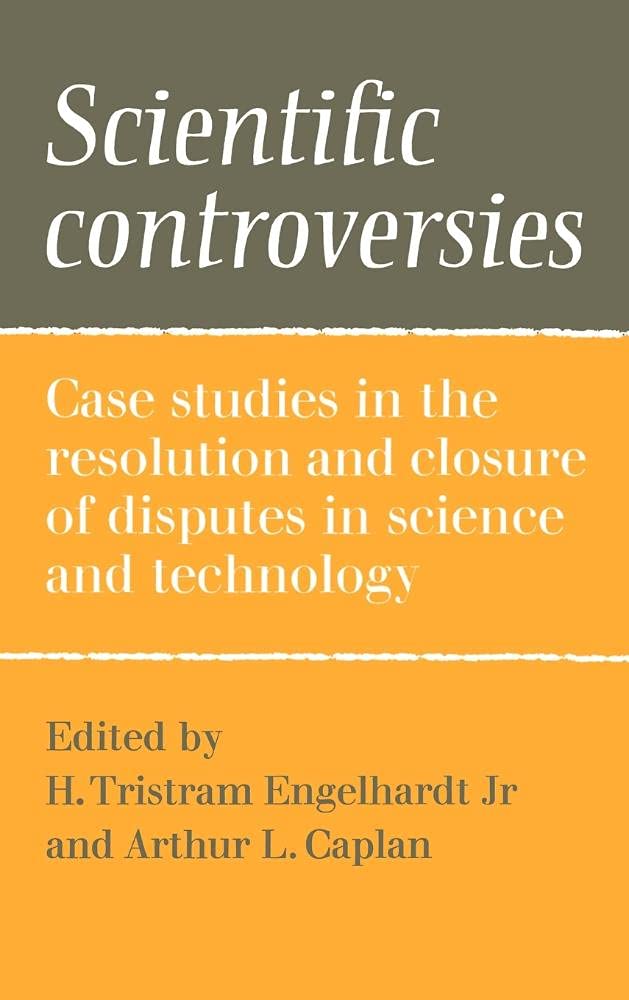
Scientific Controversies: Case Studies in Resolution and Closure
Scientific Controversies: Case Studies in Resolution and Closure
Price subject to change. Tap below for current.
Couldn't load pickup availability
In this review of Scientific Controversies: Case Studies in the Resolution and Closure of Disputes in Science and Technology, the book is recommended for readers who want a thoughtful, academic account of how public disputes over scientific matters are settled. The collection's biggest strength is its focus on how ethical, economic, and political forces shape technical debates, making it especially useful for scholars and practitioners who need context beyond empirical evidence. This review presents a clear view of what the essays offer and why the volume matters for interdisciplinary inquiry.
Key Features
- Case-driven analysis: Each essay examines a concrete public controversy so readers can see how theoretical ideas play out in real disputes.
- Interdisciplinary contributors: Essays by scholars from both the sciences and humanities provide diverse perspectives that illuminate the non-empirical dimensions of debate.
- Four focused examples: The book uses Laetrile, the classification of homosexuality, workplace safety standards, and nuclear energy to show recurring patterns in controversy resolution.
- Emphasis on closure: Contributors explore how controversies reach resolution or closure, helping readers understand processes beyond mere evidence.
- Theoretical sketch: The volume helps sketch a theory of scientific dispute that links factual argument to ethical and political interests.
Who It's For
This collection is best for graduate students, policy makers, and academics in science studies, bioethics, history of science, and public policy who need case-based insight into how controversies are framed and settled. It is also valuable for practitioners who encounter public resistance to technical decisions and want to anticipate the non-scientific factors at play.
Readers seeking a primer on scientific methods, hands-on technical guidance, or a concise single-author narrative should look elsewhere; the book is an edited volume of essays and assumes some familiarity with academic discourse and interdisciplinary inquiry.
Pros & Cons
Pros
- The case-study approach offers concrete illustrations of how controversies unfold in public arenas.
- Diverse scholarly voices provide balanced attention to ethical, economic, and political dimensions.
- The book clarifies that many disputes are structured by interests beyond empirical fact, aiding nuanced analysis.
Cons
- As an edited academic volume, the essays presume background knowledge and can feel dense for casual readers.
Specifications
| Title | Scientific Controversies: Case Studies in the Resolution and Closure of Disputes in Science and Technology |
| Editors/Authors | H. Tristram Engelhardt Jr., Arthur L. Caplan |
| Content focus | Four public controversies illustrating resolution processes |
| Key cases | Laetrile; classification of homosexuality; workplace safety standards; nuclear energy |
| Approach | Interdisciplinary essays linking empirical debate to ethical, economic, and political interests |
| Audience | Scholars, policy makers, graduate students in science studies and bioethics |
Our Verdict
Scientific Controversies is a thoughtful, case-focused collection that successfully demonstrates how non-empirical interests shape scientific disputes; it is worth acquiring for researchers and policy-oriented readers who need context and analytic tools for understanding debates that go beyond data, and it represents good value for those seeking interdisciplinary perspectives on closure and resolution.
Frequently Asked Questions
Does this book include detailed empirical studies?
The volume centers on case analysis and interpretive essays rather than primary empirical research; it synthesizes evidence to illuminate broader patterns.
Are the contributors from multiple disciplines?
Yes; scholars from both the sciences and the humanities contribute perspectives aimed at showing how ethical and political interests interact with technical debate.
Is this suitable for nonacademic readers?
Some essays are dense and assume background knowledge, so it is best suited to readers comfortable with academic discourse or those willing to engage with scholarly argumentation.
Editor's Take
A thoughtful, case-focused collection that shows how ethical, economic, and political interests shape scientific disputes; recommended for scholars and policy-oriented readers seeking interdisciplinary analysis.

Recently viewed
Recently viewed products will appear here as customers browse the store.