

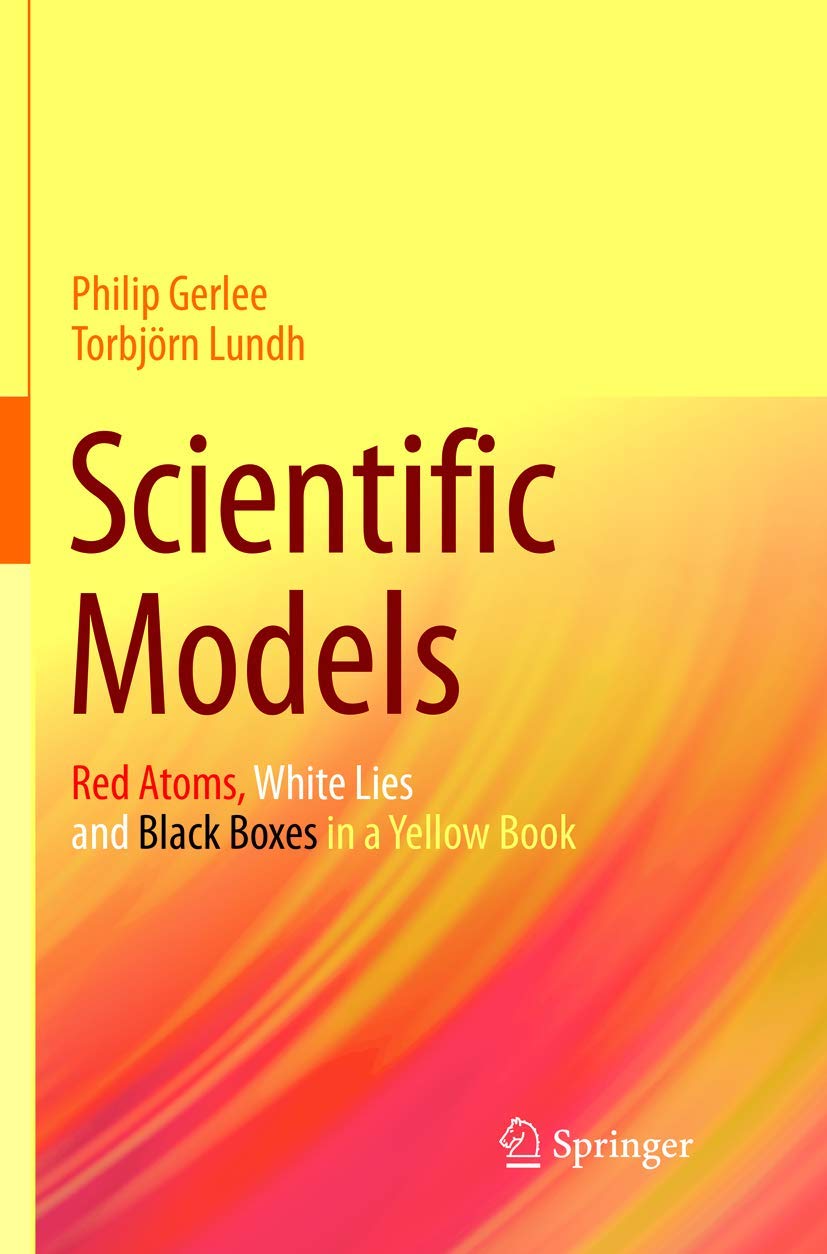
Scientific Models: Red Atoms, White Lies and Black Boxes in a Yellow
Scientific Models: Red Atoms, White Lies and Black Boxes in a Yellow
Price subject to change. Tap below for current.
Couldn't load pickup availability
In this review of Scientific Models: Red Atoms, White Lies and Black Boxes in a Yellow Book, the authors Philip Gerlee and Torbjorn Lundh present a compact, thoughtful introduction to how scientists build and use models. The book is aimed at readers who want a conceptual grasp rather than a technical manual: it explains modelling with everyday examples - a zebrafish, a ship hull, an equation, a food chain - and traces the history of modelling from the 16th century to today. The single biggest reason to read it is its clear focus on the tradeoff between complex, predictive models and simpler, explanatory ones.
Key Features
- Accessible introduction: Uses familiar objects and stories to make the concept of a scientific model intuitive for non-specialists.
- Historical sweep: Traces the development of modelling from the 16th century to the present, placing modern practice in context.
- Comparative perspective: Discusses the iterative process of model building and the contrast between high predictive accuracy and conceptual simplicity.
- Interdisciplinary examples: Draws on biology, engineering and mathematics to show how different fields use models for distinct purposes.
- Debate within science: Presents diverse opinions from the scientific community to illustrate genuine disagreements about modelling goals.
Who It's For
This book is well suited to students, early-career researchers and curious professionals who want a clear conceptual primer on modelling without heavy mathematics. Educators seeking a readable discussion to introduce modelling philosophy in courses will also find useful anecdotes and cross-disciplinary examples.
Readers looking for step-by-step simulation tutorials, extensive mathematical derivations or a reference manual for software should look elsewhere, as the emphasis here is on ideas, history and the tradeoffs that guide model choice rather than technical implementation details.
Pros & Cons
Pros
- Clear, approachable writing makes abstract concepts graspable for a broad audience.
- Wide range of examples - from a zebrafish to a ship hull - helps illustrate how models function in different domains.
- The historical perspective connects present practice to its intellectual roots, improving overall understanding.
Cons
- Limited technical depth means it is not a how-to guide for building computational models.
Specifications
| Title | Scientific Models: Red Atoms, White Lies and Black Boxes in a Yellow Book |
| Authors | Philip Gerlee, Torbjorn Lundh |
| Subject | Scientific modelling, history and philosophy of models |
| Examples used | Zebrafish, miniature ship hull, mathematical equation, food chain |
| Scope | History from 16th century to present and model-building process |
Our Verdict
Scientific Models is a concise, concept-first exploration of what models are and why scientists use them. It offers excellent value for readers who want a principled overview and historical context rather than a technical textbook, and it is particularly good for students and educators seeking to frame modelling debates in plain language.
Frequently Asked Questions
Does this book include technical code or simulation tutorials?
No; the focus is on conceptual explanation, history and the tradeoffs involved in model building rather than hands-on coding.
Who wrote the book and what perspective do they bring?
The authors are Philip Gerlee and Torbjorn Lundh, who present an interdisciplinary view that draws on biology, engineering and mathematics to discuss modelling practice.
Is this suitable for classroom use?
Yes; the clear examples and historical framing make it a useful supplementary text for undergraduate courses on modelling or philosophy of science.
Editor's Take
Scientific Models delivers a concise, concept-first overview of modelling that is ideal for students and educators who want historical context and clear examples rather than technical tutorials.

Recently viewed
Recently viewed products will appear here as customers browse the store.