

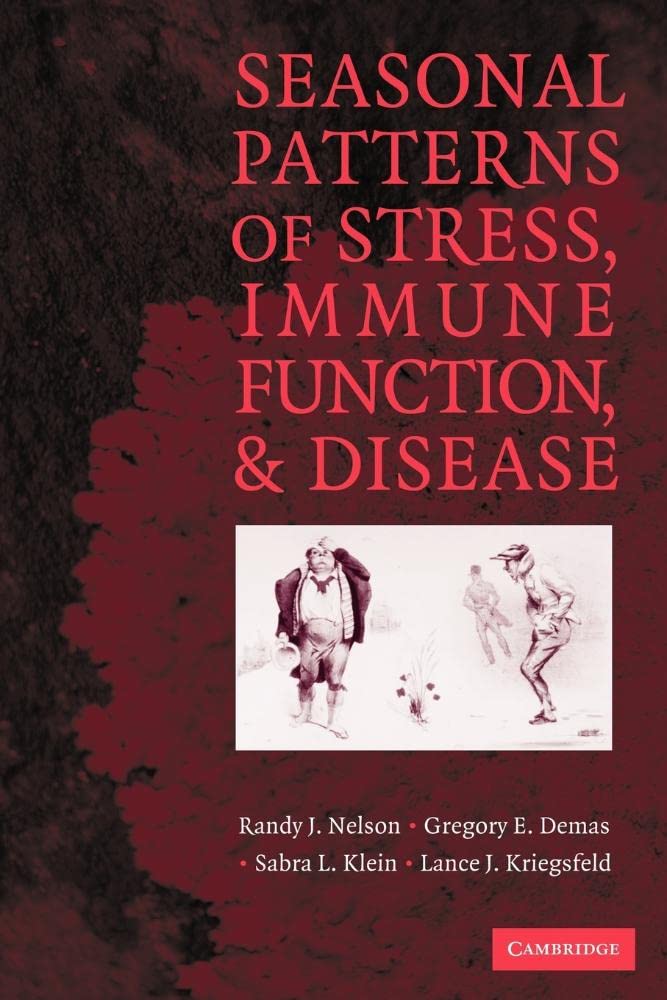
Seasonal Patterns of Stress, Immune Function, and Disease - Scholarly
Seasonal Patterns of Stress, Immune Function, and Disease - Scholarly
Price subject to change. Tap below for current.
Couldn't load pickup availability
In this review of Seasonal Patterns of Stress, Immune Function, and Disease, the bottom line is clear: this monograph is for researchers, clinicians, and graduate students who need a cross-disciplinary look at how seasonal cycles shape infection risk and immune function. The book's single biggest reason to buy is its synthesis of ecology, endocrinology, and immunology that links environmental stressors to predictable shifts in disease patterns. The review highlights how the authors draw mechanistic connections-such as melatonin and glucocorticoid pathways-to explain seasonal vulnerability rather than providing a simple epidemiological summary.
Key Features
- Interdisciplinary approach: The text integrates ecology, endocrinology, and immunology to explain why infections and immune responses vary by season.
- Mechanistic focus: The authors identify hormonal mechanisms, including the roles of melatonin and glucocorticoids, that help explain seasonal modulation of immune function.
- Stress and environment: The volume links seasonal stressors such as temperature drops and food shortages to changes in host susceptibility and disease cycles.
- Disease breadth: Coverage spans infectious diseases, autoimmune disorders, and some cancers to show broad implications of seasonal immune variation.
- First monograph of its kind: This is presented as the first dedicated interdisciplinary examination of seasonal immune function, useful as a reference for advanced study.
Who It's For
This book is best for academic researchers, medical professionals in infectious disease or immunology, and advanced students seeking a mechanistic understanding of seasonal disease dynamics. It is especially useful for those designing studies or interventions that must account for seasonal variation in host defense and pathogen prevalence.
Practitioners who need quick clinical protocols or lay readers seeking popular science explanations should look elsewhere, because the book emphasizes mechanistic synthesis and interdisciplinary scholarship over simple clinical guidelines or accessible narrative.
Pros & Cons
Pros
- Comprehensive interdisciplinary synthesis that clarifies links between environment, stress, and immune cycles.
- Emphasizes hormonal mechanisms such as melatonin and glucocorticoids, offering testable biological pathways.
- Addresses a broad range of outcomes from infection to autoimmune disease and cancer, widening its relevance.
Cons
- Not designed as a clinical handbook, so it may be dense for readers seeking direct treatment guidance.
Specifications
| Title | Seasonal Patterns of Stress, Immune Function, and Disease |
| Authors / Editors | Randy J. Nelson, Gregory E. Demas, Sabra L. Klein, Lance J. Kriegsfeld, Frank Bronson |
| Scope | Interdisciplinary examination of seasonal immune function and disease |
| Key topics | Seasonal infection cycles; immune function; melatonin; glucocorticoids; stressors |
| Audience | Researchers, clinicians, and graduate students in medicine and neuroscience |
| Unique claim | First monograph to examine seasonal immune function from an interdisciplinary perspective |
Our Verdict
Seasonal Patterns of Stress, Immune Function, and Disease is a valuable scholarly resource for anyone studying how environmental cycles influence host defense. Its interdisciplinary, mechanistic focus makes it good value for researchers and clinicians who need to account for seasonal variation in study design or interpretation, though it will be less accessible for readers seeking quick clinical recommendations.
Frequently Asked Questions
Does this book explain why infections rise at certain times of year?
The volume presents evidence and mechanisms that link seasonal stressors and hormonal changes to cycles in infection risk and immune function.
Will this book teach clinical treatment strategies?
No; the book emphasizes mechanistic and interdisciplinary understanding rather than step-by-step clinical protocols.
Who contributed to this monograph?
The editors and contributors include Randy J. Nelson, Gregory E. Demas, Sabra L. Klein, Lance J. Kriegsfeld, and Frank Bronson, among other specialists.
Editor's Take
Seasonal Patterns of Stress, Immune Function, and Disease is a rigorous interdisciplinary monograph that links environmental stressors and hormones to seasonal shifts in infection and immunity, making it essential for researchers and clinicians who need mechanistic insight rather than clinical protocols.

Recently viewed
Recently viewed products will appear here as customers browse the store.