

Sequential Experimentation in Clinical Trials: Design and Analysis
Sequential Experimentation in Clinical Trials: Design and Analysis
Price subject to change. Tap below for current.
Couldn't load pickup availability
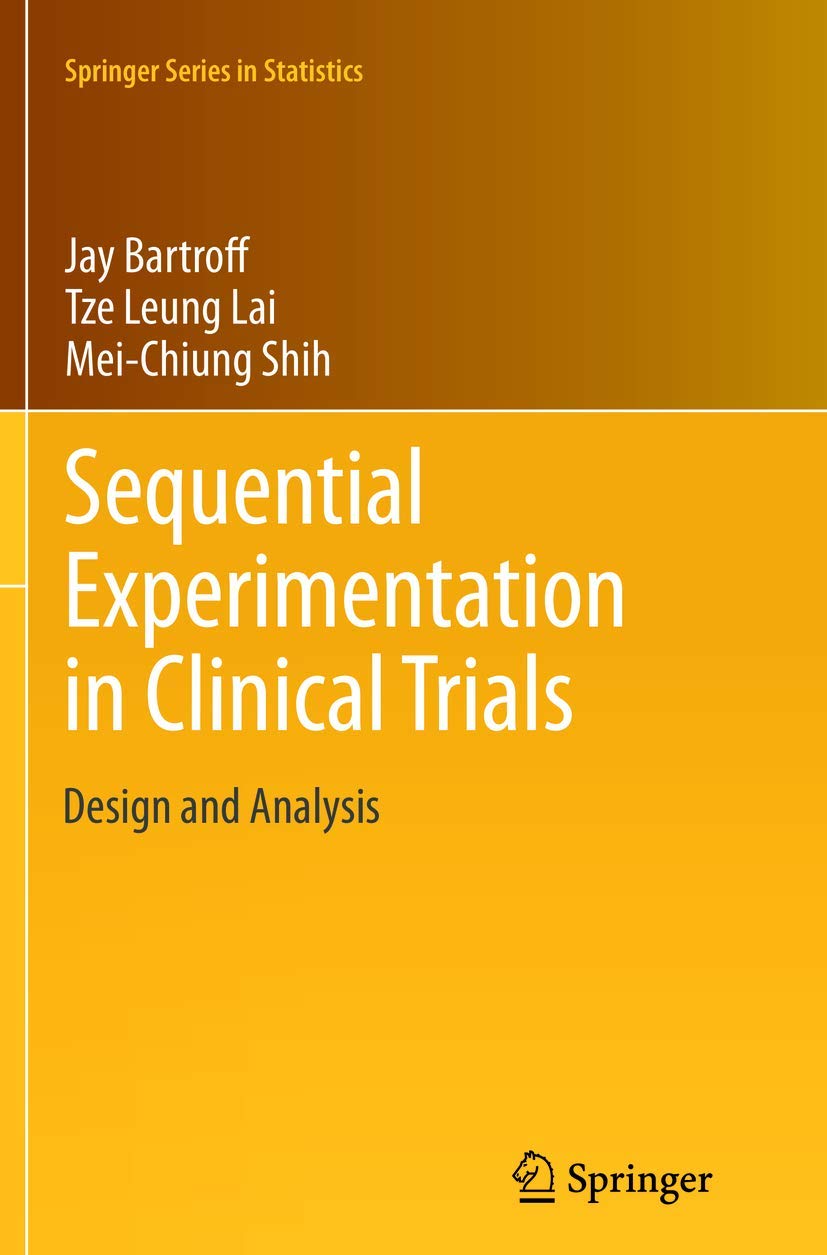
Our review of Sequential Experimentation in Clinical Trials: Design and Analysis finds it a focused, advanced text for statisticians and clinical trial designers who need a rigorous treatment of adaptive and group sequential methods. Developed from decades of research and pedagogy, the book's single biggest selling point is its practical connection between theory and applied clinical trial planning, making it particularly useful for readers who will design or analyze Phase II and III studies. This review highlights why the book serves as a graduate course resource and a reference for applied biostatistics work.
Key Features
- Comprehensive coverage: The book presents group sequential and adaptive design methods in a unified way that supports both theoretical understanding and practical implementation.
- Course-ready structure: Chapters are organized to be used in short courses and graduate seminars, with material suitable for Statistics Ph.D. students and advanced coursework.
- Pedagogical depth: Concepts are developed from decades of teaching experience, giving clear motivation for statistical choices in trial design.
- Applied focus: Examples and discussions target Phase II and Phase III clinical trial contexts, helping readers translate methods into trial protocols.
- Supplemental resources: Additional online supplements and chapter-specific exercises extend the material for classroom use and self-study.
Who It's For
This book is best suited to academic statisticians, clinical trial biostatisticians, and advanced graduate students who need a rigorous, course-ready presentation of sequential experimentation methods. It is especially relevant for those involved in designing or analyzing Phase II and Phase III clinical trials who want methods grounded in both theory and practice.
Practitioners who require step-by-step software tutorials or an introductory-level primer should look elsewhere; readers without a solid background in statistical theory may find the presentation dense. However, those seeking a text to support teaching or to reference when planning adaptive trials will find strong value.
Pros & Cons
Pros
- Thorough treatment of group sequential and adaptive designs useful for applied trial work.
- Organized for use in short courses and graduate teaching, with chapter-specific exercises available online.
- Authored by experienced researchers and educators, reflecting long-term development and practical perspective.
Cons
- The level is advanced and assumes familiarity with statistical theory, so it may not suit beginners or nonstatistical clinicians.
Specifications
| Title | Sequential Experimentation in Clinical Trials: Design and Analysis |
| Series | Springer Series in Statistics, 298 |
| Authors | Jay Bartroff; Tze Leung Lai; Mei-Chiung Shih |
| Subject focus | Group sequential and adaptive designs for clinical trials |
| Intended use | Graduate courses, clinical trial design and analysis reference |
| Supplemental material | Online supplements with chapter exercises |
Our Verdict
Sequential Experimentation in Clinical Trials is a high-value, specialized text for statisticians and trial designers who need a rigorous, course-ready treatment of adaptive and group sequential methods. It excels as a teaching text and practical reference, though readers without a strong theoretical background should consider a more introductory resource first.
Frequently Asked Questions
Does this book include practical exercises?
Yes, the authors provide chapter-specific exercises and additional online supplements to support classroom use and self-study.
Is the book suitable for clinicians without statistical training?
No, the book assumes a solid statistical background and is aimed at graduate students and professional biostatisticians rather than introductory-level clinicians.
Which trial phases does the book focus on?
The text emphasizes methods applicable to Phase II and Phase III clinical trials, including group sequential and adaptive designs.
Editor's Take
Sequential Experimentation in Clinical Trials is a rigorous, course-ready text for statisticians and trial designers seeking applied and theoretical coverage of adaptive and group sequential methods; it is excellent for graduate courses and professional reference but not aimed at beginners.

Recently viewed
Recently viewed products will appear here as customers browse the store.