

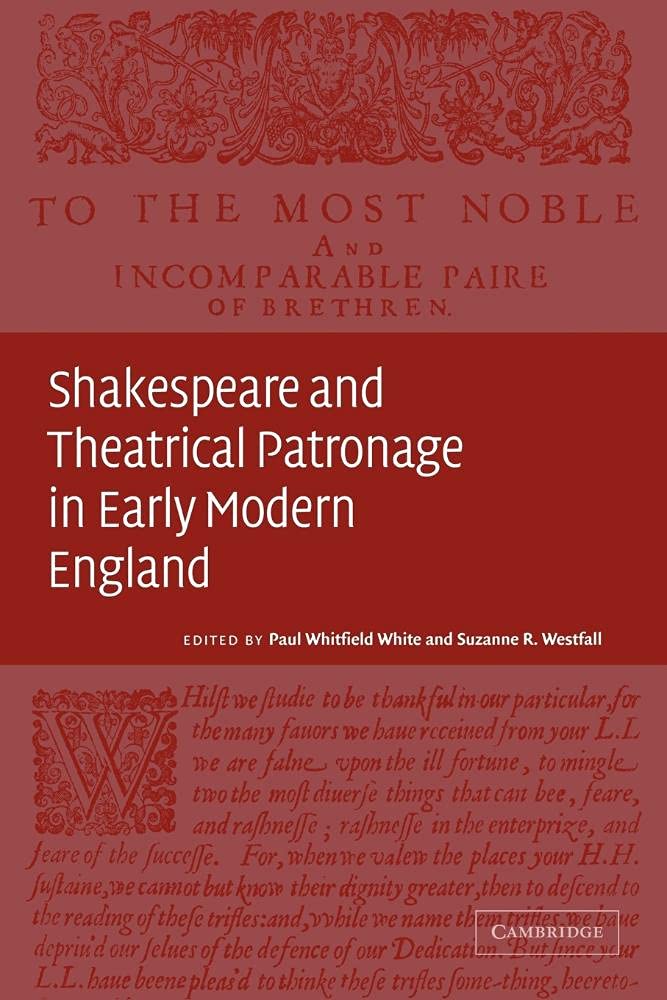
Shakespeare and Theatrical Patronage in Early Modern England
Shakespeare and Theatrical Patronage in Early Modern England
Price subject to change. Tap below for current.
Couldn't load pickup availability
In this review of Shakespeare and Theatrical Patronage in Early Modern England the bottom line is clear: this collection is essential for readers who want an informed, scholarly look at how patronage shaped the theater that produced Shakespeare. The essays assemble historical context and focused case studies to argue that patronage was not merely financial support but a set of social, political, and artistic relationships that shaped repertoire, performance practices, and the careers of players. For students, researchers, and informed general readers seeking depth rather than a casual overview, this volume delivers sustained analysis and useful historiographical perspective.
Key Features
- Wide-ranging essays: Twelve theater historians offer multiple perspectives that together map out how patronage functioned across decades, giving readers a broad yet connected picture.
- Historical span: The collection traces changes from the early Tudor period through the years when Shakespeare was prominent, showing development over time rather than a single snapshot.
- Intersections explored: Contributors examine how patronage, political power, and theatrical practice intersected, clarifying the social reach of theatrical activity.
- Focused case studies: Individual chapters provide concrete examples of how patrons influenced repertory, company organization, and public perception of players.
- Scholarly audience orientation: The tone and references suit undergraduates, graduate students, and scholars who need documented arguments and historiographical context.
Who It's For
Shakespeare and Theatrical Patronage in Early Modern England is best for literature students, theater historians, and researchers interested in the political and cultural networks around early modern performance. It suits coursework or seminar reading where readers can discuss and critique multiple scholarly positions rather than expecting a single-author narrative.
Readers seeking a general-audience introduction to Shakespeare or casual biographies of the playwright should look elsewhere; this volume presumes some familiarity with early modern theatrical institutions and benefits from close reading and a tolerance for academic argumentation.
Pros & Cons
Pros
- Comprehensive range of essays offers varied approaches, useful for comparative study and course syllabi.
- The historical scope from early Tudor through Shakespeare's era clarifies changes in patronage over time.
- Detailed exploration of political and social intersections enriches understanding of theater beyond performance alone.
Cons
- The academic focus and density mean the book is less suitable for casual readers seeking a concise narrative.
Specifications
| Title | Shakespeare and Theatrical Patronage in Early Modern England |
| Editors/Authors | Paul Whitfield White, Suzanne R. Westfall |
| Contents | Twelve essays by theater historians |
| Scope | Early Tudor period through Shakespeare's leading years |
| Focus | Patronage, political power, and theatrical culture |
| Intended audience | Students, researchers, and theater historians |
Our Verdict
For readers engaged in early modern studies or theater history, this collection is a valuable, well-documented resource that situates Shakespeare within changing patronage systems. It represents good value for coursework and research because its range of essays provokes comparative thinking and supplies useful historiographical context.
Frequently Asked Questions
Does this book focus on Shakespeare himself?
Answer. Shakespeare is central as a figure within the volume, but the book emphasizes the broader patronage networks and theatrical culture that shaped his career.
Is this suitable for undergraduate courses?
Answer. Yes; it is appropriate for upper-level undergraduates or graduate seminars that can handle academic essays and primary-source discussion.
Will a casual reader enjoy it?
Answer. Casual readers may find the essays dense; those seeking a narrative biography should choose a more general introduction instead.
Editor's Take
This collection is a valuable resource for students and scholars, offering well-documented essays that situate Shakespeare within evolving patronage networks and theatrical culture.

Recently viewed
Recently viewed products will appear here as customers browse the store.