

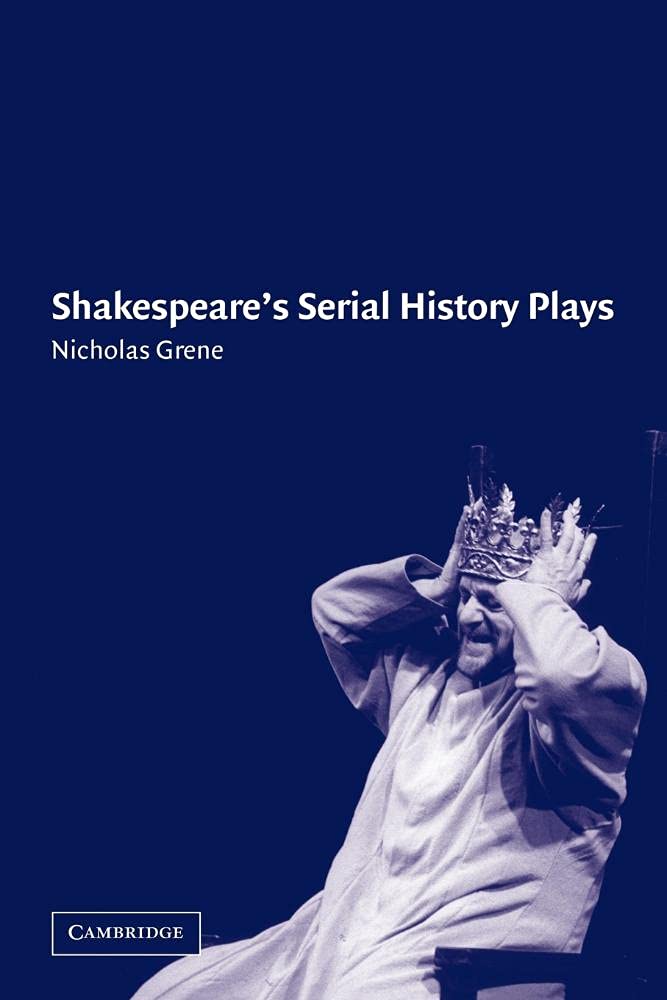
Shakespeare's Serial History Plays - In-depth and Analysis
Shakespeare's Serial History Plays - In-depth and Analysis
Price subject to change. Tap below for current.
Couldn't load pickup availability
In this review of Shakespeare's Serial History Plays the critic Nicholas Grene offers a focused re-reading aimed at scholars, theatre practitioners and serious students of Shakespeare who want to understand the plays as deliberately linked performances. Grene's central argument - that the Henry VI to Richard III sequence and the Richard II to Henry V sequence were conceived for serial staging in the 1590s - is the single biggest reason to pick up this book, since it reorients how one thinks about chronology, staging and source materials in Elizabethan theatre.
Key Features
- Reassessment of sources: Grene carefully examines the chronicle sources to show how historical material was adapted to support serial performance rather than isolated plays.
- Staging focus: The book discusses period staging practices to explain how plays would have been connected in performance, helping readers visualize original presentation.
- Two serial sequences: The analysis treats both the Henry VI-Richard III and Richard II-Henry V sequences, giving readers a comparative perspective on seriality.
- Historical context: Coverage of the 1590s creation period grounds the argument in the political and theatrical realities that shaped the plays.
- Modern adaptations considered: Grene connects his case to modern serial productions, including major ensemble stagings, to demonstrate ongoing relevance for directors and historians.
Who It's For
This book suits graduate students, theatre historians and directors who need a sustained, textually grounded argument about serial performance and its implications for dramaturgy and production. The focus on sources and staging makes it useful for anyone preparing multi-play cycles or researching Elizabethan production practices.
Readers looking for a general introduction to Shakespeare that emphasizes plot summaries or beginner-level guidance should look elsewhere; the prose assumes prior familiarity with the plays and with chronicle material, and rewards close reading rather than casual browsing.
Pros & Cons
Pros
- Provides a clear thesis about serial performance that reshapes reading of multiple history plays.
- Combines source analysis with staging evidence, which benefits both scholars and practitioners.
- Places the plays in a tight historical frame, illuminating their 1590s origins.
- Engages with modern serial productions to show practical implications for adaptation.
Cons
- The book assumes familiarity with the plays and chronicles, so it may feel dense for newcomers.
- Readers seeking an extensive catalog of performance photographs or production paperwork will find the emphasis is analytic rather than archival.
Specifications
| Title | Shakespeare's Serial History Plays |
| Author | Nicholas Grene |
| Subject focus | Henry VI-Richard III and Richard II-Henry V sequences |
| Primary argument | History plays designed for serial performance |
| Periods covered | Original creation in the 1590s and modern serial productions |
| Approach | Chronicle source analysis and staging practice |
Our Verdict
Grene's study is a valuable, argument-driven contribution for anyone seriously engaged with Shakespearean history plays; it reframes familiar texts by recovering their serial presentation and links historical evidence to contemporary production practice. For scholars and directors who want to rethink sequence, this book is well worth the investment.
Frequently Asked Questions
Does the book cover both historical sequences?
Yes. It treats Henry VI to Richard III and Richard II to Henry V as distinct serial sequences and compares them.
Is this suitable for casual readers?
Not primarily; the book is written for readers with existing familiarity with the plays and chronicle sources.
Does it discuss modern stagings?
Yes. Grene examines notable serial productions and adaptations to demonstrate contemporary relevance.
Editor's Take
Grene's study reframes Shakespeare's history plays as intentionally serial, offering a strong, source-based argument valuable to scholars and directors who want to rethink sequence and staging.

Recently viewed
Recently viewed products will appear here as customers browse the store.