

Social Change in Tikopia - Reviewed Study of Modernization Effects
Social Change in Tikopia - Reviewed Study of Modernization Effects
Price subject to change. Tap below for current.
Couldn't load pickup availability
In this review of Social Change in Tikopia, Raymond Firth returns to the island community a decade after his initial visit to assess the social impact of modernization. The book is for readers who want a focused ethnographic account of how external pressures reshape economics, law, politics and ritual practice, and it offers a clear case study of institutional response to crisis. The single biggest reason to read it is Firth's combination of firsthand observation during a famine and his analysis of subsequent institutional developments, which gives readers a rare view of cultural change under duress.
Key Features
- Field revisit: Firth examines Tikopia a decade after his first visit, providing a comparative perspective on social change.
- Famine account: The author documents a famine experienced while on the island, offering firsthand evidence about distribution and responsibility.
- Institutional focus: The book analyzes how economic, legal and political institutions evolved in response to crisis and external influence.
- Ceremonial analysis: Firth pays close attention to problems of distribution in ritual and ceremonial contexts, highlighting social priorities and tensions.
- Historical edition: Originally published in 1959, the work serves both as a period case study and a reference for changes in mid-20th-century ethnography.
Who It's For
This work suits readers of anthropology, social history and development studies who want a compact, evidence-based case study of cultural resilience and institutional change. Scholars interested in Pacific Island societies or comparative analyses of modernization will find Firth's careful observations and emphasis on economics and ritual particularly useful.
Those looking for a contemporary policy manual or a broad survey of global development should look elsewhere; the book is a focused ethnographic revisit rather than a modern textbook on development theory or contemporary statistical analysis.
Pros & Cons
Pros
- Provides a rare firsthand famine narrative that grounds discussions of responsibility and distribution.
- Offers detailed observations on law, politics and social affairs during a period of change.
- Useful comparative perspective by revisiting the same community after a decade.
Cons
- As a 1959 publication, its framing and language reflect its time and may lack contemporary theoretical updates.
Specifications
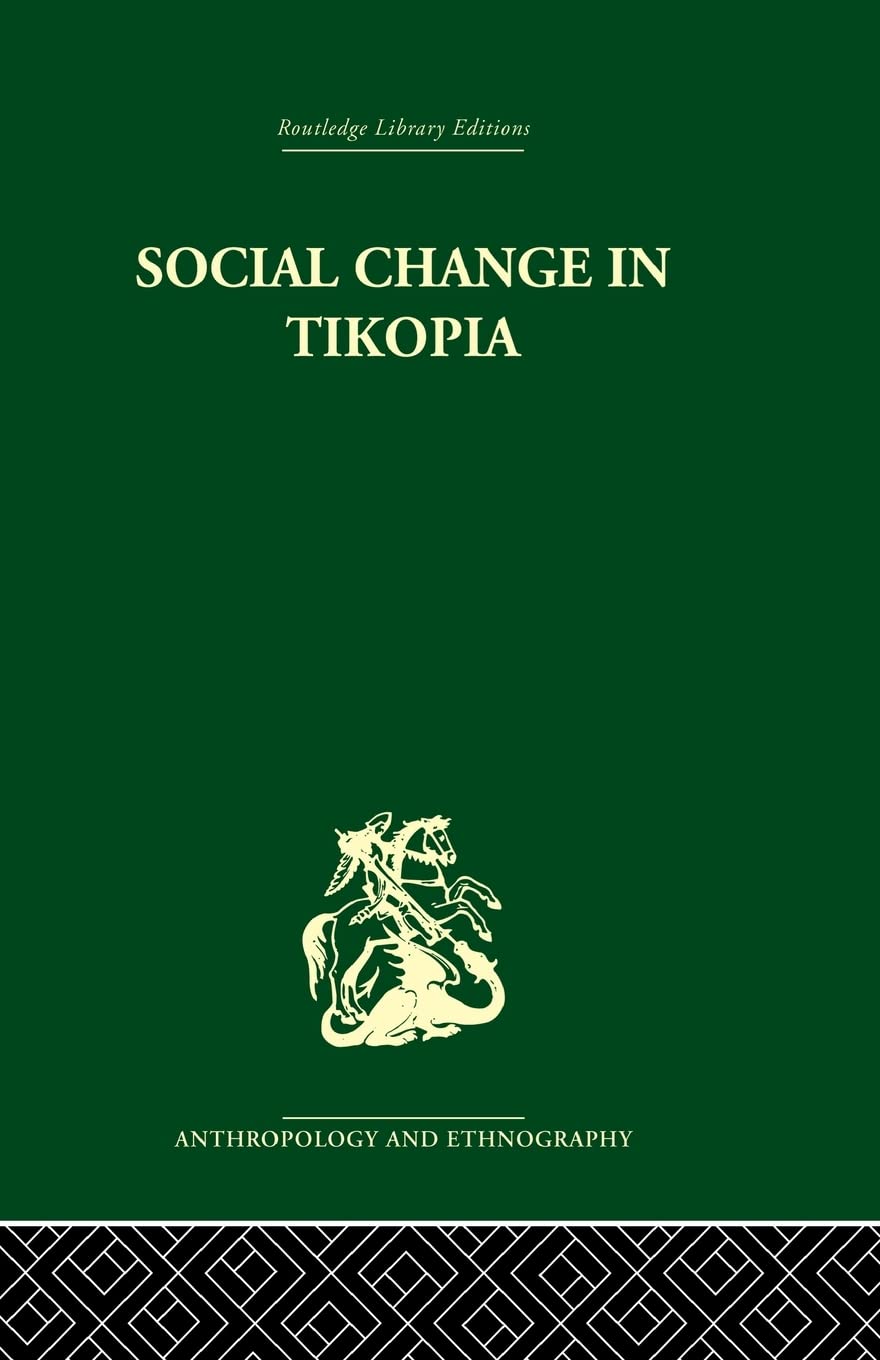
| Title | Social Change in Tikopia (Routledge Library Editions Anthropology and Ethnography, 4) |
| Author | Raymond Firth |
| Focus | Impact of modernization on economics, law, politics and social affairs |
| Special content | Firsthand account of a famine and issues of ceremonial distribution |
| Original publication | 1959 |
| Approach | Ethnographic revisit and institutional analysis |
Our Verdict
Social Change in Tikopia is a concise, valuable ethnographic study for readers who want a grounded account of how modernization and crisis affect small-scale institutions. Its firsthand famine observations and follow-up analysis make it a good value for students and researchers seeking historical case material rather than contemporary policy prescriptions.
Frequently Asked Questions
Does this book include firsthand observations?
Yes. Firth records being on Tikopia during a famine and uses that direct experience to analyze distribution and responsibility.
Is the book suitable for modern development courses?
It is best used as a historical case study within development courses, not as a current technical manual.
How detailed is the coverage of ritual and ceremony?
Firth gives specific attention to problems of distribution in ceremonial contexts and their social implications.
Editor's Take
Social Change in Tikopia is a concise ethnographic study offering firsthand famine observations and a clear analysis of how modernization affected Tikopia's institutions; it is recommended for students and researchers seeking historical case material.

Recently viewed
Recently viewed products will appear here as customers browse the store.