

Social Collateral: Women and Microfinance in Paraguay's Smuggling
Social Collateral: Women and Microfinance in Paraguay's Smuggling
Price subject to change. Tap below for current.
Couldn't load pickup availability
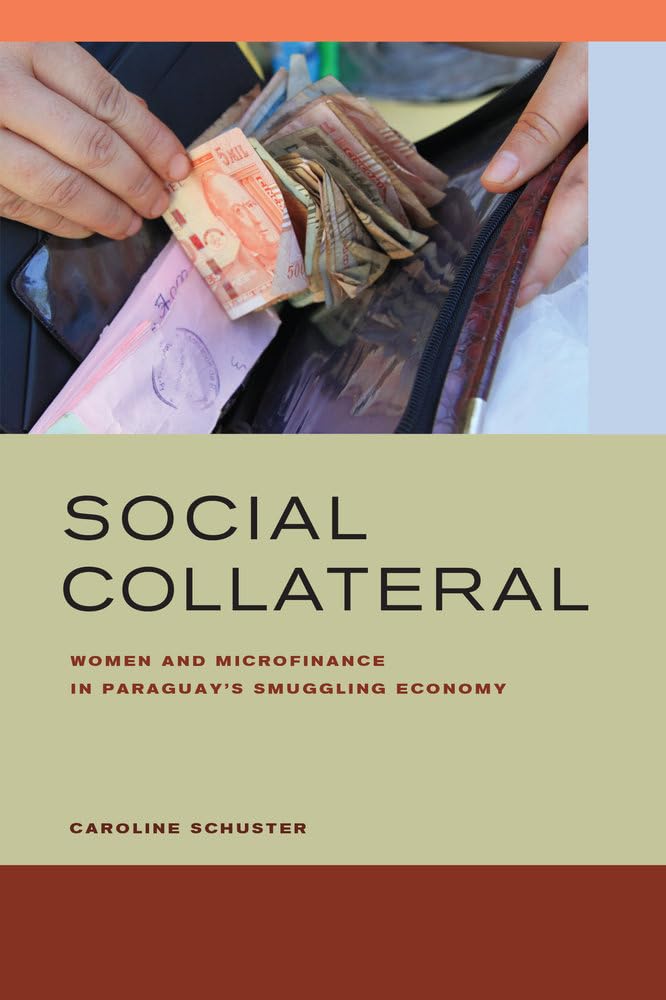
Our review of Social Collateral: Women and Microfinance in Paraguays Smuggling Economy finds it best suited to readers seeking a rigorous, ethnographic look at how small loans and group pressure shape everyday economic life. Caroline E. Schuster uses Paraguayan solidarity lending to show the collision of development projects and informal border economies, and the book's greatest value is its close attention to how social collateral operates where formal finance and smuggling networks meet. This review highlights the book's analytic clarity and practical relevance for scholars and practitioners alike.
Key Features
- Ethnographic focus: Deep fieldwork on Paraguayan group loans provides concrete examples of how lending practices are embedded in local social relations.
- Gender analysis: A careful account of the feminization of solidarity lending explains why women disproportionately shoulder group loan obligations.
- Development critique: The book interrogates the tension between social development aims and global finance, offering a critical perspective useful for policy discussions.
- Cross-sector insight: By tracing connections between commercial society and smuggling economies, the work illuminates informal market dynamics often overlooked in microcredit studies.
- Clear narrative: Schuster weaves empirical detail and theoretical reflection so readers can follow the mechanics of mutual support and peer pressure securing loans.
Who It's For
This book is valuable for anthropology and development studies students, NGO practitioners working on microfinance, and researchers interested in gendered economic practices. Its close focus on Paraguayan solidarity lending makes it a strong case study for comparative work on microcredit and informal economies.
Readers seeking a how-to manual for lending programs or a broad global history of microfinance may want a different, more prescriptive title. Those looking for quantitative evaluations of loan performance will find the emphasis here is qualitative and interpretive.
Pros & Cons
Pros
- Provides detailed, on-the-ground descriptions of group lending that illuminate real social pressures behind repayment.
- Offers a persuasive gendered reading that clarifies why women are central to solidarity lending.
- Connects development practice to informal smuggling economies, expanding common analyses of microcredit.
Cons
- The qualitative, ethnographic approach means it is less useful for readers seeking statistical outcomes or program metrics.
Specifications
| Title | Social Collateral: Women and Microfinance in Paraguays Smuggling Economy |
| Author | Caroline E. Schuster |
| Subject | Microcredit, solidarity lending, gender and development |
| Region | Paraguay, border and smuggling economies |
| Approach | Ethnographic fieldwork and qualitative analysis |
| Audience | Anthropology, development practitioners, students |
Our Verdict
Social Collateral is a thoughtful, well-documented study that should appeal to scholars and practitioners who want a nuanced account of how solidarity lending functions in settings shaped by informal trade and gendered labor. It offers strong analytical payoff for readers interested in the social mechanisms behind microcredit and is good value as a focused case study rather than a policy handbook.
Frequently Asked Questions
Does this book include quantitative loan performance data?
No. The work is ethnographic and interpretive, emphasizing social processes over statistical outcomes.
Is the focus limited to one community in Paraguay?
While centered on Paraguayan solidarity lending at border sites, the analysis draws comparisons to broader development and smuggling contexts.
Who would benefit most from reading this?
Anthropologists, development professionals, and students exploring gendered finance and informal economies will gain the most from its detailed case study.
Editor's Take
Social Collateral delivers a nuanced ethnographic account of solidarity lending at the Paraguayan border, ideal for scholars and practitioners interested in gendered finance and informal economies.

Recently viewed
Recently viewed products will appear here as customers browse the store.