

Society and Death in Ancient Egypt: Mortuary Landscapes
Society and Death in Ancient Egypt: Mortuary Landscapes
Price subject to change. Tap below for current.
Couldn't load pickup availability
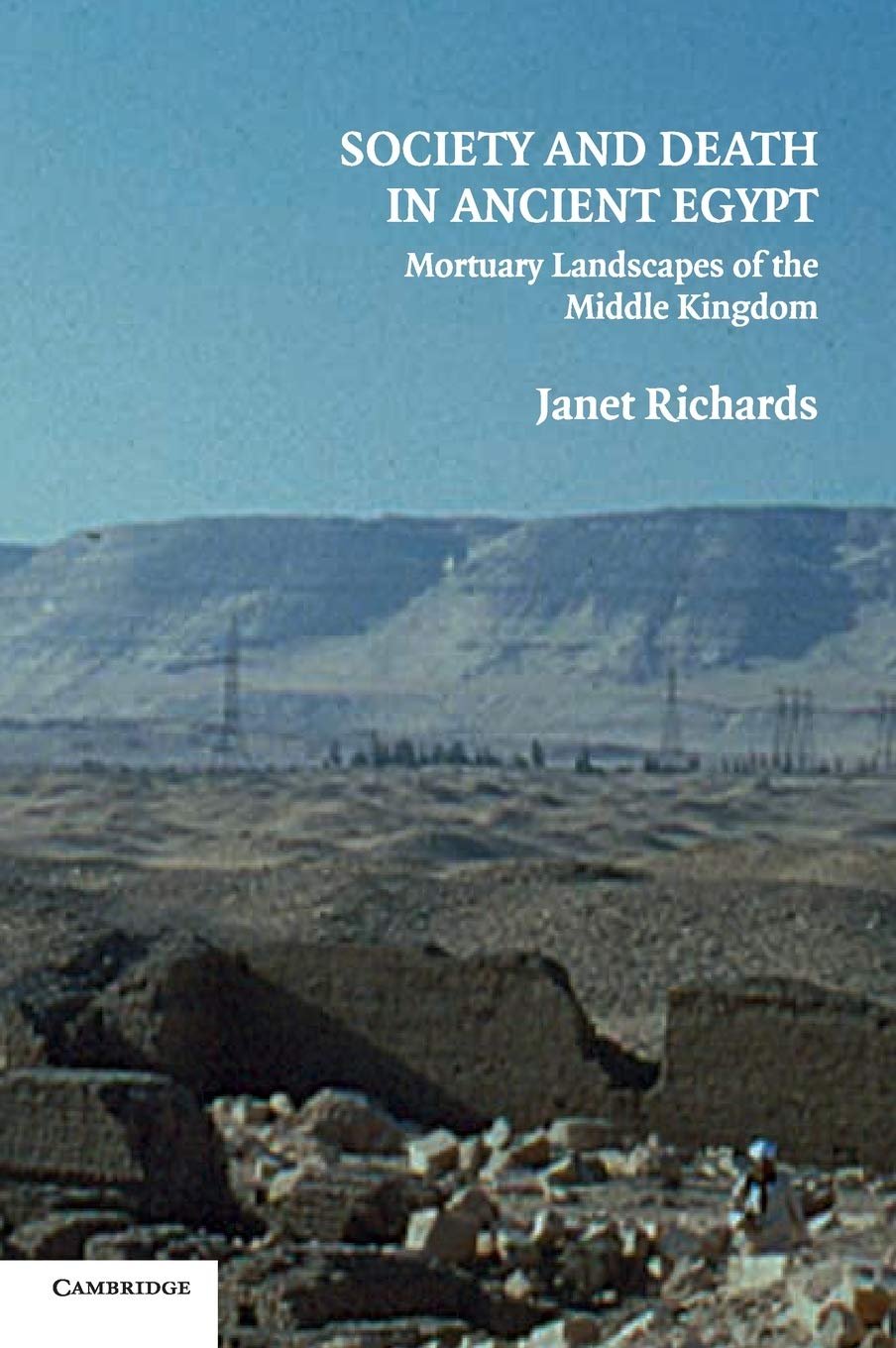
In this review of Society and Death in Ancient Egypt, Janet Richards offers a focused exploration of social change in the Middle Kingdom that will appeal to scholars, graduate students, and informed readers of ancient history. The book's single biggest contribution is its insistence on examining the full range of mortuary behavior rather than only elite tombs, which makes it a valuable corrective for anyone seeking a social rather than purely political or art-historical account of the period. Readers looking for synthetic interpretation grounded in field evidence will find Richards persuasive and richly documented.
Key Features
- Social focus: Richards traces the emergence of a probable middle class by examining mortuary practices across social levels, offering a different lens than elite-focused studies.
- Chronological scope: The book connects developments in the Middle Kingdom back to the later Old Kingdom and First Intermediate Period, helping readers see long-term processes.
- Multi-source evidence: Excavation data, ancient Egyptian texts, and decorative reliefs are combined to build a cohesive argument from diverse materials.
- Mortuary landscapes: By treating cemeteries and funerary settings as informative landscapes, the work reveals how social and political processes are inscribed in burial choices.
- Interpretive synthesis: Richards weaves archaeological and textual evidence into explanatory narratives useful for teaching and advanced study.
Who It's For
This book is best for graduate students, researchers, and informed amateurs interested in Egyptian social history, mortuary archaeology, and the Middle Kingdom specifically. Its emphasis on social stratification and on non-elite material makes it especially useful for courses that aim to broaden perspectives beyond royal and elite art and architecture.
It is less suited to readers seeking a purely chronological narrative of pharaonic rulers, a lavishly illustrated coffee-table treatment, or a beginner's handbook to Egyptian art; those audiences may prefer more general overviews or richly visual survey works.
Pros & Cons
Pros
- Grounded interpretation that uses both archaeological excavation evidence and textual sources to support its claims.
- Clear argument linking the emergence of a middle class to earlier Old Kingdom and First Intermediate Period developments.
- Fresh perspective by focusing on mortuary landscapes and non-elite practices rather than only elite burials.
Cons
- Readers expecting extensive illustration or a concise introductory survey may find the analytic focus dense and specialized.
Specifications
| Title | Society and Death in Ancient Egypt: Mortuary Landscapes of the Middle Kingdom |
| Author | Janet Richards |
| Subject focus | Social stratification and mortuary behavior in the Middle Kingdom |
| Chronological scope | Later Old Kingdom, First Intermediate Period, Middle Kingdom |
| Evidence used | Excavations, ancient Egyptian texts, decorative reliefs and statuary |
| Approach | Archaeological and textual synthesis of mortuary landscapes |
Our Verdict
Richards delivers a thoughtful, evidence-rich study that reorients how readers should think about death, cemeteries, and social change in Middle Kingdom Egypt. For specialists and serious students the book offers excellent value as a synthetic, well-documented argument; for casual readers it remains authoritative but somewhat demanding in scope and detail.
Frequently Asked Questions
Does this book focus only on elite tombs?
No. The book deliberately examines the full range of mortuary behavior, emphasizing non-elite practices as well as elite remains.
What kinds of evidence does the author use?
The study combines excavation reports, ancient Egyptian texts, and decorative reliefs and statuary to support its interpretations.
Is this book suitable for classroom use?
Yes. It is well suited for graduate seminars and advanced undergraduate courses on Egyptian social history and mortuary archaeology.
Editor's Take
Richards presents a well-documented, synthetic study of Middle Kingdom mortuary landscapes that persuasively argues for a developing middle class; ideal for students and specialists seeking a social-archaeological perspective.

Recently viewed
Recently viewed products will appear here as customers browse the store.