

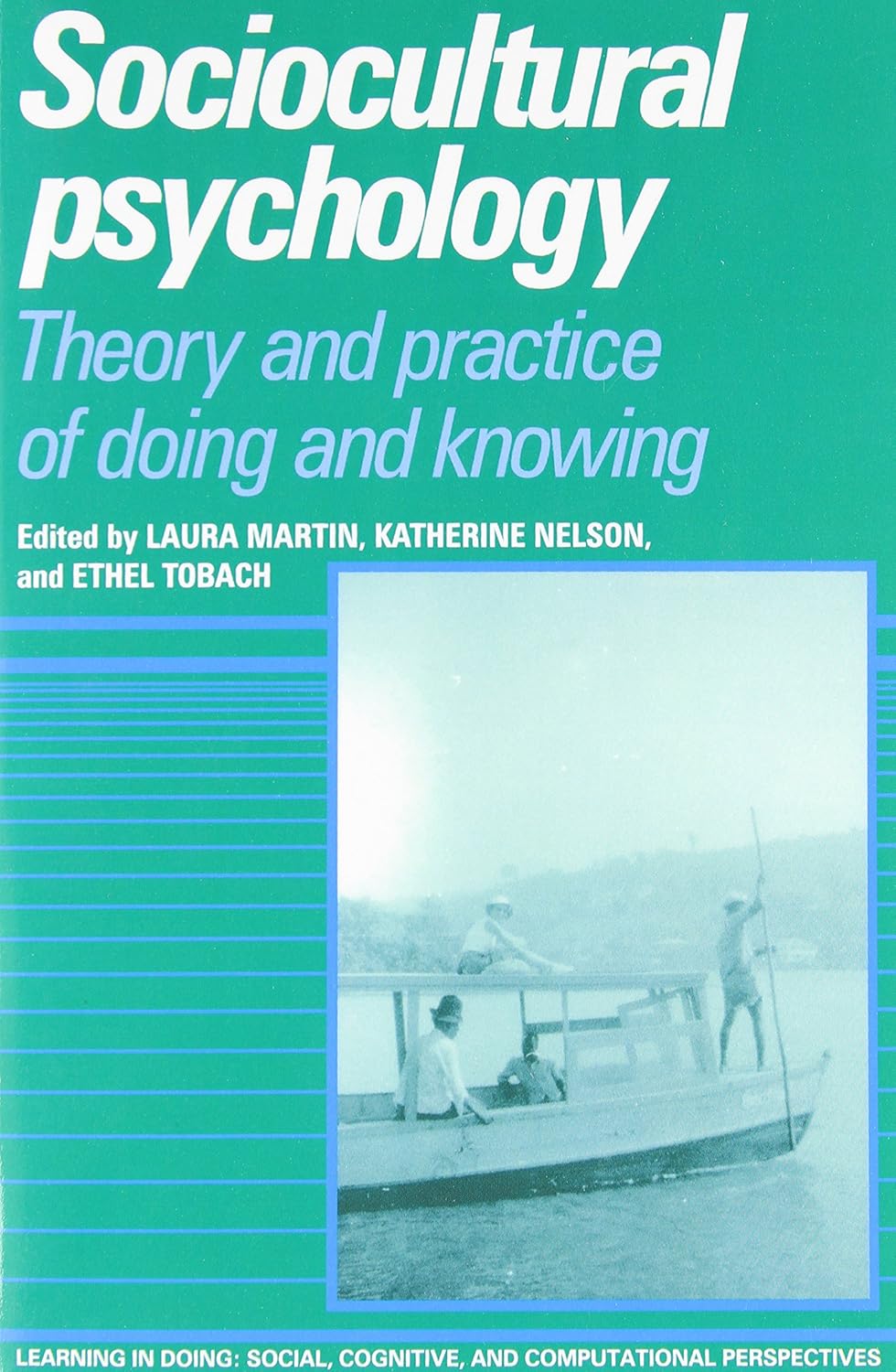
Sociocultural Psychology: Theory and Practice of Doing and Knowing
Sociocultural Psychology: Theory and Practice of Doing and Knowing
Price subject to change. Tap below for current.
Couldn't load pickup availability
In this review of Sociocultural Psychology: Theory and Practice of Doing and Knowing readers will find a thoughtful collection for scholars and advanced students interested in how context, history and culture shape cognitive activity. The essays, written in honor of Sylvia Scribner, assemble perspectives from sociocultural, cognitive, developmental and educational psychology and make a persuasive case for the relevance of activity theory to real-world problems. The single biggest reason to buy is its integration of theoretical insight with applied analysis of literacy, schooling and workplace cognition.
Key Features
- Honors Sylvia Scribner: Essays explicitly engage and extend Scribner's legacy, offering readers a clear sense of the thinker who influenced contemporary sociocultural approaches.
- Interdisciplinary essays: Contributions span sociocultural, cognitive, developmental and educational psychology, providing multiple angles on human activity and thought.
- Contextual emphasis: The volume emphasizes the importance of historical and cultural context to thinking, which helps readers apply theory to diverse settings.
- Applied activity theory: Several chapters present concrete applications of activity theory to work, school and problem solving, making abstract ideas more practical.
- Literacy and cognition focus: The essays analyze the role of literacy in human activity and thought, useful for educators and researchers exploring learning and instruction.
- Analysis of societal processes: The book examines historical-societal processes in science and culture, useful for those studying the evolution of ideas and institutions.
Who It's For
This collection is best for graduate students, researchers and practitioners in psychology, education and the human sciences who want a rigorous, theoretically informed set of essays linking cognition to sociocultural context. In particular, anyone studying literacy, workplace learning or activity theory will find substantial material to inform research design and interpretation.
Those seeking a basic textbook or an introduction aimed at general readers should look elsewhere; the emphasis here is on advanced theoretical discussion and case analyses rather than introductory overviews or step-by-step pedagogy.
Pros & Cons
Pros
- Rich, interdisciplinary perspectives that deepen understanding of cognition in context.
- Strong focus on literacy and real-world applications that benefit educators and workplace analysts.
- Scholarly essays that build on a respected figure in the field and stimulate further research.
Cons
- Not designed as an introductory text; readers without background in psychology or activity theory may find some essays demanding.
Specifications
| Title | Sociocultural Psychology: Theory and Practice of Doing and Knowing |
| Series | Learning in Doing: Social, Cognitive and Computational Perspectives |
| Editors / Authors | Laura Martin, Katherine Nelson, Ethel Tobach |
| Subject areas | Sociocultural, cognitive, developmental, educational psychology |
| Key themes | Context, history, literacy, activity theory, cognition in school and workplace |
| Audience | Researchers, graduate students, educators |
Our Verdict
Sociocultural Psychology is a valuable, scholarly collection for readers who want to connect theory with applied study of literacy, schooling and workplace cognition. Its essays reward readers with some background in psychology or education and represent good value for researchers seeking rigorous, interdisciplinary treatments grounded in Sylvia Scribner's legacy.
Frequently Asked Questions
Does this volume focus on practical classroom strategies?
Answer. It contains applied analyses relevant to schooling, but it is primarily scholarly and emphasizes theoretical integration rather than step-by-step classroom methods.
Who edited the collection?
Answer. The volume is attributed to Laura Martin, Katherine Nelson and Ethel Tobach as the named editors or principal contributors.
Is prior knowledge of activity theory required?
Answer. Prior familiarity helps; many essays assume background in sociocultural approaches and may be challenging for complete newcomers.
Editor's Take
This scholarly collection connects activity theory, literacy and contextual analysis to inform research and practice; it is best suited to graduate students and researchers seeking rigorous, interdisciplinary perspectives.

Recently viewed
Recently viewed products will appear here as customers browse the store.