

Software Radio Transceivers Software Defined Radio SDR Development
Software Radio Transceivers Software Defined Radio SDR Development
Price subject to change. Tap below for current.
Couldn't load pickup availability
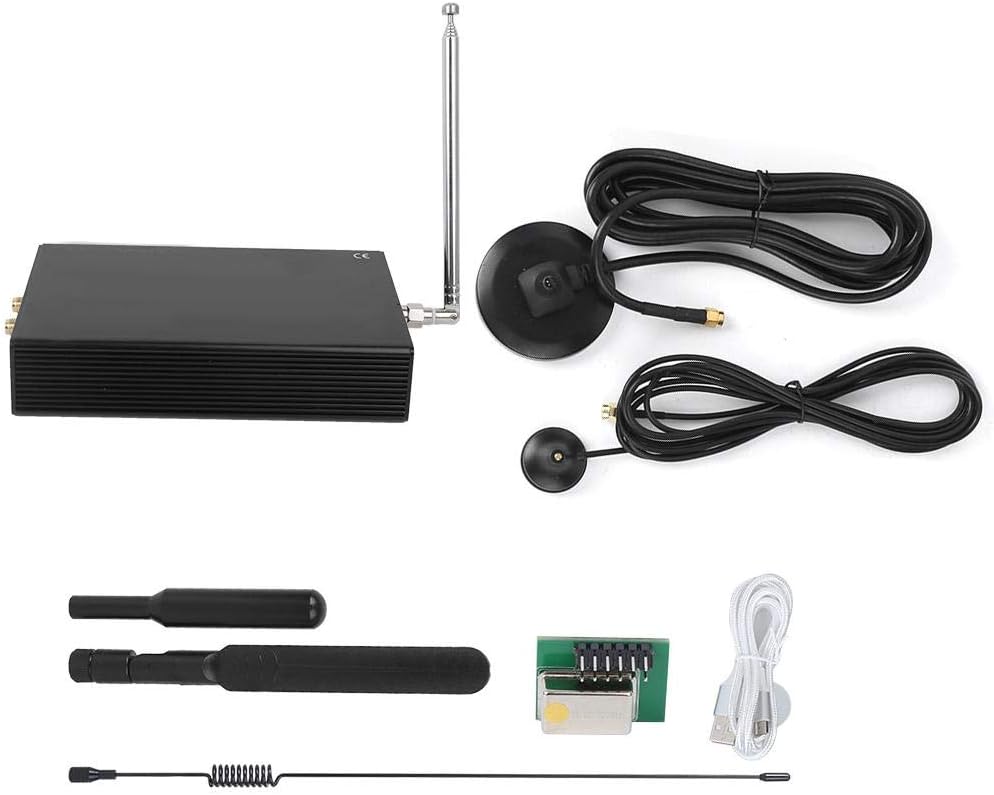
In this review the reviewer tests the Software Radio Transceivers Software Defined Radio SDR development board and finds it best suited for hobbyists and engineers who need a wideband, software-driven receiver and development platform. The board covers a broad 1 MHz to 6 GHz range and delivers up to 20 million samples per second, which is the single biggest reason to consider it: it combines a wide RF span with practical sample throughput and compatibility with common toolchains. For those building experiments in GNU Radio or SDR #, this board is a compact, programmable transceiver platform worth evaluating.
Key Features
- Wide frequency range: Covers 1 MHz to 6 GHz so a single board can be used for many RF experiments across HF, VHF, UHF, and microwave bands.
- High sample rate: Up to 20 million samples per second enables broader instantaneous bandwidths for capture and analysis.
- 8-bit orthogonal sampling: Uses 8-bit I and 8-bit Q sampling which simplifies baseband processing while keeping data rates manageable.
- Software-configurable front end: RX and TX gains plus baseband filters are adjusted in software for quick iteration during development.
- Synchronization I/O: SMA master clock input and output make it possible to sync multiple units or external timing references for coordinated measurements.
- Convenience controls: A programming button and software-controlled antenna port power add practical hands-on convenience for bench use.
Who It's For
This board is aimed at RF hobbyists, students, and engineers who already use or plan to use open toolchains like GNU Radio or SDR # for signal processing, modulation experiments, and receiver development. Its wide frequency coverage and software-configurable front end make it especially useful for multi-band prototyping and classroom labs.
It is less appropriate for users needing very high dynamic range or professional multibit receivers; the 8-bit orthogonal sampling and half-duplex operation mean this is a development and learning platform rather than a production-grade communications transceiver for mission-critical deployments.
Pros & Cons
Pros
- Very wide 1 MHz to 6 GHz tuning range lets one board serve many projects.
- Up to 20 MSPS supports broad instantaneous capture for moderate-bandwidth signals.
- Sync-capable SMA clock I/O and software control simplify multi-board setups and experimentation.
- Compatible with common SDR software, easing integration into existing workflows.
Cons
- 8-bit I/Q sampling limits dynamic range compared with higher-bit professional SDRs.
- Half-duplex transceiver design means simultaneous full-duplex Tx/Rx use is not supported.
Specifications
| Operating frequency | 1 MHz to 6 GHz |
| Sample rate | Up to 20 million samples per second |
| Sampling resolution | 8-bit I and 8-bit Q orthogonal sampling |
| Transceiver mode | Half-duplex |
| Antenna connector | SMA female |
| Sync | SMA master clock input and output |
| Antenna port power | Software controlled, 50 mA at 3.3 V |
Our Verdict
The Software Radio Transceivers SDR development board is a strong value for learners and experimenters who need broad frequency coverage and easy integration with GNU Radio or SDR #. It delivers practical sample rates and synchronization features in a compact package, making it a good choice for prototyping and classroom work, though users requiring the highest dynamic range or full-duplex operation should consider other options.
Frequently Asked Questions
Does this board work with GNU Radio?
Yes. It is listed as compatible with GNU Radio and SDR #, and works as a development platform when proper drivers and blocks are used.
What is the maximum sample rate?
The board supports up to 20 million samples per second, which allows moderate instantaneous bandwidth captures.
Can the units be synchronized for multi-board setups?
Yes. SMA master clock input and output provide synchronization capability for coordinated measurements or multi-channel experiments.
Editor's Take
A strong development board for hobbyists and engineers needing 1 MHz to 6 GHz coverage and up to 20 MSPS; compatible with GNU Radio and SDR #, but limited by 8-bit I/Q sampling and half-duplex operation.

Recently viewed
Recently viewed products will appear here as customers browse the store.