

Software Test Attacks to Break Mobile and Embedded Devices - Test
Software Test Attacks to Break Mobile and Embedded Devices - Test
Price subject to change. Tap below for current.
Couldn't load pickup availability
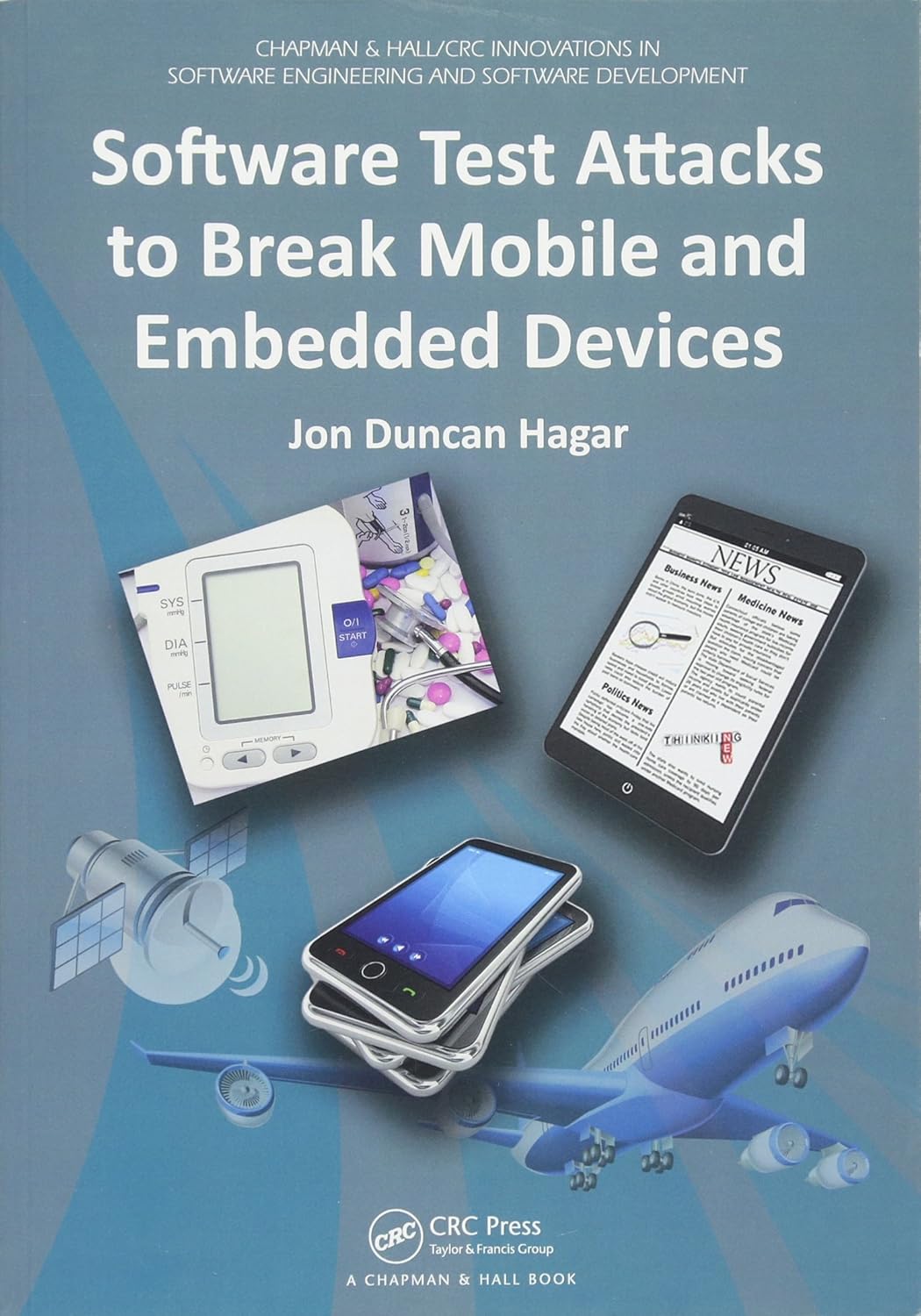
In this review of Software Test Attacks to Break Mobile and Embedded Devices the bottom line is clear: this is a practical, hands-on guide for testers who need a repeatable way to uncover defects in smart devices before users do. Jon Duncan Hagar focuses on an attack-based testing method that translates well from desktop and web testing into the constrained, hardware-influenced world of mobile and embedded systems. The book walks readers from basic concepts to real-world setups, making it especially valuable for teams responsible for quality in connected devices.
Key Features
- Attack-based approach: Presents a mix-and-match set of test attacks that reveal bugs by simulating deliberate probes and failure modes.
- Step-by-step guidance: Starts with fundamentals and builds to more complex techniques so readers can adopt methods incrementally.
- Focus on mobile and embedded: Tailors test ideas to the constraints and interfaces of smart devices rather than only IT systems.
- Practical patterns: Explains mind mapping and lab setups so testers can organize attacks and reproduce results reliably.
- Team and individual use: Suitable for lone testers or coordinated test teams working on device ecosystems.
Who It's For
This book is aimed at software testers, QA engineers, and developers who are moving into or already work with mobile, embedded, or IoT devices and need concrete testing strategies. It is useful for teams that must discover device-specific failures that traditional IT test suites may miss, and for testers who want to adopt an attack basis to structure exploratory and destructive testing.
It is less suited to readers seeking deep theoretical proofs or exhaustive code-level vulnerability lists; security researchers looking for exploit details or academics wanting formal models may need supplemental resources. Those new to basic software testing concepts should be prepared to reference introductory material alongside this book.
Pros & Cons
Pros
- Provides actionable test attacks that surface functional and integration bugs specific to devices.
- Clear progression from basics to lab techniques helps teams scale practices without starting from scratch.
- Bridges the gap between IT testing and the particular demands of mobile and embedded hardware.
Cons
- Not a substitute for deep security exploit manuals; readers seeking low-level attack code will need other sources.
Specifications
| Title | Software Test Attacks to Break Mobile and Embedded Devices |
| Series | Chapman & Hall/CRC Innovations in Software Engineering and Software Development |
| Author | Jon Duncan Hagar |
| Coverage | Attack-based testing for mobile and embedded systems |
| Audience | Testers, QA engineers, development teams |
| Approach | Mix-and-match test attacks and lab techniques |
Our Verdict
Software Test Attacks to Break Mobile and Embedded Devices is a practical resource for testers responsible for smart devices, offering a structured, repeatable way to find defects that conventional tests miss. For teams needing an applied, attack-focused methodology it represents good value, since the patterns and lab techniques can be adapted immediately to real projects.
Frequently Asked Questions
Is this book suitable for complete beginners?
The book assumes basic testing knowledge; beginners will benefit but may want an introductory testing primer alongside it.
Does it cover security exploits in depth?
The focus is on testing attacks that reveal defects rather than providing exploit code or deep security research methods.
Can teams adopt the methods quickly?
Yes, the mix-and-match approach and lab guidance are designed for incremental adoption by individuals and teams.
Editor's Take
A practical, attack-focused guide for testers of mobile and embedded devices that delivers repeatable test attacks and lab techniques, making it valuable for teams needing to find device-specific defects.

Recently viewed
Recently viewed products will appear here as customers browse the store.