

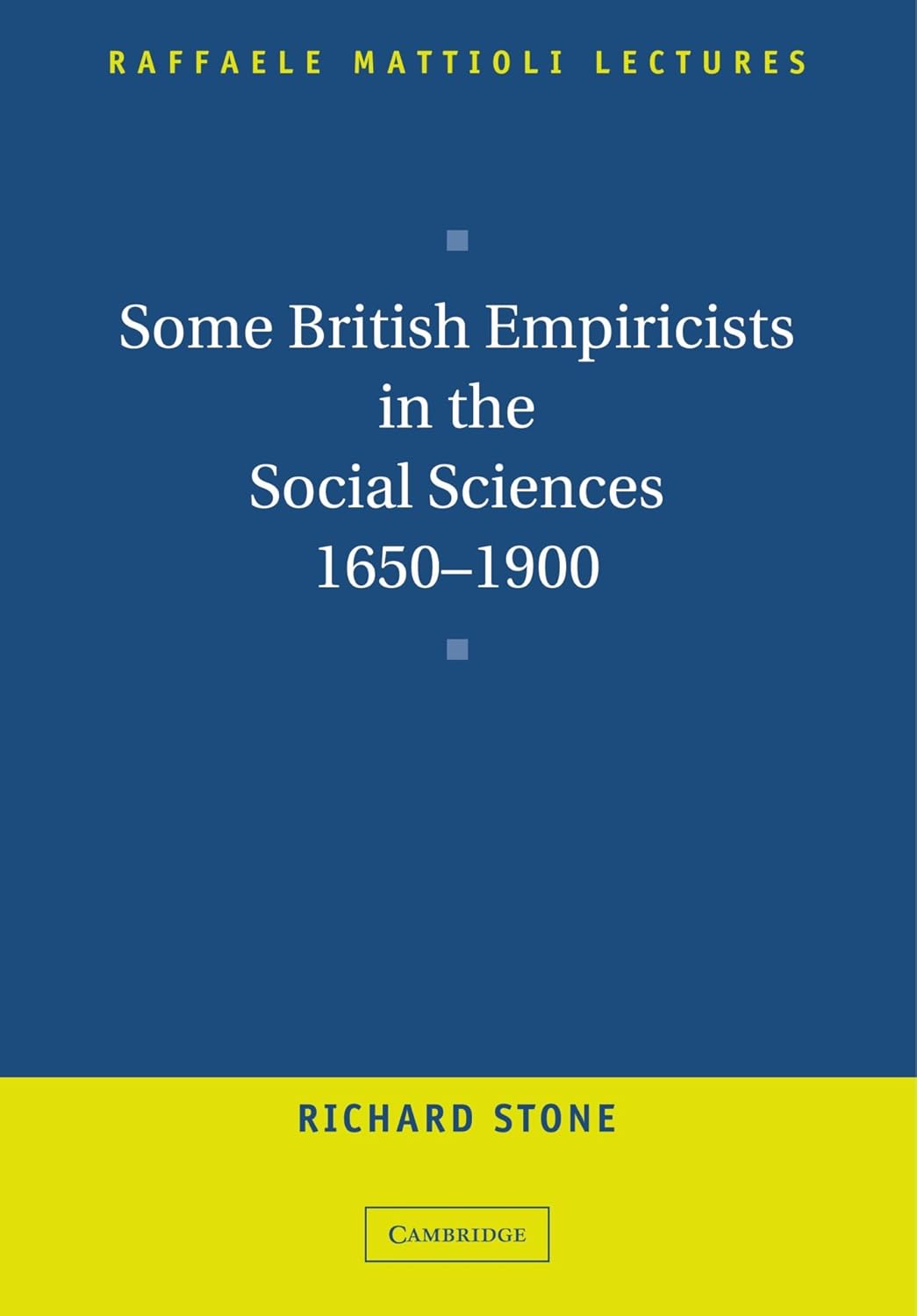
Some British Empiricists in the Social Sciences, 1650-1900 - Lecture
Some British Empiricists in the Social Sciences, 1650-1900 - Lecture
Price subject to change. Tap below for current.
Couldn't load pickup availability
In this review of Some British Empiricists in the Social Sciences, 1650-1900, the lectures are judged for readers interested in the historical roots of quantitative social inquiry. Richard Stone presents twelve focused lectures on pioneers of economic, demographic and social statistics, and the single biggest reason to buy is the book's meticulous tracing of how early figures shaped methods still used today. The writing is academic but accessible, making this volume a useful review read for historians and social scientists seeking precedent and development rather than a general introduction to statistics.
Key Features
- Twelve focused lectures: each lecture concentrates on a specific set of pioneers, allowing clear, concentrated study of individual contributions to statistics and social inquiry.
- Historical breadth: coverage from the seventeenth century to the end of the nineteenth century helps readers follow long-term developments in economic measurement and demographic methods.
- Profiles of founders: detailed attention to figures such as William Petty and John Graunt gives readers concrete examples of early quantitative practice and its motivations.
- Cross-disciplinary scope: the book links economic, demographic and social statistics to show how methods migrated between fields and influenced policy and inquiry.
- Lecture format: the original Raffaele Mattioli Lectures structure gives a concise, seminar-like feel that suits readers looking for targeted historical analysis.
Who It's For
This volume is best for historians of economics, demographers, statisticians curious about their profession's origins, and graduate students seeking primary-context narratives of how measurement practices evolved. The lectures are most valuable to readers who appreciate focused scholarly essays rather than textbook overviews.
Those seeking a modern how-to manual on statistical techniques or a beginner's primer in data analysis should look elsewhere, since the book emphasizes intellectual history and profiles of individuals rather than step-by-step methodology.
Pros & Cons
Pros
- Clear historical tracing of pioneers gives readers concrete lineage for contemporary methods.
- Concise lecture format makes complex developments easier to digest in discrete sections.
- Good cross-section of figures across economics, demography and social statistics, offering comparative insight.
Cons
- Scholarly tone and focus on historical figures mean it is not a practical statistics handbook.
Specifications
| Title | Some British Empiricists in the Social Sciences, 1650-1900 |
| Author | Richard Stone |
| Format | Raffaele Mattioli Lectures (lecture series) |
| Scope | Twelve pioneers in economic, demographic and social statistics |
| Historical range | Seventeenth century to late nineteenth century |
| Notable subjects | William Petty, Bishop Fleetwood, John Graunt, Florence Nightingale, Charles Booth |
Our Verdict
Some British Empiricists in the Social Sciences, 1650-1900 is recommended for readers who want a scholarly, well-organized tour of early statistical thinkers and how their work influenced economic and social measurement. It is good value for historians and advanced students because the lectures collate primary figures and developments that are often scattered across specialist literature.
Frequently Asked Questions
Does this book cover specific statisticians?
Yes. It profiles twelve pioneers including William Petty, John Graunt, William Farr, Florence Nightingale and Charles Booth.
Is the book suitable for beginners in statistics?
No. The focus is historical and intellectual; readers wanting practical instruction in methods should consult textbooks on statistics instead.
What time period does the book cover?
The lectures trace developments from the seventeenth century through to the end of the nineteenth century.
Editor's Take
Recommended for historians and advanced students, this lecture volume traces twelve pioneers who shaped economic, demographic and social statistics, offering concise, well-organized historical insight.

Recently viewed
Recently viewed products will appear here as customers browse the store.