

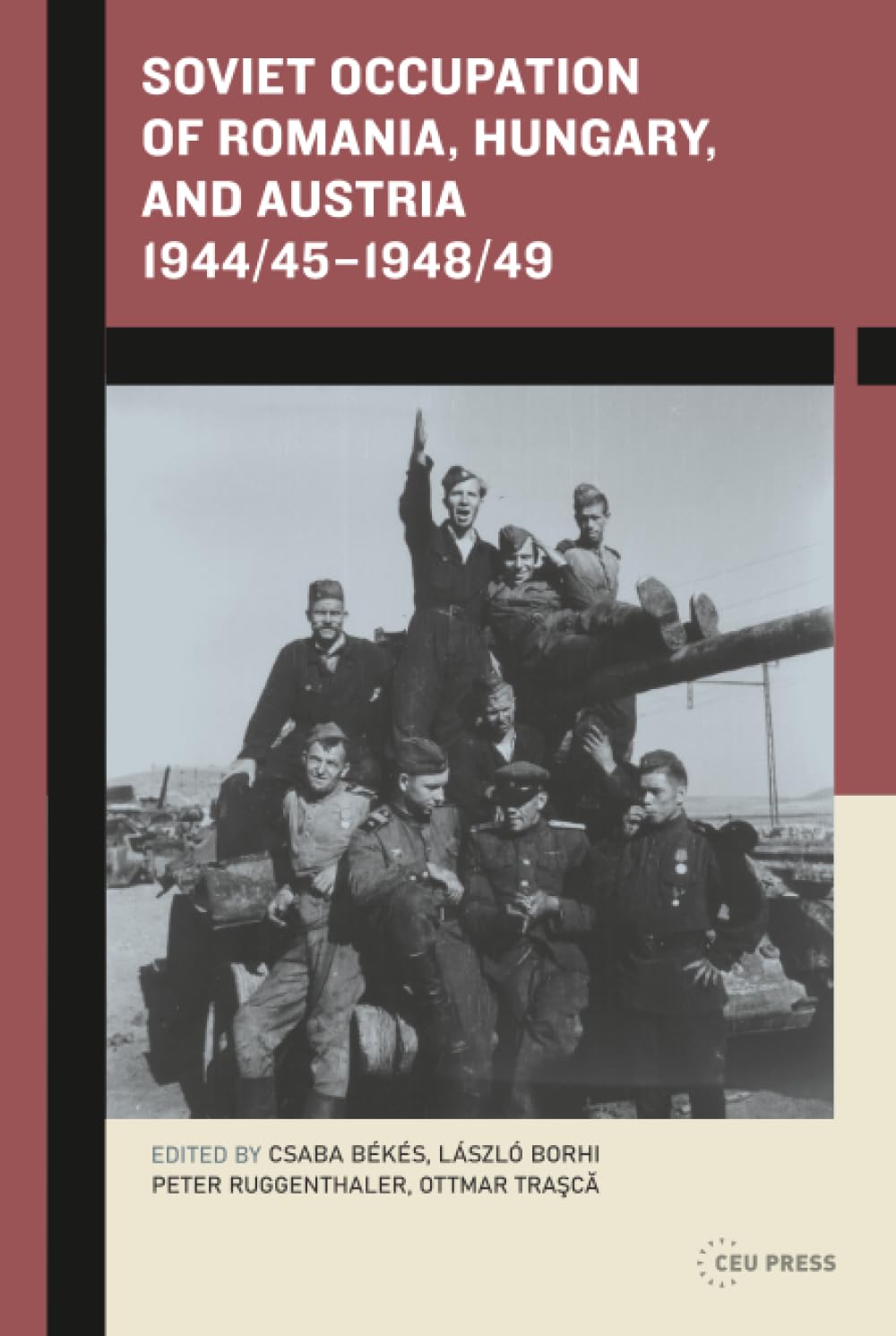
Soviet Occupation of Romania, Hungary, and Austria 1944/45-1948/49
Soviet Occupation of Romania, Hungary, and Austria 1944/45-1948/49
Price subject to change. Tap below for current.
Couldn't load pickup availability
In this review of Soviet Occupation of Romania, Hungary, and Austria 1944/45-1948/49 the authors present a comparative, document-based analysis that will interest scholars and informed readers of Cold War history. The book's single biggest reason to buy is its multi-archive foundation: using Austrian, Hungarian, Romanian and Russian documents it reframes Soviet policy as not only political but also military, economic and imperial. This review explains who benefits most, what the book adds to existing literature, and why the human dimension of occupation is a central, unavoidable element.
Key Features
- Comparative scope: Examines Austria, Hungary and Romania side by side to reveal patterns and divergences in Soviet occupation policy.
- Archival research: Uses documents from Austrian, Hungarian, Romanian and Russian archives to support claims and provide fresh primary-source evidence.
- Political and military analysis: Argues that Soviet foreign policy must be read through both political decision-making and the strategic use of occupied territory.
- Economic perspective: Details how occupied territories were used as economic space, adding depth to the standard political narrative.
- Human experiences: Confronts atrocities and personal consequences of occupation, giving weight to the tragic social impact alongside state-level analysis.
Who It's For
This book is well suited to graduate students, historians, and policy scholars who want a documented, comparative study of early Cold War occupation in East-Central Europe. The focus on primary archives makes it valuable for researchers seeking source-driven interpretations rather than summary syntheses.
Readers looking for a brief or popular history will find the treatment dense and documentary; those expecting a purely political biography of Stalin should look elsewhere, because the authors deliberately expand the lens to include military, economic and human dimensions.
Pros & Cons
Pros
- Strong archival foundation provides rare documentary evidence across four national collections.
- The comparative approach clarifies differences between Austria, Hungary and Romania in occupation practices.
- Integration of military and economic analysis challenges conventional political-only readings of Soviet expansion.
Cons
- The dense scholarly style and focus on archives may limit accessibility for casual readers.
Specifications
| Title | Soviet Occupation of Romania, Hungary, and Austria 1944/45-1948/49 |
| Authors / Brand | Laszlo Borhi, Ottmar Trasca, Peter Ruggenthaler, Csaba Bekes |
| Geographic focus | Austria, Hungary, Romania |
| Primary sources | Documents from Austrian, Hungarian, Romanian and Russian archives |
| Thematic focus | Political, military, economic and human dimensions of Soviet occupation |
| Historical period | 1944/45 to 1948/49 |
Our Verdict
Soviet Occupation of Romania, Hungary, and Austria 1944/45-1948/49 is a rigorous, well-documented comparative study that repays careful reading. Scholars and serious students of international and European politics will value its archival depth and the way it reorients familiar narratives toward military and economic imperial dimensions. It is good value for those seeking primary-evidence interpretation rather than a light overview.
Frequently Asked Questions
Does this book rely on primary documents?
Yes. The authors use documents from Austrian, Hungarian, Romanian and Russian archives to support their analysis.
Which countries are compared?
The study compares Soviet occupation policies in Austria, Hungary and Romania between 1944/45 and 1948/49.
Is the book suitable for casual readers?
Its scholarly tone and archival detail make it better suited to students and researchers than to casual readers seeking a brief narrative.
Editor's Take
A rigorous comparative study grounded in Austrian, Hungarian, Romanian and Russian archives; ideal for scholars and students seeking a source-driven reinterpretation of Soviet occupation policies.

Recently viewed
Recently viewed products will appear here as customers browse the store.