

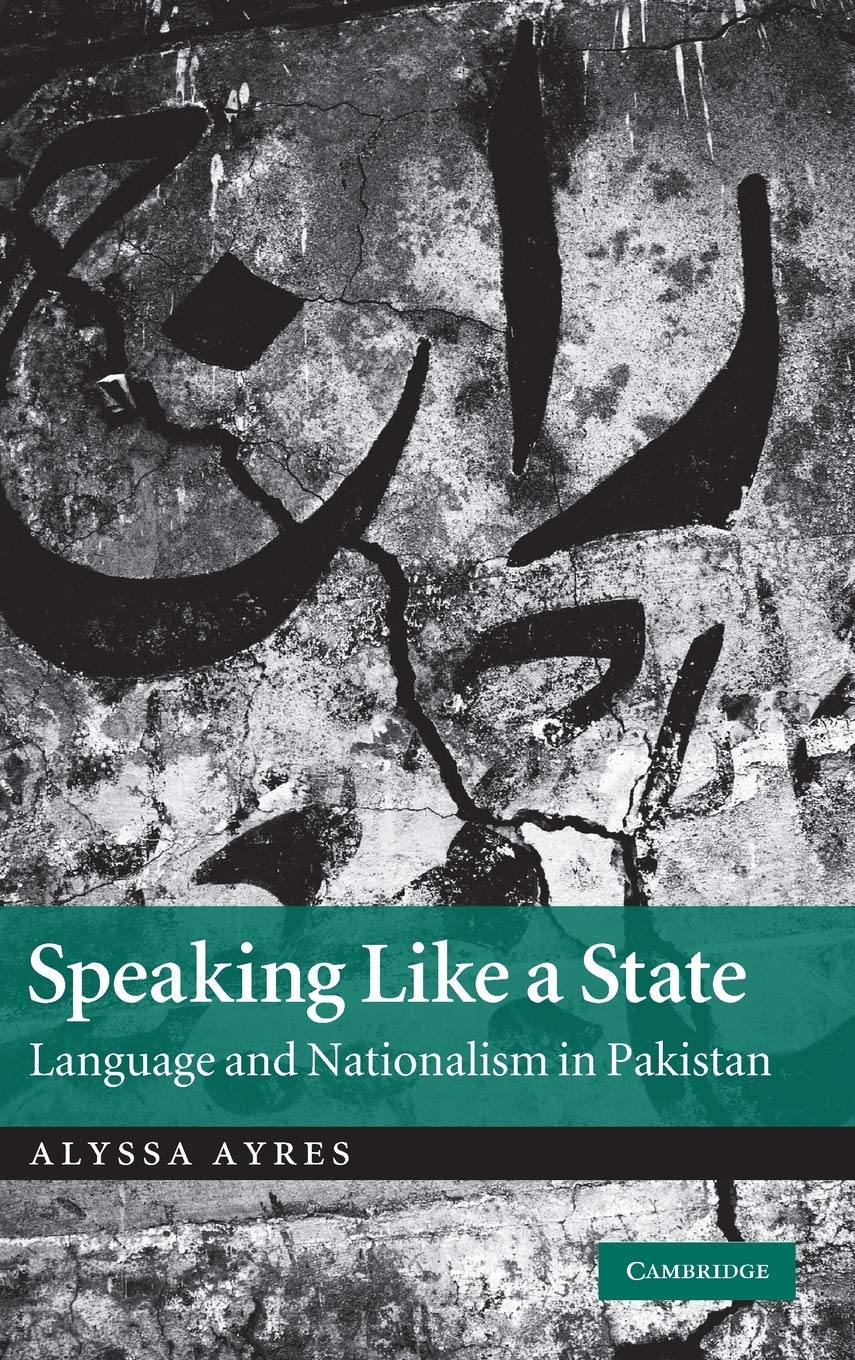
Speaking Like a State: Language and Nationalism in Pakistan
Speaking Like a State: Language and Nationalism in Pakistan
Price subject to change. Tap below for current.
Couldn't load pickup availability
In this review of Speaking Like a State: Language and Nationalism in Pakistan, the book is presented as a focused study for readers who want to understand how language policy shapes political legitimacy. Alyssa Ayres offers a comparative historical narrative that makes the single biggest case for the book: language choices are not merely cultural but central to state formation. The review explains who will gain most from this work and why its comparative framework with India and Indonesia matters for scholars and informed readers of contemporary nationalism.
Key Features
- Comparative analysis: Contrasts Pakistan's language policy with India and Indonesia to show how different approaches yield distinct national outcomes.
- Historical depth: Traces early decisions to adopt Urdu as a national symbol and explains the origins of the resulting political paradox.
- Focus on cultural policy: Demonstrates how cultural and linguistic choices underpin claims to political legitimacy in multiethnic states.
- Scholarly audience: Written for historians, political theorists, and South Asian studies specialists who need nuanced evidence and argumentation.
- Theoretical insight: Uses Pakistan's experience as a case study to illuminate broader issues of identity and nationalism globally.
Who It's For
This title is best for graduate students, researchers, and instructors in history, political theory, and South Asian studies who require a careful, source-driven account of language policy and nationalism. The book is also useful for policy analysts interested in the real-world consequences of symbolic language choices.
Readers seeking a broad popular history or a general survey of Pakistan without emphasis on language policy should look elsewhere, since the book centers tightly on cultural policy and comparative institutional outcomes rather than a sweeping narrative of every political event.
Pros & Cons
Pros
- Clear comparative framework that helps readers see how different language policies produced different national effects.
- Well-grounded historical argument tracing why Urdu was chosen and the practical limits of that choice.
- Valuable for scholars interested in the intersection of culture and political legitimacy.
Cons
- The book's specialist focus means casual readers may find the subject narrow rather than panoramic.
Specifications
| Title | Speaking Like a State: Language and Nationalism in Pakistan |
| Author | Alyssa Ayres |
| Subject focus | Language policy, nationalism, cultural legitimacy |
| Comparative cases | Pakistan, India, Indonesia |
| Intended audience | Scholars in history, political theory, South Asian studies |
| Primary theme | Language as symbol and instrument of nationhood |
Our Verdict
Speaking Like a State is a focused, thoughtful study that rewards readers who want to understand the structural role of language in nation building. Scholars and advanced students will find its comparative evidence and historical argumentation a strong value, while those seeking a wide-angle popular history should consider a different, broader general book.
Frequently Asked Questions
Does the book explain why Urdu was chosen?
Yes, it traces early leaders' reasoning and the symbolic appeal of Urdu as a link to a perceived cultural past.
How does comparison with India and Indonesia help?
Comparative analysis highlights how different language policies led to divergent outcomes in national integration and political legitimacy.
Who will benefit most from reading this book?
Graduate students, researchers, and instructors in South Asian studies, political theory, and history will gain the most from its arguments.
Editor's Take
Speaking Like a State is a focused, comparative study showing how language policy shapes political legitimacy; recommended for scholars and advanced students seeking rigorous analysis.

Recently viewed
Recently viewed products will appear here as customers browse the store.