

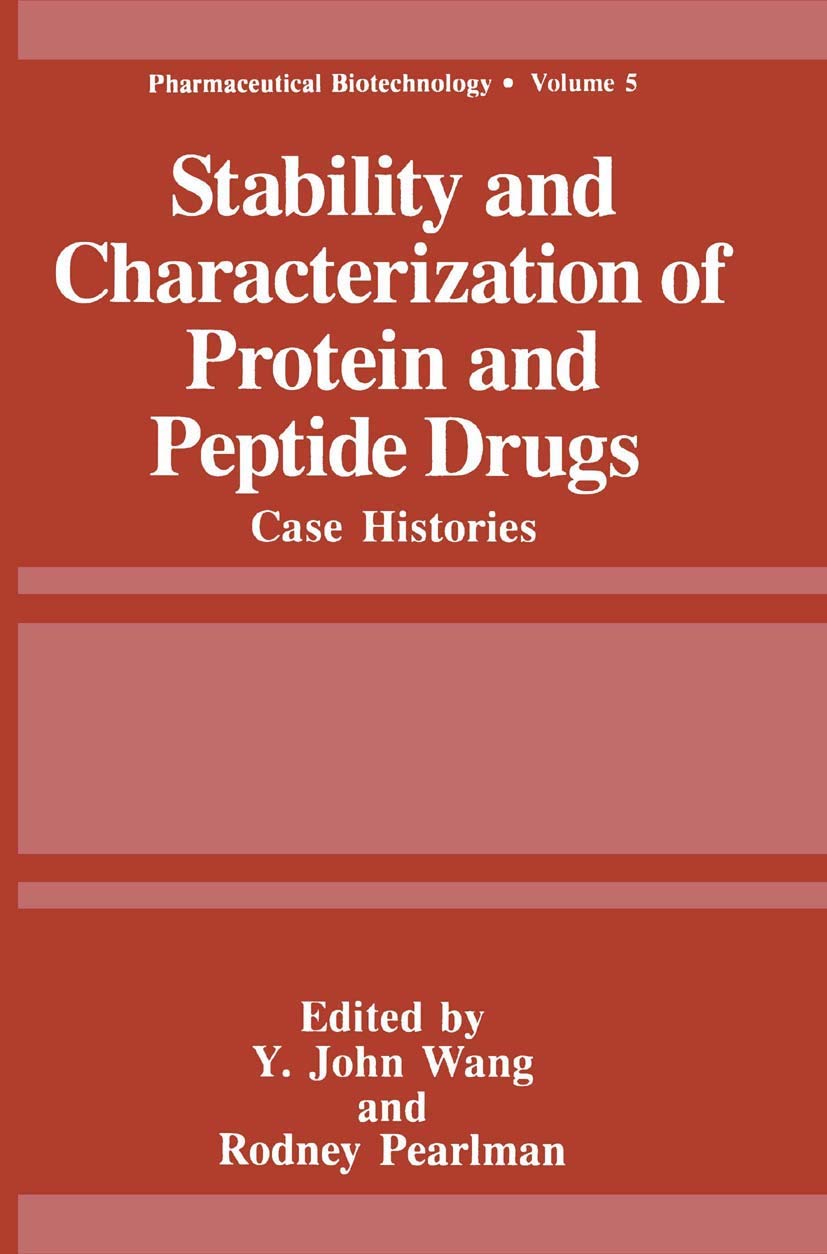
Stability and Characterization of Protein and Peptide Drugs - Case
Stability and Characterization of Protein and Peptide Drugs - Case
Price subject to change. Tap below for current.
Couldn't load pickup availability
In this review of Stability and Characterization of Protein and Peptide Drugs: Case Histories the reviewer finds a tightly focused resource for formulation scientists who need real-world examples of therapeutic protein and peptide development. This volume compiles case histories that connect the theoretical principles of protein characterization and stability to practical formulation challenges, making it especially useful for readers who already understand the basics and want applied examples. The book's main value is its emphasis on how principles are put into use during product development rather than on introductory theory.
Key Features
- Case history focus: Presents detailed examples of marketed and clinically tested proteins and peptides to show how theory is applied in practice.
- Practical guidance: Emphasizes formulation scientist needs by discussing real development pathways from laboratory findings to pharmaceutical products.
- Contextualized theory: Builds on prior volumes by using established principles of protein characterization and stability in concrete scenarios.
- Selection breadth: Includes a curated panel of proteins and peptides chosen from a large pool of clinical agents to illustrate diverse challenges.
- Development focus: Shows decision points and tradeoffs encountered during formulation and stability assessment of therapeutic agents.
Who It's For
This volume is aimed primarily at formulation scientists, analytical chemists, and development leaders working with therapeutic proteins and peptides who need practical examples that bridge academic theory and regulatory or manufacturing realities. Graduate students and researchers looking for applied case studies to complement foundational texts will also find the content valuable.
Readers seeking an introductory textbook on protein chemistry or a step-by-step lab manual should look elsewhere, because the book assumes familiarity with the fundamentals and concentrates on case histories and development decision making rather than basic instruction.
Pros & Cons
Pros
- Strong emphasis on real case histories makes it easier to see how stability principles are applied in product development.
- Useful for experienced formulation scientists who want examples rather than theory-heavy chapters.
- Curated selection of proteins and peptides gives exposure to diverse development scenarios.
Cons
- Not a beginner's primer; readers without prior background in protein characterization may find it dense.
Specifications
| Title | Stability and Characterization of Protein and Peptide Drugs: Case Histories |
| Series | Pharmaceutical Biotechnology (prior volumes cover fundamentals) |
| Editors/Authors | Rodney Pearlman, Y. John Wang |
| Content focus | Case histories of therapeutic proteins and peptides in development and market |
| Audience | Formulation scientists, development researchers, advanced students |
| Approach | Practical examples linking theory to pharmaceutical product development |
Our Verdict
Stability and Characterization of Protein and Peptide Drugs is a worthwhile purchase for professionals who need applied case histories that demonstrate how characterization and stability principles translate into formulation decisions. It offers practical value and illustrative examples that make it good value for development scientists, while those seeking introductory coverage should choose a more basic text first.
Frequently Asked Questions
Does this book teach basic protein chemistry?
Answer. No, the book assumes foundational knowledge and emphasizes case histories and applied development issues rather than introductory theory.
Who edited the volume?
Answer. The volume is presented by Rodney Pearlman and Y. John Wang as part of the Pharmaceutical Biotechnology series.
Will this help with regulatory submissions?
Answer. The case histories illustrate development and stability considerations relevant to product development and can inform regulatory thinking, though it is not a regulatory guide.
Editor's Take
This volume delivers practical case histories that help formulation scientists apply principles of protein characterization and stability to real development challenges; ideal for experienced readers needing applied examples.

Recently viewed
Recently viewed products will appear here as customers browse the store.