

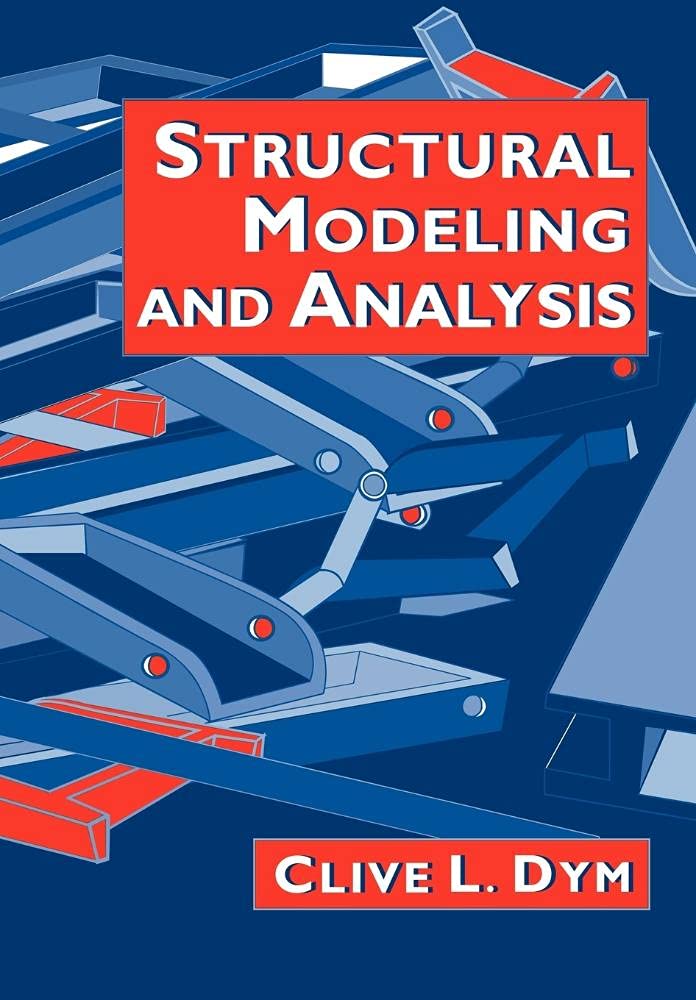
Structural Modeling and Analysis - Modern Energy Methods
Structural Modeling and Analysis - Modern Energy Methods
Price subject to change. Tap below for current.
Couldn't load pickup availability
In this review of Structural Modeling and Analysis the reviewer finds a focused, academic introduction that suits advanced undergraduates and early-career engineers aiming to understand how structures behave. The single biggest reason to buy is the book's clear presentation of the energy methods that tie equilibrium and compatibility together without heavy formalism, making it a practical bridge between classical hand analysis and modern computational approaches.
Key Features
- Unified energy approach: Presents energy methods as a single framework that clarifies the relationship between equilibrium and compatibility for both determinate and indeterminate structures.
- Practical modeling emphasis: Emphasizes idealization and discretization so readers learn how modeling choices affect analysis results in real structures.
- Accessible mathematics: Develops energy methods without relying on the calculus of variations, making key concepts available earlier in a curriculum.
- Relevance to computation: Serves as a prelude to computational structural analysis by showing the logical foundations behind numerical methods.
- Cross-disciplinary appeal: Organized to be useful for civil, aeronautical, and mechanical engineering students who study structural behavior.
Who It's For
The book is best for advanced undergraduate or graduate students and early-career engineers who want a coherent theoretical foundation that connects hand analysis with computational practice; instructors looking for a course text that stresses physical interpretation will also find it helpful. It is particularly valuable for those who appreciate a focus on how modeling choices influence results and who want a conceptual bridge to numerical methods.
Those who should look elsewhere include readers seeking a comprehensive design handbook, step-by-step code procedures, or an introductory text with elementary statics review; this book assumes some prior exposure to structural concepts and focuses on analysis and modeling rather than prescriptive design rules.
Pros & Cons
Pros
- Clear exposition of energy methods that clarifies the unity of structural analysis.
- Strong attention to modeling, idealization, and discretization that prepares readers for computational approaches.
- Accessible mathematical treatment that avoids heavy formalism while remaining rigorous.
Cons
- Not a substitute for a design code or an elementary introduction; some prior structural background is assumed.
Specifications
| Title | Structural Modeling and Analysis |
| Author | Clive L. Dym |
| Subject focus | Structural analysis and modeling using energy methods |
| Intended audience | Civil, aeronautical, and mechanical engineering students and practitioners |
| Approach | Energy methods without calculus of variations; emphasis on idealization and discretization |
| Purpose | Bridge between hand analysis and modern computational approaches |
Our Verdict
Structural Modeling and Analysis is a thoughtful, well-organized text that offers excellent value for students and engineers who need a deeper conceptual grasp of how structures behave and how analysis links to computation. Buy it if you want a rigorous yet accessible treatment of energy methods and modeling; those seeking prescriptive design rules should consult a supplemental design reference.
Frequently Asked Questions
Is this book suitable for beginners?
The book assumes some prior exposure to structural concepts; it is best for advanced undergraduates or graduate students rather than complete beginners.
Does it cover computational methods?
It does not teach software, but it explains the energy-based foundations that underlie many computational approaches.
Will this replace a design code?
No. The book focuses on analysis and modeling, not prescriptive design procedures or code-based checks.
Editor's Take
Structural Modeling and Analysis is a rigorous yet accessible text that teaches energy methods and structural modeling, making it ideal for advanced students and engineers who want a conceptual bridge to computational analysis.

Recently viewed
Recently viewed products will appear here as customers browse the store.