

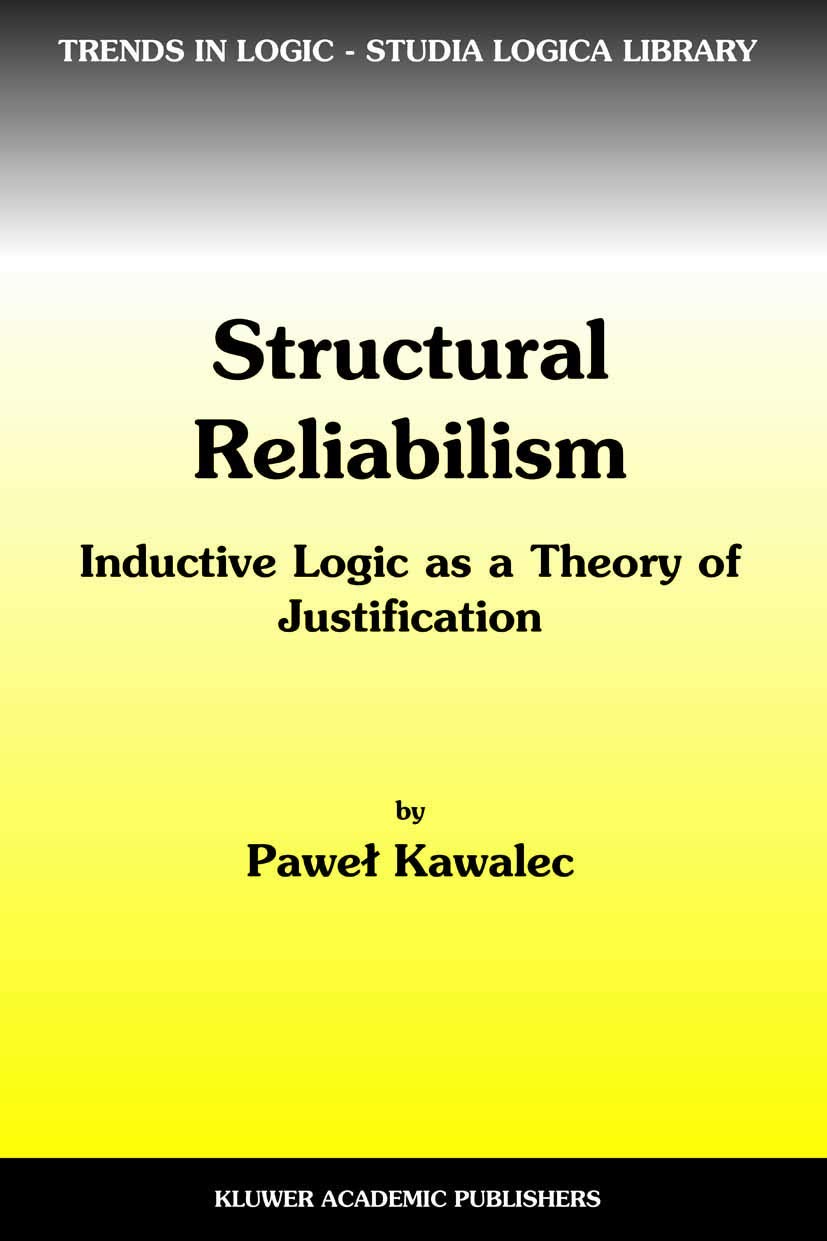
Structural Reliabilism: Inductive Logic as a Theory of Justification
Structural Reliabilism: Inductive Logic as a Theory of Justification
Price subject to change. Tap below for current.
Couldn't load pickup availability
In this review of Structural Reliabilism: Inductive Logic as a Theory of Justification, the author P. Kawalec presents a dense but rewarding monograph that will most appeal to philosophers of science and logicians interested in the foundations of inductive reasoning. The book's single biggest contribution is its effort to reconnect the mid-20th century programme of inductive logic, associated with Carnap and Hintikka, to contemporary epistemology through a novel structural reliabilist account. Readers seeking a clear defence of how justification can supervene on syntactic and semantic sentence properties will find this text particularly valuable.
Key Features
- Historical revival: Revisits the inductive logic programmes of Rudolf Carnap and Jaakko Hintikka, showing their continued relevance to modern debates.
- Epistemic framing: Links inductive logic to contemporary discussions in epistemology so readers can see how probabilistic methods bear on justification.
- Structural reliabilism: Proposes a theory where justification supervenes on syntactic and semantic properties of sentences, offering a clear alternative to standard accounts.
- Theoretical confrontation: Tests structural reliabilism against rival theories of justification, providing readers with concrete argumentative contrasts.
- Monograph format: Focuses tightly on argument and theory, making it suitable for graduate seminars and specialist research reading.
Who It's For
Structural Reliabilism is aimed at graduate students, researchers, and scholars in philosophy of science, formal epistemology, and logic who want a rigorous defence of inductive logic grounded in epistemological concerns. The book assumes familiarity with the basic ideas of Carnapian inductive logic and debates about justification, so it rewards readers prepared to follow formal and philosophical argumentation.
Those seeking an introductory textbook or light popular exposition should look elsewhere, as the monograph is concentrated on theory rather than pedagogy and does not serve as a beginner-friendly overview of probability or statistics.
Pros & Cons
Pros
- Provides a fresh linkage between inductive logic and contemporary epistemology, clarifying why the older programme matters today.
- Carefully defends structural reliabilism and explains how justification can supervene on sentence properties.
- Engages directly with rival theories of justification, which helps readers evaluate competing positions.
Cons
- Dense, specialist prose may be challenging for readers without prior exposure to the Carnapian tradition or formal epistemology.
Specifications
| Title | Structural Reliabilism: Inductive Logic as a Theory of Justification |
| Author | P. Kawalec |
| Subject | Inductive logic and epistemology |
| Approach | Monograph linking syntactic and semantic properties to justification |
| Theoretical claim | Justification supervenes on sentence properties via structural reliabilism |
| Intended audience | Researchers and graduate students in philosophy and formal epistemology |
Our Verdict
For readers invested in the foundations of induction and the philosophy of justification, Kawalec offers an important and original defence that revitalises the inductive logic programme by situating it within contemporary epistemic discussion. Although demanding, the monograph is good value for scholars who want a serious alternative account of justification grounded in syntactic and semantic considerations.
Frequently Asked Questions
Is this book suitable for beginners?
The text is a specialist monograph and assumes familiarity with inductive logic and epistemology, so it is not ideal for complete beginners.
Does the book engage with historical figures?
Yes, it explicitly revives ideas from Rudolf Carnap and Jaakko Hintikka and situates them in modern debates.
What is the central theoretical contribution?
The central claim is that a structural reliabilist theory can make justification supervene on syntactic and semantic sentence properties, offering an alternative to prevailing theories.
Editor's Take
Kawalec delivers a rigorous, specialist defence that reconnects Carnapian inductive logic to contemporary epistemology; demanding but valuable for researchers seeking an alternative account of justification.

Recently viewed
Recently viewed products will appear here as customers browse the store.