

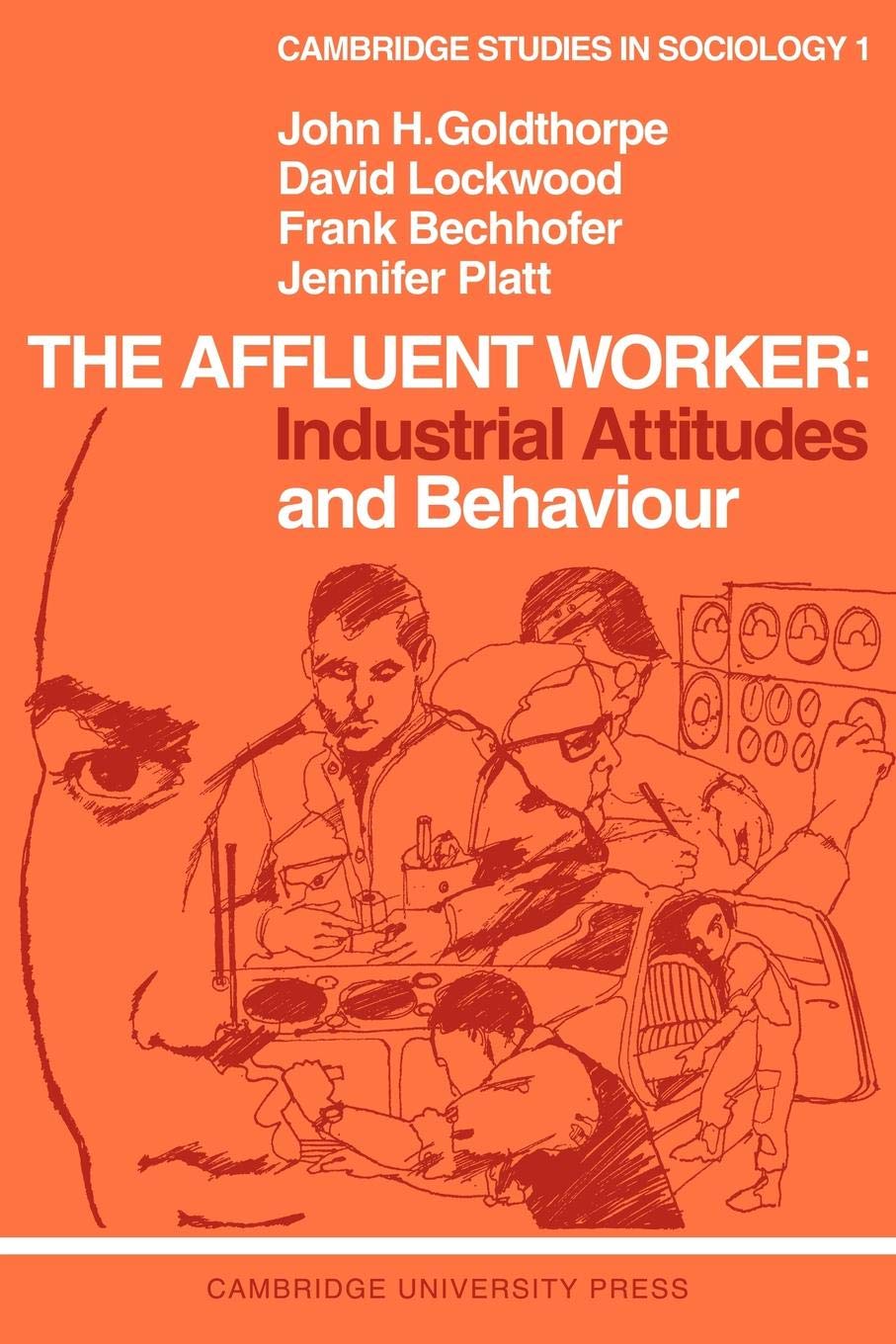
The Affluent Worker: Industrial Attitudes and Behaviour - Classic
The Affluent Worker: Industrial Attitudes and Behaviour - Classic
Price subject to change. Tap below for current.
Couldn't load pickup availability
In this review of The Affluent Worker: Industrial Attitudes and Behaviour, the reviewer finds a meticulous empirical study best suited to readers interested in class, work and industrial relations. Originally published in 1968 and based on interviews and company data from three major employers in Luton, this book stands out for its careful comparison of workers across different production systems and for exploring attachment to organizations and trade unions. The review highlights why historians, sociologists and labour researchers will value the depth of the qualitative material and the clarity of its analytical aims.
Key Features
- Empirical interviews: Detailed interview material gives firsthand insight into workers' experience of industrial jobs and workplace relations.
- Comparative approach: Study compares employees from three distinct firms, allowing contrasts across different production systems and employer practices.
- Focus on attachment: Examines workers' loyalty and attachment to their employing organizations and to trade unions, illuminating workplace identities.
- Historical context: First published in 1968, the book captures a particular moment in postwar industrial Britain valuable to historians and sociologists.
- Institutional selection: Firms were chosen for above-average pay and advanced personnel policies, enabling analysis of outcomes where employers offered favorable conditions.
Who It's For
This book is for readers who want a rigorous sociological account of mid-20th century industrial labour: academics, graduate students and informed readers in social history and industrial relations will find the material particularly useful. Its qualitative interviews and organizational comparisons are well suited to researchers building empirical cases or teaching about class and work.
Those seeking a contemporary manual on modern HR practice or up-to-the-minute labour market data should look elsewhere, as the book presents a historical study grounded in the late 1960s rather than current workplace trends.
Pros & Cons
Pros
- Rich qualitative data offers direct testimony on job experience and relations with workmates.
- Careful comparative design across three firms highlights how different production systems shape worker attitudes.
- Clear focus on organizational and union attachment provides a nuanced perspective on worker identity.
Cons
- The historical scope means it is less useful for readers seeking modern statistical trends or policy prescriptions.
Specifications
| Title | The Affluent Worker: Industrial Attitudes and Behaviour |
| Series | Cambridge Studies in Sociology, Series Number 1 |
| Authors / Brand | John H. Goldthorpe, David Lockwood, Frank Bechhofer, Jenifer Platt |
| Publication context | Originally published 1968; study of three major firms in Luton |
| Research basis | Interviews and company data, focused on employees of well-paying employers |
| Focus areas | Work experience, workplace relations, organizational and union attachment |
Our Verdict
The Affluent Worker is a strong value for readers who need a grounded empirical study of postwar industrial labour and workplace identities. Its methodical interviews and firm comparisons make it a durable reference for sociologists and historians, even though it does not address contemporary workplace dynamics.
Frequently Asked Questions
Is this a contemporary study of modern workplaces?
This is a historical empirical study originally published in 1968, offering deep insight into that period rather than current workplace conditions.
What types of data does the book use?
The authors rely on interviews and other company data collected from employees of three major firms in Luton chosen for pay and personnel policies.
Who wrote the study?
The work is by John H. Goldthorpe, David Lockwood, Frank Bechhofer and Jenifer Platt, published as part of the Cambridge Studies in Sociology series.
Editor's Take
A rigorous, empirically grounded study of 1960s industrial labour, valuable to sociologists and historians for its interviews and firm-by-firm comparisons; less relevant for those seeking contemporary workplace analysis.

Recently viewed
Recently viewed products will appear here as customers browse the store.