

The Argentine Silent Majority: Middle Classes and Memory
The Argentine Silent Majority: Middle Classes and Memory
Price subject to change. Tap below for current.
Couldn't load pickup availability
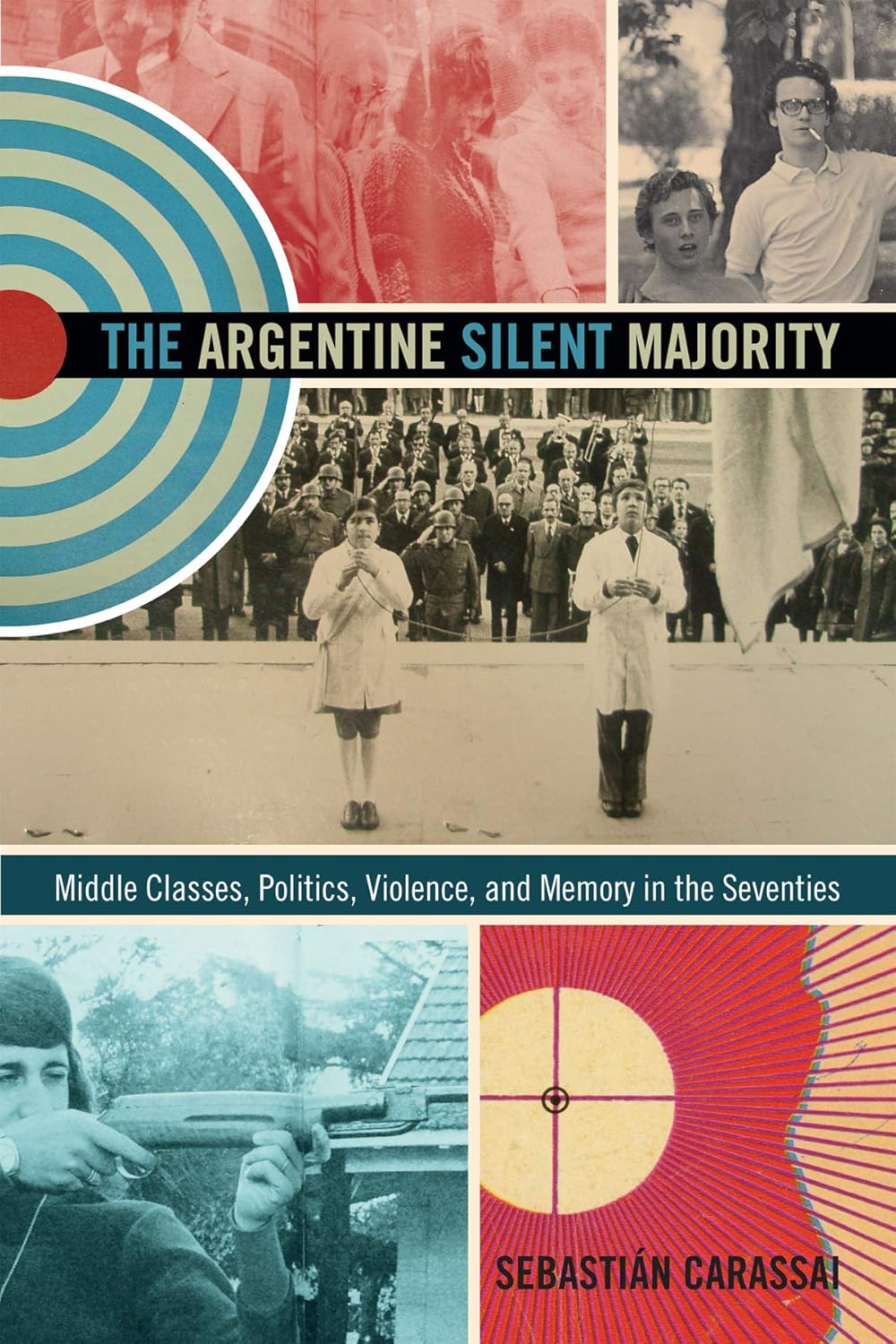
In this review of The Argentine Silent Majority, the reviewer finds a focused, interview-driven study best suited to readers seeking a nuanced social history of Argentina in the late 1960s and 1970s. Sebastian Carassai concentrates on the experiences and memories of middle-class non-activists, drawing on two hundred interviews across three distinct locales to illuminate why much of Argentine society remained aloof or complicit during turbulent years. The book's single biggest reason to buy is its sustained attention to ordinary voices, which expands understanding of the period beyond activists and victims to the broader middle-class perspective.
Key Features
- Extensive interviews: The book uses interviews with 200 people to provide a wide range of firsthand recollections and attitudes from the era.
- Focused social lens: Carassai foregrounds middle-class culture and politics, offering readers a targeted view distinct from works centered on activists or state terror.
- Three-site comparison: By interviewing people in Buenos Aires, Tucuman, and Correa, the author captures local variations in memory and political behavior.
- Mixed respondent pool: The sample includes non-activists as well as journalists, politicians, scholars, and artists, enriching contextual understanding.
- Memory and ideology analysis: The narrative links recollection to underlying ideologies, helping readers see how ordinary attitudes shaped public life in the 1970s.
Who It's For
This book is for readers of Argentine history, social historians, and students who want a bottom-up view of political culture in the late 1960s and 1970s. Scholars interested in memory studies or comparative regional experiences will find the three-site approach valuable.
It is less suited for readers seeking a comprehensive chronicle of political violence or a blow-by-blow account of state terror; those needs are better met by works focused primarily on activists, human-rights litigation, or institutional histories rather than memory-focused interviews.
Pros & Cons
Pros
- Offers a distinctive focus on the middle classes, filling a gap in literature centered on activists and victims.
- The 200 interviews provide breadth and variety of voices that ground the analysis in lived experience.
- Comparing Buenos Aires, Tucuman, and Correa highlights important local contrasts in political memory and behavior.
Cons
- The emphasis on non-activists means readers seeking a detailed account of organized political violence will need complementary sources.
Specifications
| Title | The Argentine Silent Majority: Middle Classes, Politics, Violence, and Memory in the Seventies |
| Author | Sebastian Carassai |
| Primary focus | Middle-class culture and politics in late 1960s-1970s Argentina |
| Method | Interviews with 200 respondents |
| Interview sites | Buenos Aires, Tucuman, Correa |
| Respondent types | Mostly non-activists, plus journalists, politicians, scholars, artists |
Our Verdict
Carassai's book is a well-crafted, interview-rich study that expands the field by centering ordinary middle-class voices; it is recommended for readers who want a social-history angle on Argentina's troubled 1970s and good value for those seeking memory-based analysis rather than operational histories of violence.
Frequently Asked Questions
Does the book rely on primary interviews?
Yes. Carassai conducted interviews with 200 people to form the core evidence for the study.
Which locations are covered?
The author collected memories from Buenos Aires, Tucuman, and the small town of Correa to capture local differences.
Is this a political violence chronicle?
No. The emphasis is on middle-class memory and ideology rather than a detailed chronological account of state violence.
Editor's Take
Carassai's interview-driven study is a focused, valuable look at middle-class memory in 1970s Argentina, recommended for readers seeking social-history perspectives rather than operational accounts of political violence.

Recently viewed
Recently viewed products will appear here as customers browse the store.