

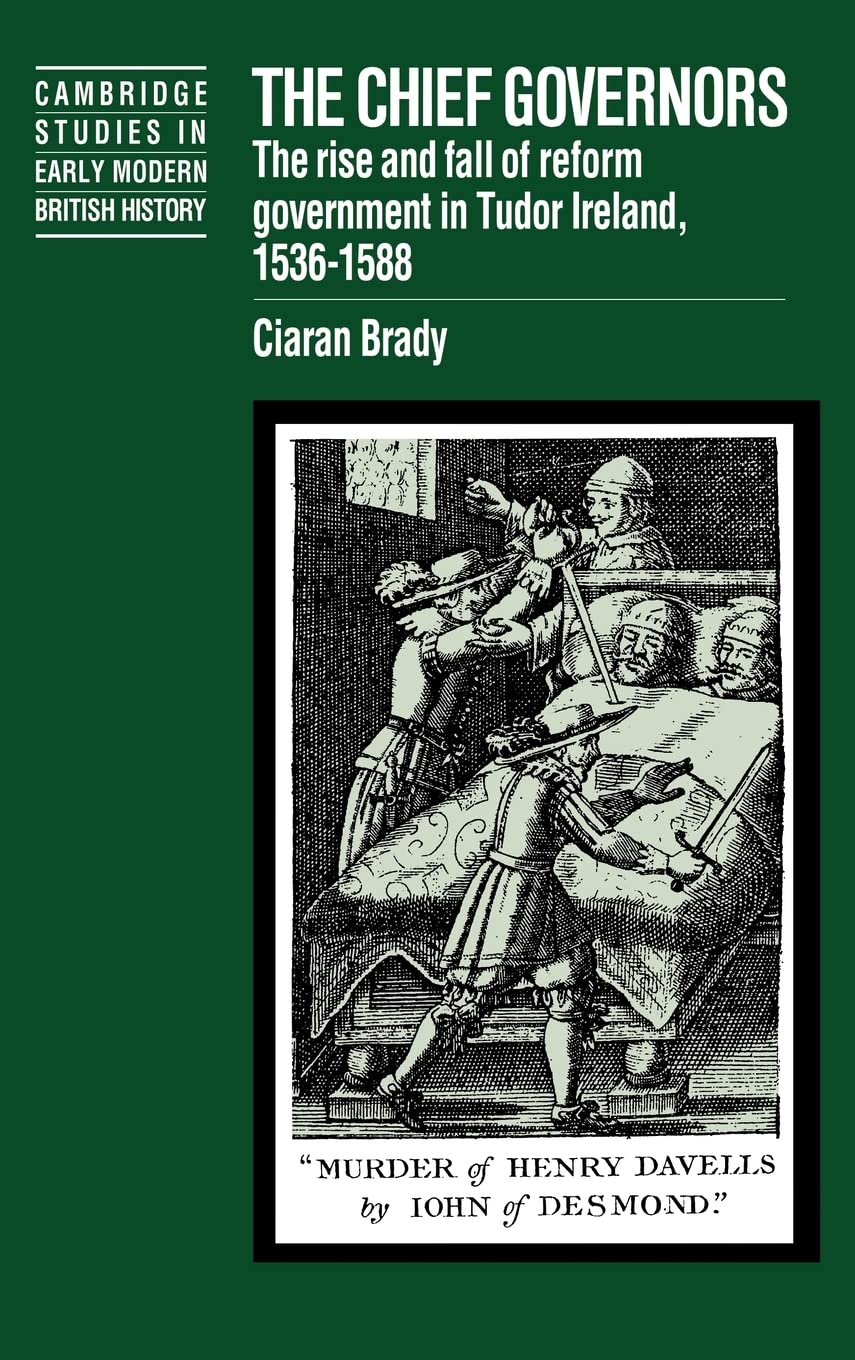
The Chief Governors: The Rise and Fall of Reform Government in Tudor
The Chief Governors: The Rise and Fall of Reform Government in Tudor
Price subject to change. Tap below for current.
Couldn't load pickup availability
Our review of The Chief Governors argues this dense academic book is essential for readers seeking a deep reassessment of Tudor policy in Ireland. Ciaran Brady offers a sustained, evidence-driven critique that reframes sixteenth-century English activity in Ireland as a program of reform rather than simple conquest; the single biggest reason to buy is its careful archival argumentation that links policy intentions to administrative consequences. This is a review for serious students and historians who want a revisionist account, not a breezy survey.
Key Features
- Revisionist thesis: Brady argues that reform not conquest was the primary aim of Tudor policy, which changes how readers interpret sixteenth-century events in Ireland.
- Archival depth: The book draws on extensive contemporary sources to show how policy goals produced unintended administrative innovations.
- Institutional focus: Readers benefit from detailed discussion of how administrative reforms emerged as practical responses to the difficulties reformers faced.
- Clear historical framing: The work situates Tudor strategies within broader early modern governance debates, helping scholars reassess conventional assumptions.
- Scholarly prose: The academic style is precise and cautious, which benefits readers looking for rigorous argument rather than polemic.
Who It's For
This book is aimed at graduate students, professional historians, and informed readers interested in Tudor Ireland, early modern administration, or colonial policy debates. Those researching the evolution of governance and institutional change will find its detailed critique particularly useful.
Readers seeking a short popular history, an introductory textbook, or a narrative-driven account with many illustrations should look elsewhere; the book is dense, argumentative, and best appreciated by those comfortable with specialized scholarship.
Pros & Cons
Pros
- Provides a compelling reassessment of Tudor aims that prompts fresh research questions.
- Grounded in extensive primary sources, offering strong evidential support for its claims.
- Focus on administrative outcomes adds useful nuance to debates about policy and power.
Cons
- The academic tone and density limit accessibility for general readers.
Specifications
| Title | The Chief Governors: The Rise and Fall of Reform Government in Tudor Ireland 1536-1588 |
| Author | Ciaran Brady |
| Series | Cambridge Studies in Early Modern British History |
| Subject | Sixteenth-century Irish history and Tudor governance |
| Approach | Revisionist analysis emphasizing reform and administrative change |
| Audience | Graduate students, scholars, and specialist readers |
Our Verdict
For scholars and advanced students of Tudor England and Ireland, this book is a valuable corrective that reshapes how reform and administration are understood; its thorough use of sources and clear institutional argument make it good value as a work of serious scholarship despite its demanding style.
Frequently Asked Questions
Does the book argue Tudor policy was purely peaceful?
No. The author argues reform was the aim but explains how practical difficulties and administrative changes undermined those intentions.
Is this suitable for undergraduate reading?
It can be used in advanced undergraduate seminars, but it is primarily geared to graduate and professional readers due to its scholarly tone.
Does the book contain primary-source evidence?
Yes; the argument is built on extensive contemporary sources and archival research.
Editor's Take
A valuable, revisionist scholarly study arguing Tudor policy favored reform over conquest; essential for specialists and advanced students due to its archival depth and institutional analysis.

Recently viewed
Recently viewed products will appear here as customers browse the store.