

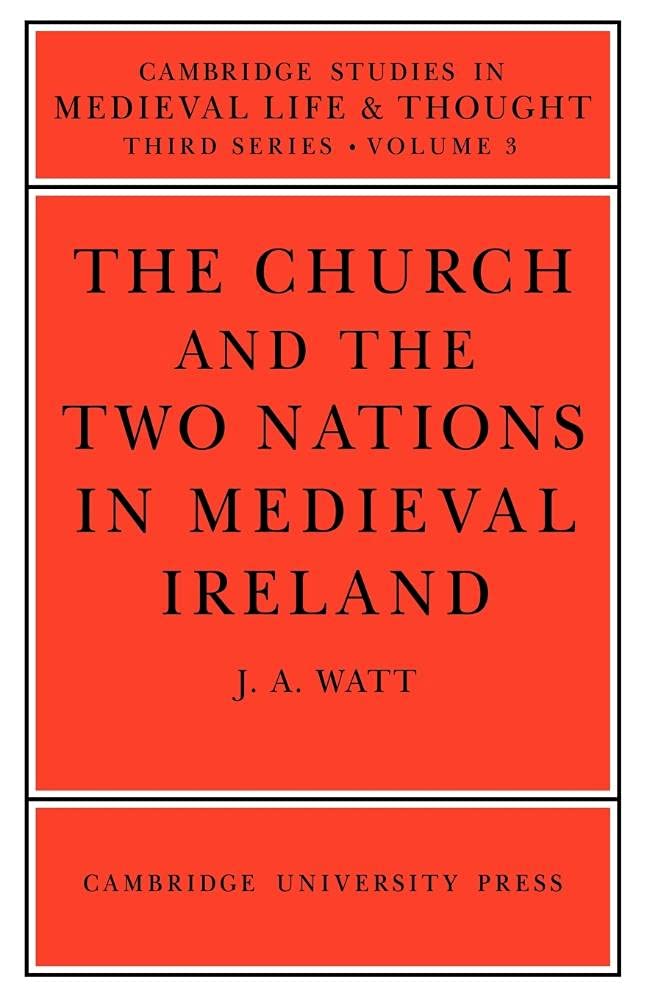
The Church and the Two Nations in Medieval Ireland - Scholarly
The Church and the Two Nations in Medieval Ireland - Scholarly
Price subject to change. Tap below for current.
Couldn't load pickup availability
In this review of The Church and the Two Nations in Medieval Ireland the reviewer finds a dense, archival study best suited to historians and students of medieval ecclesiastical relations; the single biggest reason to consult this work is its use of manuscript material and printed sources not previously gathered together to trace how English royal policy and church structures attempted a form of ecclesiastical colonization of Ireland. J. A. Watt's analysis tracks the shifting power between king, clergy and pope and explains the role of religious orders in a way that rewards careful reading rather than casual browsing.
Key Features
- Original source base: Draws on manuscript material and printed sources that have not been previously assembled for this topic, providing fresh primary evidence for readers.
- Chronological focus: Covers the period from Henry II's invasion in 1171 up to the Statute of Kilkenny, offering a clear timeframe for researchers interested in late 12th to 14th century developments.
- Political-ecclesiastical analysis: Shows how the central English government engaged with Irish ecclesiastical matters, illuminating state strategies toward church reform and control.
- Two nations perspective: Traces the changing fortunes of the 'two nations', explaining relations between Irish and English clergy in practical terms.
- Religious orders examined: Treats the role of the Cistercians and the friars in depth, useful for those studying monastic and mendicant influence on colonial policy.
- Legal impact: Considers the effect of English common law on Irish ecclesiastical life, connecting legal history with church structures.
Who It's For
Medievalists, ecclesiastical historians will find this book most valuable, particularly graduate students and scholars researching Anglo-Irish relations, church administration, or the impact of religious orders. The focus on manuscript sources makes it a useful reference for archival work and doctoral reading lists.
General readers seeking a broad social history or a narrative account of medieval Ireland should look elsewhere, because the tone and depth are scholarly rather than popular; those wanting a survey with many illustrations or simplified chronology may prefer a more introductory volume.
Pros & Cons
Pros
- Extensive use of previously underused manuscript and printed sources adds original evidence for specialists.
- Clear chronological framing from 1171 to the Statute of Kilkenny helps focus research questions.
- Detailed treatment of the Cistercians and friars illuminates monastic and mendicant roles in ecclesiastical politics.
- Analysis ties ecclesiastical developments to English common law, bridging legal and religious history.
Cons
- The scholarly density and archival focus make the book less accessible to casual readers or undergraduates seeking an introductory narrative.
- Limited appeal for those wanting richly illustrated or popular histories, as the emphasis is on text and sources.
Specifications
| Title | The Church and the Two Nations in Medieval Ireland |
| Series | Cambridge Studies in Medieval Life and Thought: Third Series |
| Author | J. A. Watt |
| Chronological scope | From 1171 (Henry II) to the Statute of Kilkenny |
| Key topics | Ecclesiastical policy, religious orders, English common law |
| Research base | Manuscript material and printed sources not previously used together |
Our Verdict
For scholars and advanced students of medieval Irish church history, this book is a rigorous, source-rich study that justifies its place on specialist reading lists; it offers real value by assembling neglected material and connecting ecclesiastical change to political and legal forces, though it is not pitched to general readers or those seeking a light overview.
Frequently Asked Questions
Does this book rely on primary sources?
Yes. Watt uses manuscript material and printed sources not previously collected for this purpose to support his arguments.
What period does the book cover?
The study spans from Henry II's partial conquest in 1171 up to the Statute of Kilkenny.
Is it suitable for beginners?
It is best for scholars and advanced students; casual readers may find the tone and depth too specialized.
Editor's Take
This is a rigorous, source-rich study for scholars and advanced students that assembles neglected manuscript materials to show how English ecclesiastical policy and religious orders shaped relations between Irish and English clergy.

Recently viewed
Recently viewed products will appear here as customers browse the store.